Brampton work tends to fall into two groups. One is the first replacement on a subdivision home, where the original driveway has settled, cracked at the garage or started breaking up at the edges. The other is industrial: yards and truck routes that carry far more weight than any driveway. They fail for different reasons and need different builds.
The first replacement on a newer lot
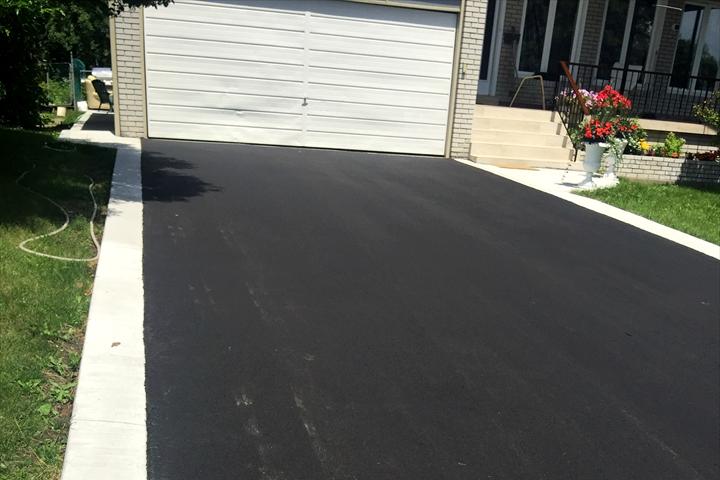
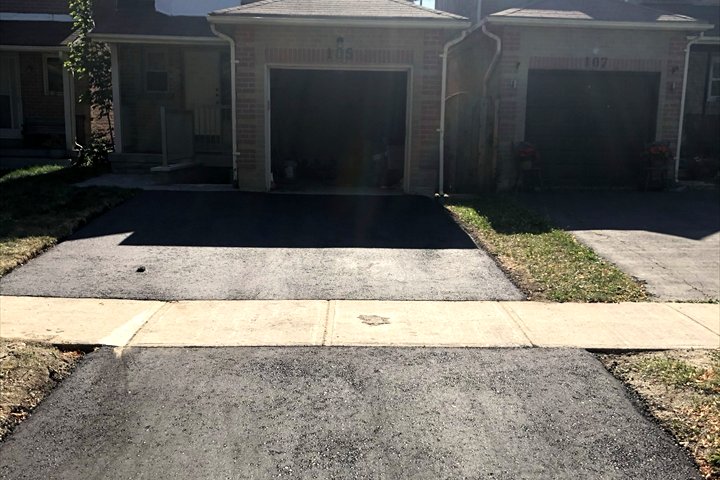
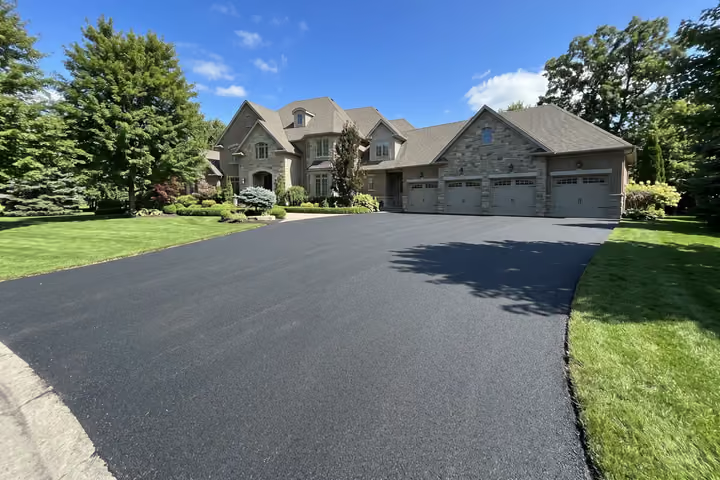
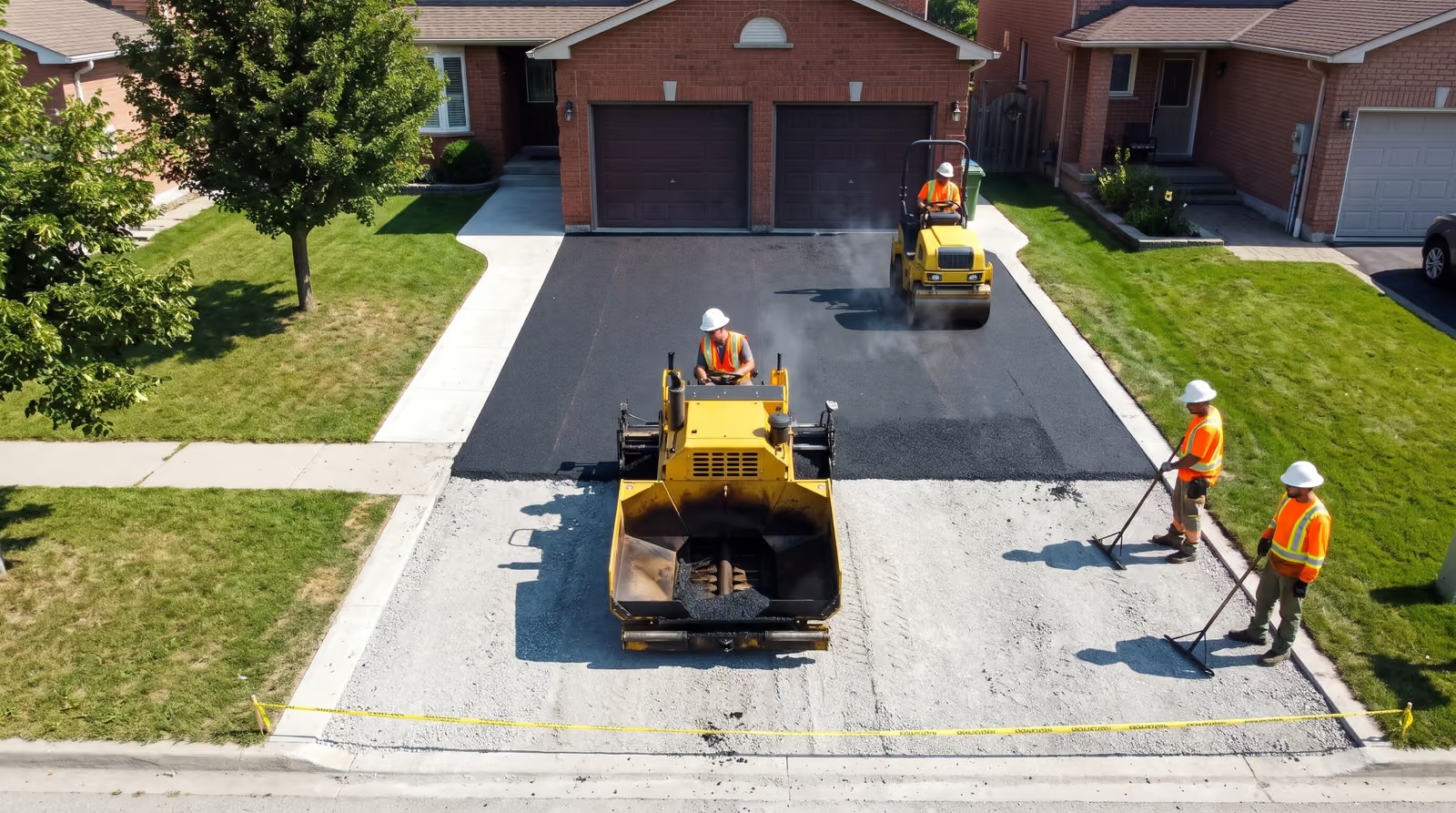
Much of Brampton is subdivision housing built over the last few decades: detached homes, semis and townhouses with attached garages. On these lots the ground under the driveway was disturbed during construction, and it keeps moving after the house is finished.
Two patterns show up again and again:
- A dip at the garage. Soil backfilled against the foundation settles for years. The driveway sags in front of the door, water collects there, and freeze-thaw opens the cracks wider each winter.
- A sunken strip across the driveway. The trench for the water and sewer services runs under most driveways, and trench backfill settles more than the ground around it.
Both are base problems. An overlay can’t fix either one, because new asphalt takes the shape of what’s under it. The settled fill comes out, compacted stone goes back, and the surface is reshaped to run from the garage door to the street. Brampton sits largely on silty, clay-bearing glacial tills that drain slowly and are frost-susceptible, so water that reaches the base tends to stay there.
Side yards and swales
On most subdivision lots, a shallow swale along the side yard carries water from the back of the lot to the street, and any new driveway edge has to stay clear of it. How to plan a wider driveway around it is in our Brampton driveway widening guide.
Older neighbourhoods
In Bramalea and the downtown streets, the usual job is taking off old layers so the driveway falls away from the house again. If the surface already sits above the garage slab, one more overlay only makes the water problem worse.
Choosing the job
- Same footprint, failed base: a new driveway on rebuilt, compacted stone.
- Wider driveway: a widening, planned around the swale and the existing slope.
- Firm but worn: resurfacing costs less than a rebuild, where there is room for a layer thick enough to last.
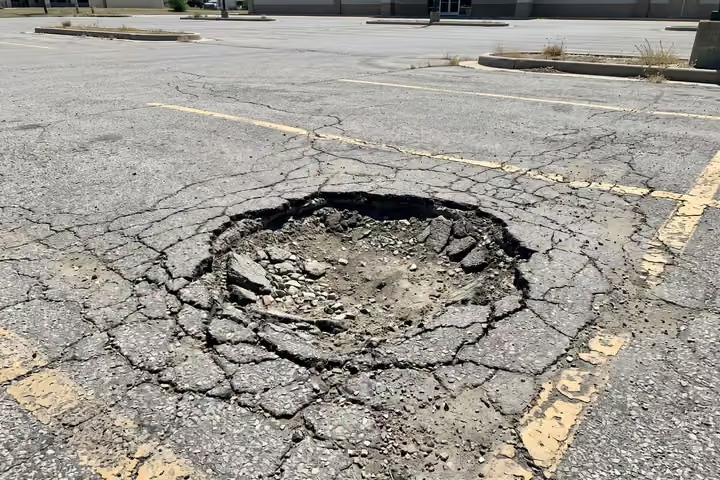
- Isolated cracks and potholes: asphalt repair, including hot rubber crack filling.
Plows and snowblowers chew up driveway edges that hang over loose soil. Whichever route you take, the base should run past the edge of the asphalt so the edge has something to sit on. How each route is priced is in the cost guide.
Industrial yards and truck routes
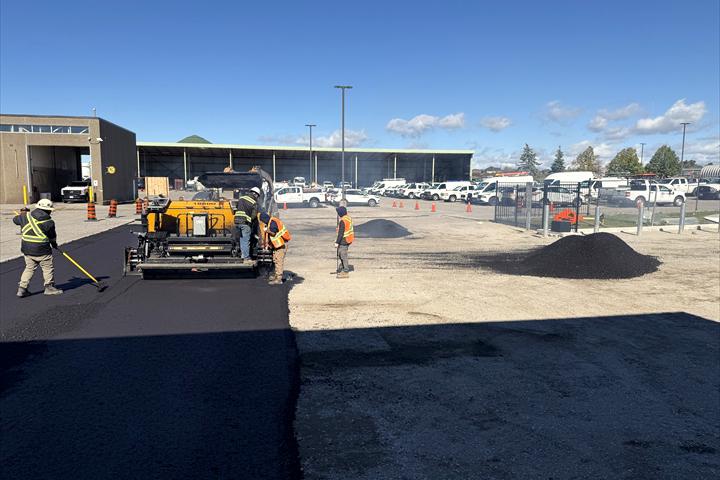
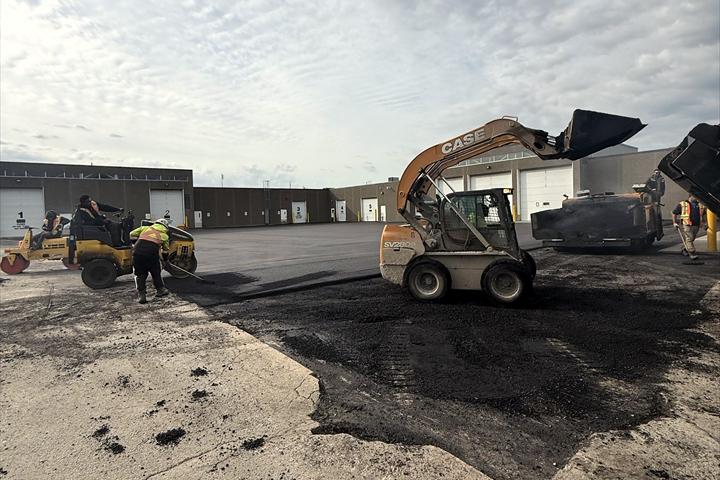
Brampton has a large industrial and logistics base, and we take on industrial work here: yards, truck routes and loading areas. Truck pavement fails in places a driveway never sees:
- Turning areas, where tractor-trailers pivot and twist the surface. These need a thicker, stronger section than straight runs.
- Trailer parking, where landing gear stands on small pads and punches into asphalt on hot days. Many yards put concrete pads under the stands, poured by another trade, and we coordinate our paving with them.
- Fuel and oil drips, which soften asphalt binder over time, so those spots break up early.
- Catch basins, where heavy wheels and water work on the same patch. A settled basin lets water into the base and the asphalt fails in a ring around it.
We carry $7 million in liability insurance. See industrial paving, parking lot paving, parking lot repair, catch basin repair and line painting.
When you contact us, say whether it’s a house, a plaza or a yard, and for a yard, what kind of trucks use it. A driveway, a parking lot and a trailer yard each start from a different base.