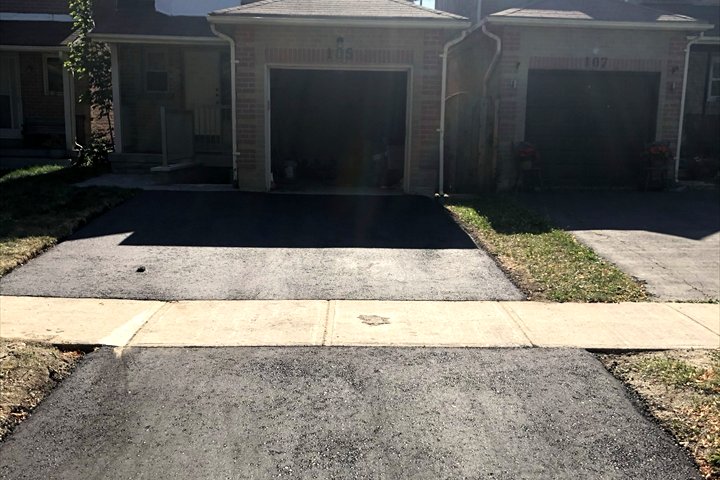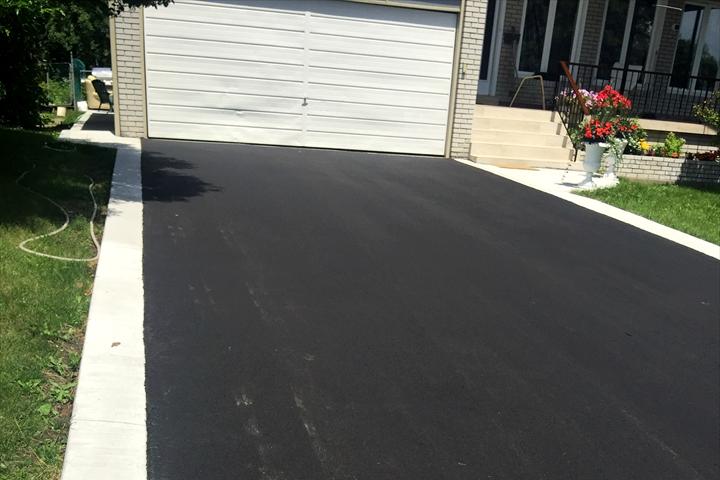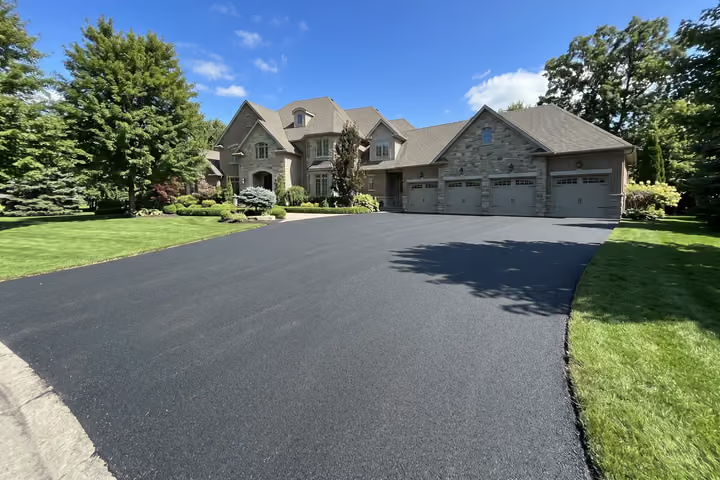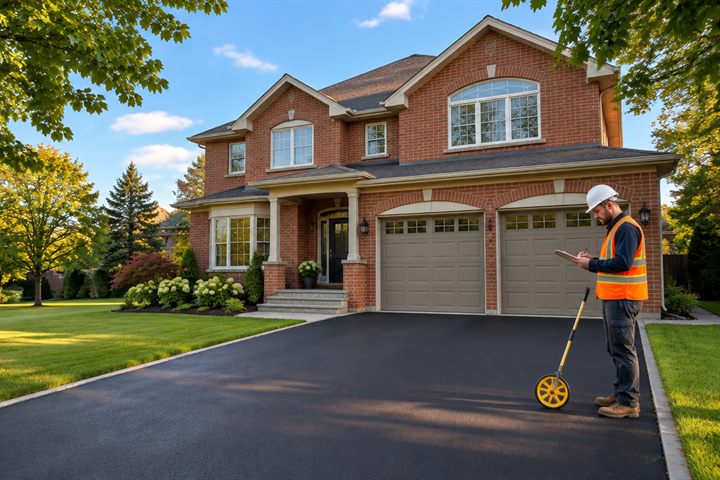
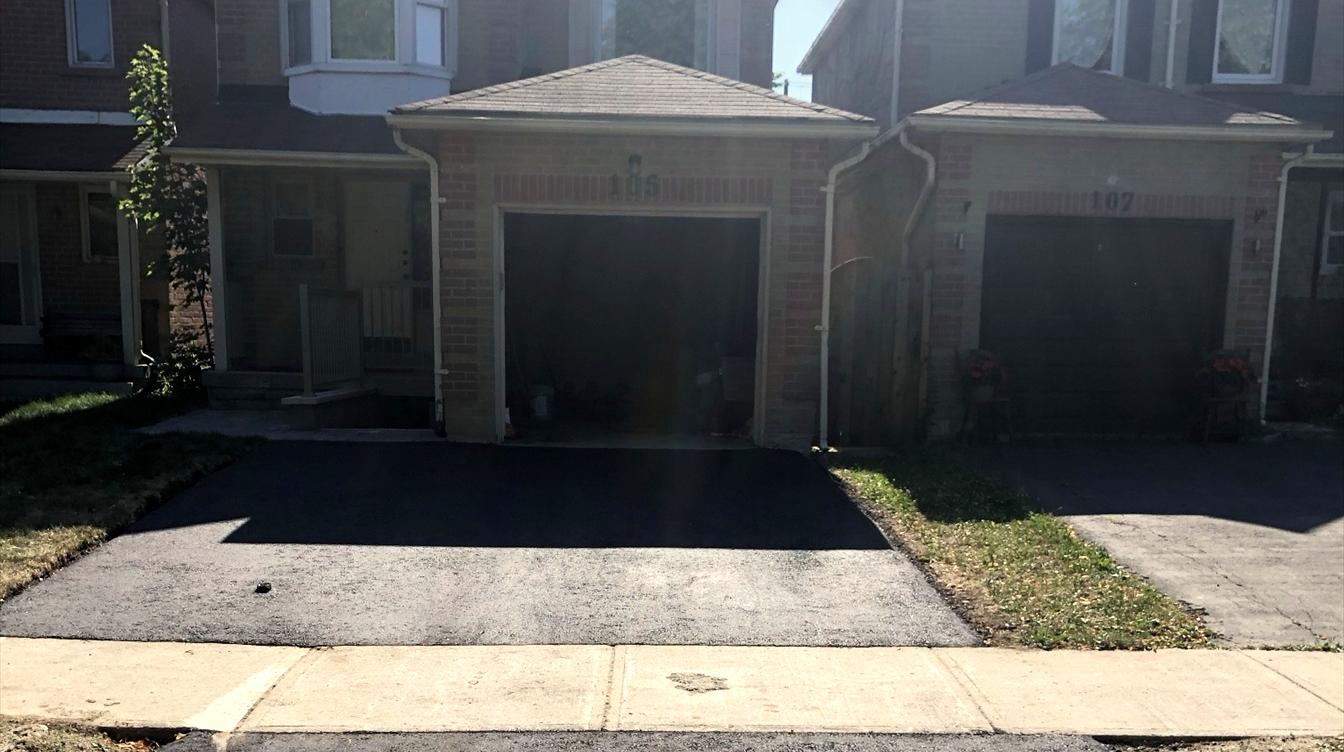
The usual reason to widen is a second car: a single-width driveway, and one car on the lawn or the street. The extra strip looks like the easy part of the driveway, but it’s built on ground that has never carried a car, and on this town’s slow-draining till, that’s where widenings fail. For soils, timing and replacements across town, see our Newmarket page.
Widening means one new surface
Almost every widening we build includes repaving the whole driveway. The new area is dug out and based, the old asphalt comes out, and the full width is paved as one surface. On a Newmarket lot that matters twice over: a dip at the garage where backfill has settled, or edges crumbling into the lawn, gets rebuilt in the same job, and there’s no seam in the wheel path for till water to sit in and freeze. Why we build widenings this way is on our widening and extensions page.
Common widening shapes on Newmarket lots
- A strip along one side. The usual choice on a subdivision lot with a single-car driveway. It’s normally added on the side away from the front door, so people walking to the house don’t cross parked cars.
- A parking pad off a side driveway. Older downtown houses with a long driveway beside the house sometimes have room for a pad at the back, near the garage or yard, which keeps the front of the house as it is.
- A split-level’s side strip. On split-level houses, the driveway often sits beside the lower level, and widening runs toward the side yard, which is also where the lot’s drainage tends to go.
The new strip’s own base
The ground under the widening is lawn, garden or an old flower bed. Topsoil holds water and compresses under weight, so all of it comes out. Below that, Newmarket’s till is often soft and wet near the surface. On till, the dig keeps going until the shovel stops sinking in, and that bottom is often deeper in April than in August.
The stone that goes back in has to match the base under the old driveway. If the new base is thinner, the two halves settle at different rates and the new surface dips along the line where the old edge was.
The base also runs a little past the edge of the new asphalt. Asphalt with nothing beside it but soil has no support, and an unsupported edge on till breaks off once the ground softens in spring.
Drainage and slope on slow-draining ground
On sandier ground, a little water running off the side of a driveway soaks away. On till it doesn’t. It pools against the edge of the asphalt, soaks into the base and freezes. So a Newmarket widening needs a clear answer to where its water goes.
- One slope for the full width. Repaving everything lets the cross-slope be set once, so water heads for the street and doesn’t collect where the old edge used to be.
- Side-yard drainage stays open. Many lots drain along the side yard toward the front or back. A widening that fills in that low strip of lawn sends the water somewhere else, often against the house or onto the neighbour’s side. Where the strip runs into that area, its edge and grade have to keep the water’s path open.
- Low spots get fixed first. If the old driveway already holds a puddle near where the new area will go, that dip is rebuilt in the same job, or the widened driveway will hold the same puddle.
Timing the work
Spring is when most people decide they want more parking, and it’s when Newmarket’s till is at its wettest. Digging the strip right after the thaw often means taking out more soft material than you’d remove in summer, which adds cost. Late spring through early fall is the most reliable window.
Price
The new area and the existing driveway are measured together in square feet, since both are paved. The figures and a worked example are in the driveway cost guide.
To get a free written estimate, send us a photo of the driveway from the street, a rough sketch of where you want the new edge, and your house type: semi, townhouse, split-level or detached. That tells us most of what the widening will involve before anyone visits.