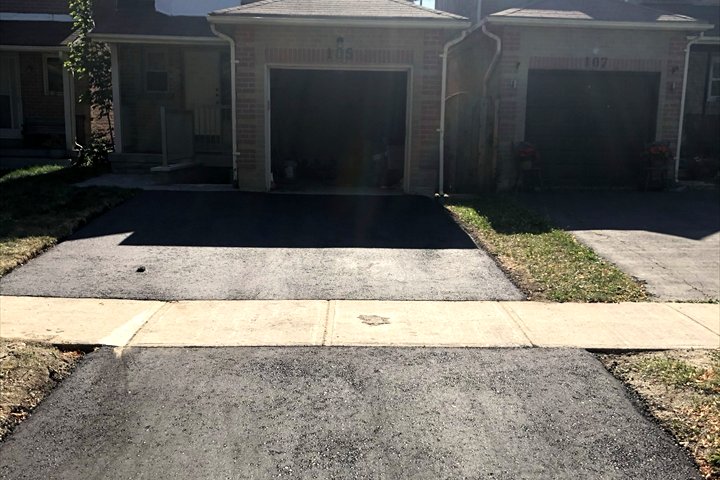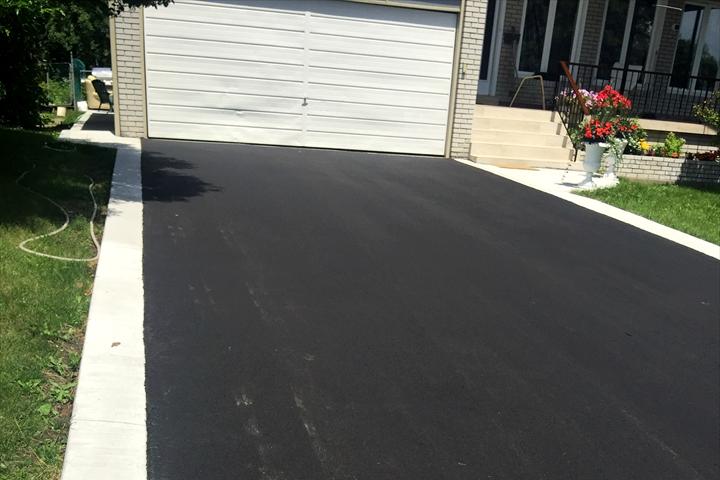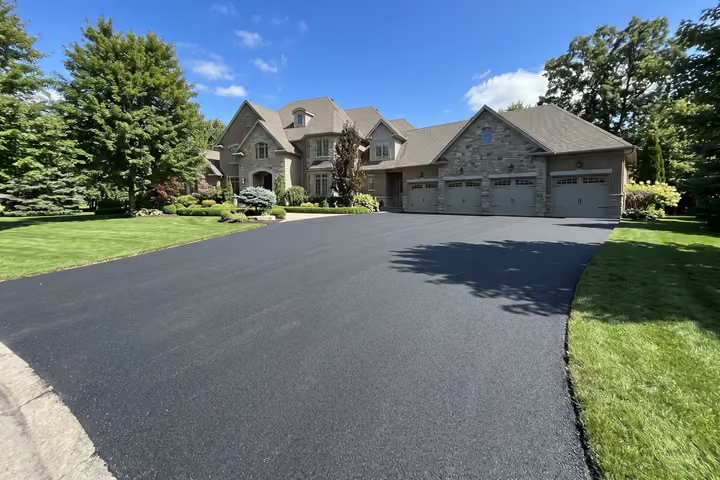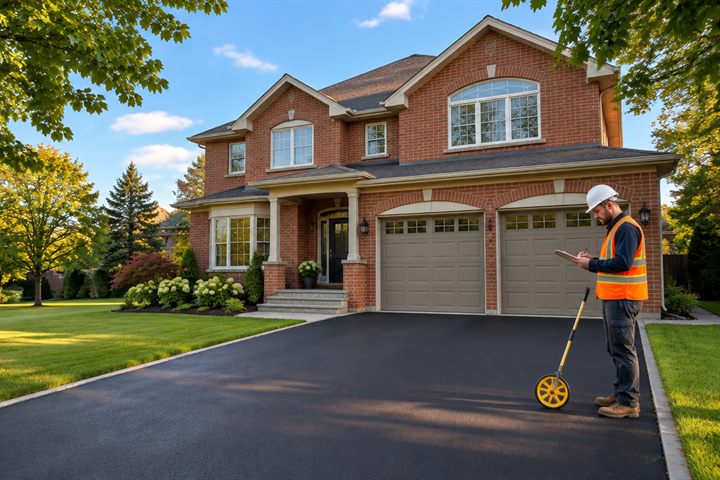
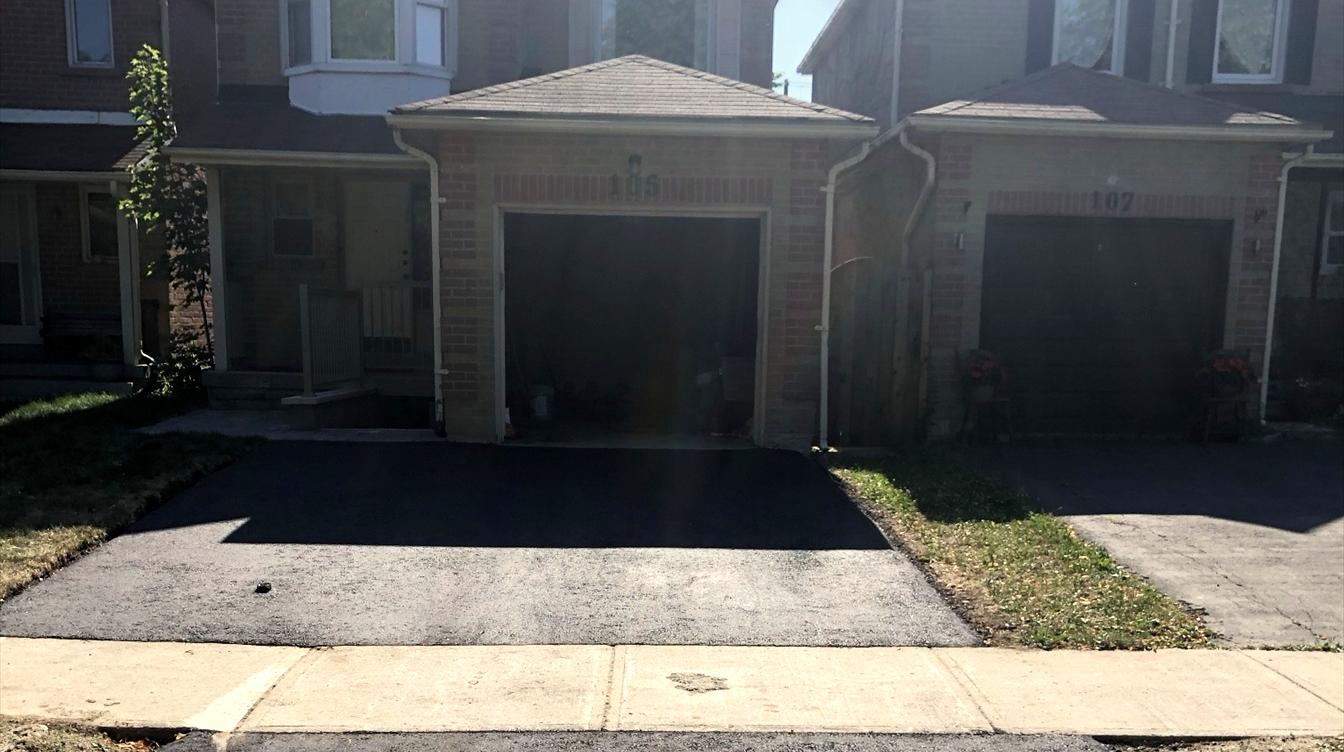
On a lot with sandy moraine ground, a driveway widening can be one of the most straightforward jobs there is, or it can leave a strip that slumps at the edge within two winters. The difference is in how the ground is prepared. Aurora adds its own twists: driveways on slopes, larger garages on bigger lots, long approaches, and streets where the driveway ends at a ditch instead of a curb. Soils, new-build settling and resurfacing across town are on our Aurora page.
Is widening the right job?
Almost every widening we build includes repaving the whole driveway. The new area gets its base, the old asphalt comes out, and the full width is paved as one surface. So the old surface’s condition matters less than you might expect: sunken patches and broken edges are dug out and rebuilt in the same job, and there’s no seam between old and new.
On Aurora’s larger lots, the bigger question is usually shape. If the garage is wider than the driveway in front of it, a new layout may work better than adding width to one side, and since the whole driveway is being repaved anyway, the shape is yours to choose.
Turnarounds on long driveways
West of Yonge and on the roads toward the edge of town, many driveways are long and meet a road where backing out is a gamble. On those lots, a turnaround is often more useful than a wider strip: a pad beside the driveway near the house, big enough to swing the car around and leave forwards. It’s usually placed on whichever side is higher, so it drains away from the house.
Building the new strip on moraine sand
The new area is lawn or garden. All the topsoil comes out, since it holds water and compresses under weight. Below that you’ll usually find moraine sand and gravel, and now and then a pocket of till.
Sand: compact it in layers. Sand that drains well can still move. On sand, the stone base has to be compacted in thin layers, because loose sand under a turning tire moves sideways and takes the edge with it. The rest of the build is on our widening and extensions page.
Till patches and wet pockets: dig them out. On the moraine, a soft or wet patch can sit right beside firm sand. When excavation for the new strip hits one, it comes out and is replaced with compacted stone. Leaving it in place means a dip in that exact spot by the next spring.
Edges: support them. The base runs a little wider than the asphalt, and the soil against the finished edge is backfilled and packed. On sand, an edge with no support ravels and breaks off faster than on heavier ground.
Widening on a slope
A lot of Aurora driveways run uphill or downhill from the street, and some tilt sideways as well. Because the whole driveway is repaved, the grade along its length and the tilt across it are set once for the full width. What still matters is where the added area sends the water.
- On a cross-slope, add the new strip on the high side if you have the choice. Water from the new area then runs across the rest of the driveway toward the low edge, the way it already does. A strip on the low side collects the whole driveway’s runoff along its outer edge.
- On a driveway that drops toward the garage, the widened area adds more water heading for the door. The grading has to turn the water aside before the garage (see our Aurora page).
- On a steep grade, the new strip’s base is more exposed to water running down through it. A well-compacted base keeps fine material from washing out of the low end.
Ditch-side lots
On streets with ditches, the end of the driveway crosses over a culvert. A widening near the road end has to leave the ditch working: the new strip stops short of the ditch slope, its edge is finished above it, and nothing narrows the culvert’s ends or blocks the flow. Widening the crossing itself means extending the culvert, which is a different job. Most widenings on these lots stay on the flat part of the property.
When to build
Sandy ground dries out faster after the spring thaw than till does, so on the moraine a widening can often start earlier in the season. Low spots where the water table is high stay wet longer, and those are worth waiting on. Once the low spots have dried, the rest of the season is open, as long as it’s warm enough for the asphalt to compact.
Price
A turnaround or an extra strip is measured and priced like any other driveway area. The cost guide has the figures and what moves a job within them: access, digging out soft ground, and the size of the existing driveway, which is repaved with the new area.
Book a free written estimate with a photo from the street, a second photo showing the slope of the lot, and a sketch of the shape you have in mind.