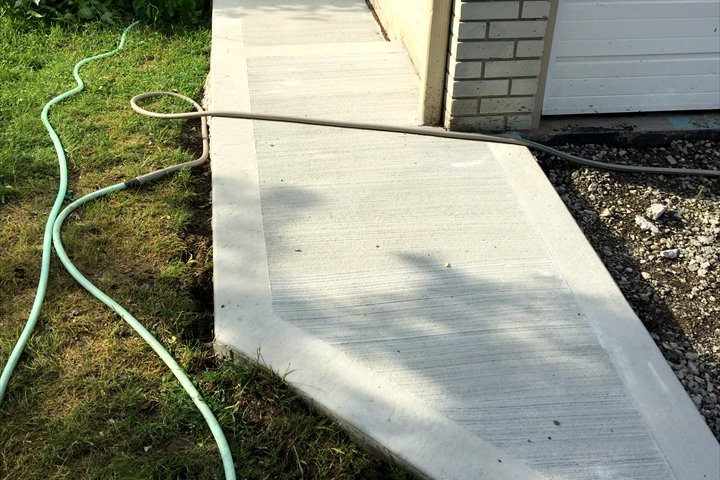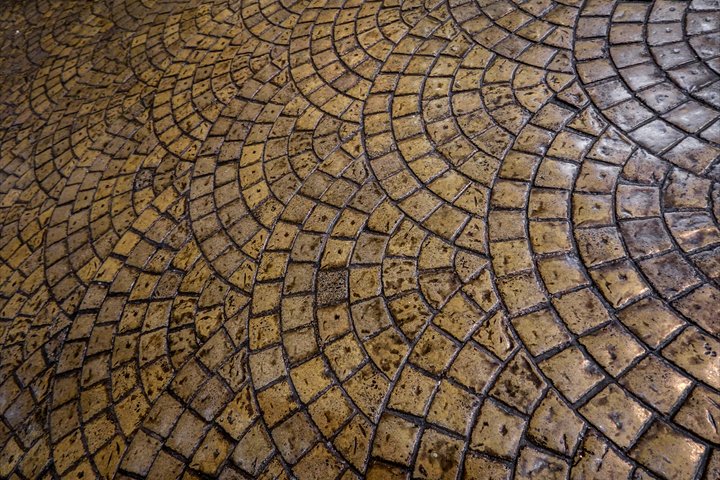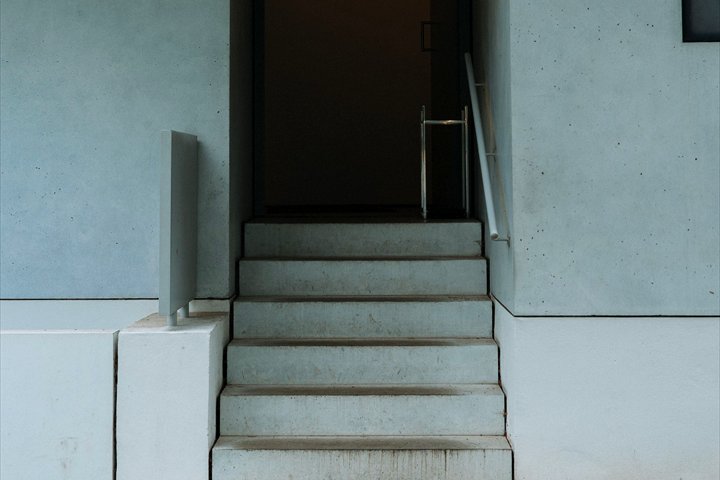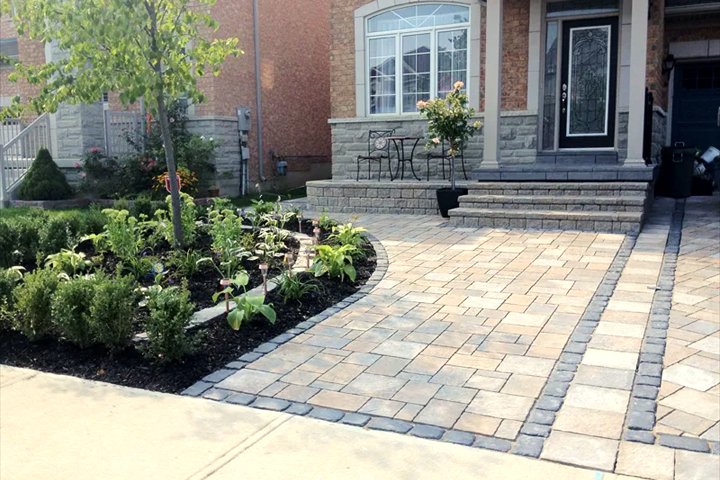
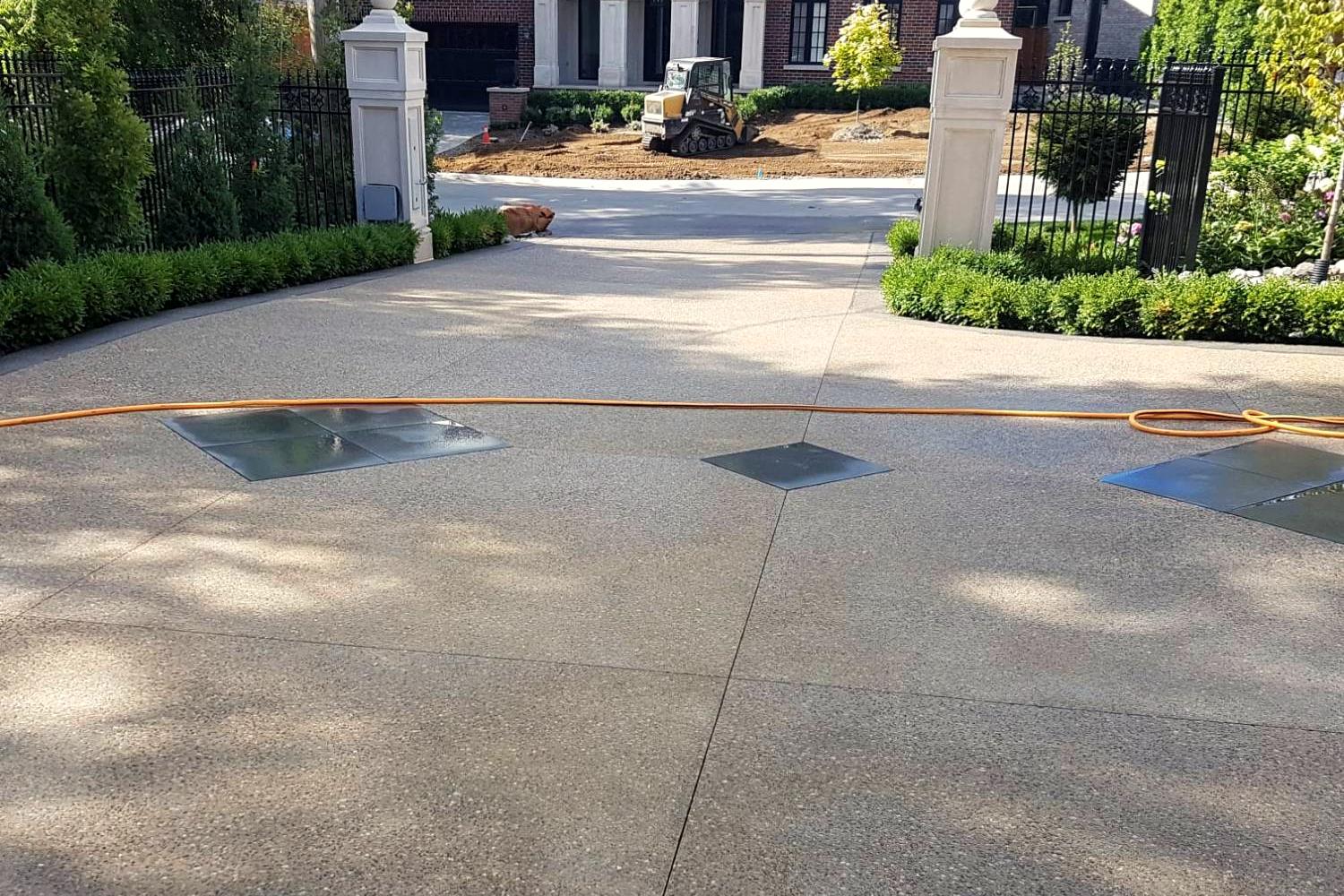
Every concrete slab has stone in it, hidden under a thin skin of cement paste. Exposed aggregate concrete is a slab where that skin is removed while the concrete is still fresh, so the tops of the stones become the surface. The pebbled finish grips under shoes and tires and hides dirt well, which is why it is a common choice for an exposed aggregate driveway, walkway, patio or set of steps.
Below the surface it is ordinary poured concrete, built like our concrete driveways and walkways. What changes is the finishing, and the choices you make about stone and texture.
How the stone is uncovered
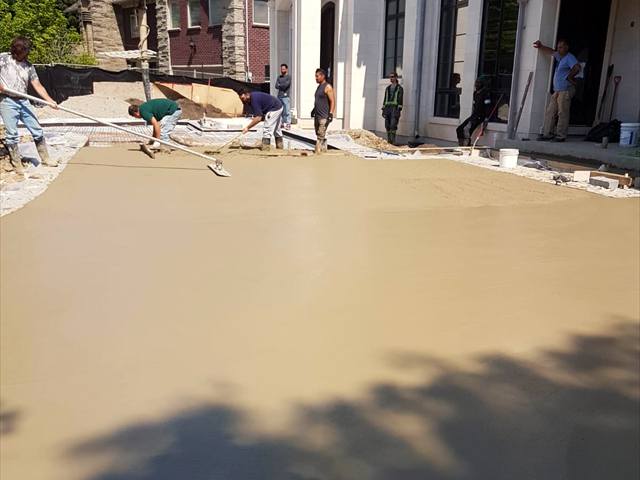
The slab is placed, levelled and floated like any other. Then the surface is opened up, in one of two ways.
Washing at the right moment
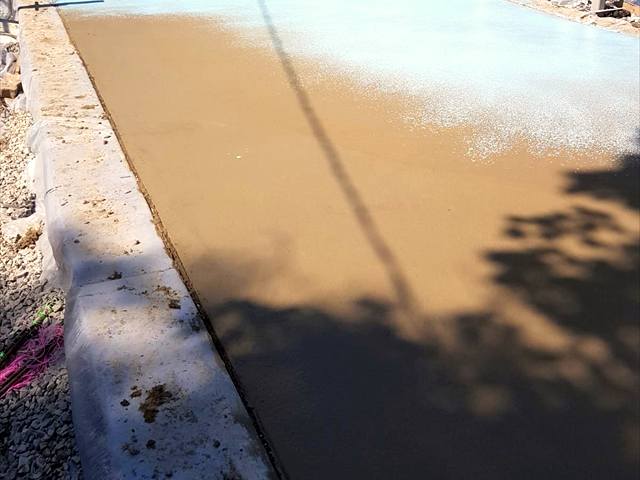
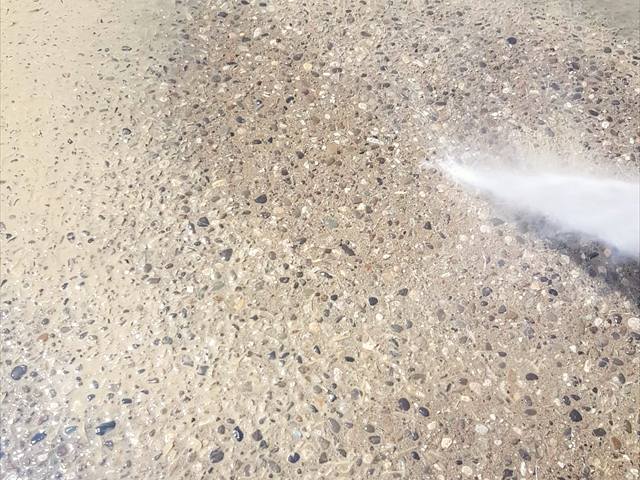
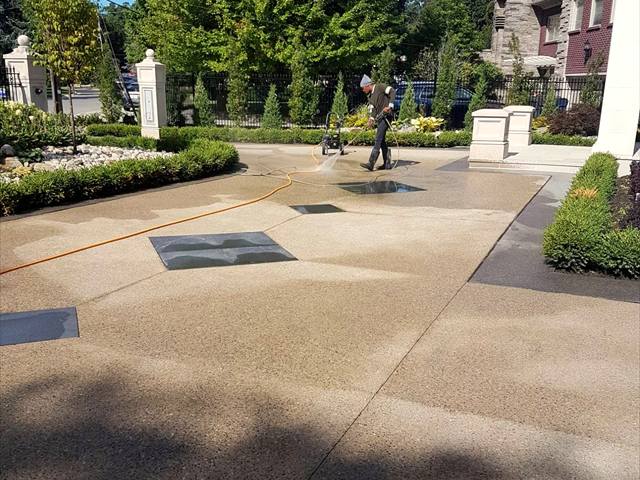
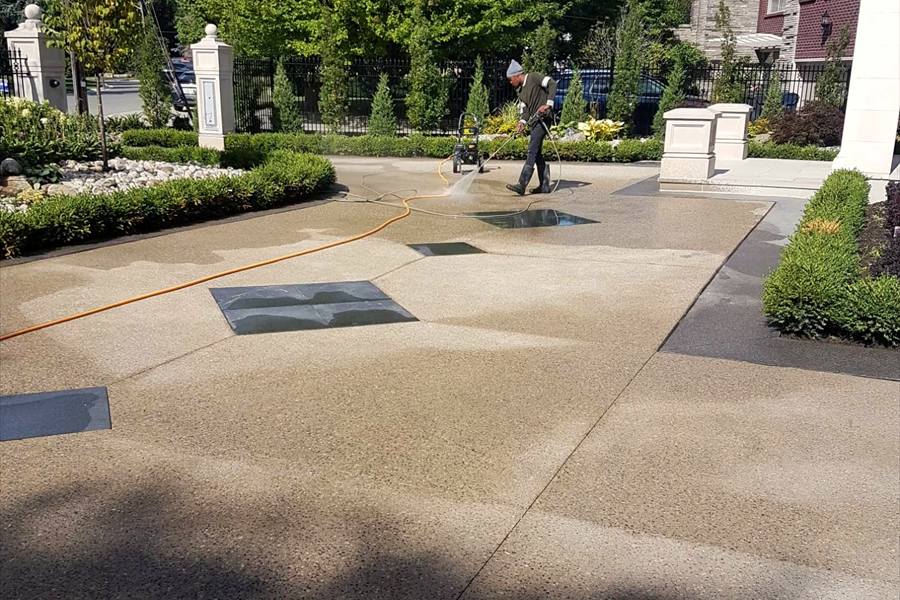
Once the concrete has set enough to hold the stones firmly, but the paste on top is still soft, the surface is brushed and rinsed. Timing is the whole job. Wash too early and stones come loose. Wash too late and the paste won't come off evenly, leaving grey, flat patches. Sun, wind and heat speed up the set, so a large driveway is often washed in sections.
Surface retarder
The other method sprays a surface retarder on the fresh concrete. It slows the setting of the top few millimetres while the slab below hardens, so the paste can be washed off later with a wider window, which helps on big areas and hot days.
Either way, the depth of exposure is a choice. A light exposure shows the tips of the stones and stays fairly smooth. A deeper one shows more of each stone, with more grip and a rougher feel.
Stone choices and colours
The stone sets most of the look, so choose it with care.
- Rounded or crushed. Rounded river stone and pea gravel feel smoother underfoot and suit patios and pool surrounds. Crushed, angular stone bites harder, which helps on a sloped driveway.
- Size. Small stone gives a fine, even texture. Larger stone looks bolder and feels rougher.
- Colour. Mixes come in greys, tans, browns and reds, some with black and white flecks. The paste between the stones shows too, and it can be tinted so the stone stands out or blends in.
- In the mix or seeded. The stone can be the concrete's own aggregate, or a decorative stone can be scattered over the fresh surface and pressed in, so a chosen stone shows without running through the whole slab.
Why exposed aggregate grips
A broom finish gets its texture from grooves dragged into the paste. Exposed aggregate gets it from the stone, which is harder than the paste around it. The stone tops stand slightly proud, water runs off between them, and shoes and tires have something to bite on. Broom grooves can wear smooth where tires turn every day; exposed stone holds its texture better. That makes it a good fit for:
- Sloped driveways, where tires need traction in rain and slush.
- Steps and porches, where a slip does the most harm. See concrete steps for how steps are formed.
- Pool decks, where wet feet are normal. Rounded stone with a light exposure grips without scraping.
- Walkways and garage aprons that take daily foot traffic in sleet and melting snow.
The slab underneath
An exposed aggregate patio or driveway fails for the same reasons any slab fails: a soft base, water with nowhere to go, or joints in the wrong place. So the groundwork is identical: a compacted granular base, forms set to the right slope, reinforcement, and control joints planned before the pour.
Two details are particular to this finish. Control joints are usually saw-cut after washing, because a jointing tool drawn through fresh concrete leaves a smooth line that stands out against the stone. And the wash water carries cement paste, so it is kept out of gardens, lawns and storm drains and cleaned up afterwards.
Where it suits, and where it doesn't
Exposed aggregate is at its best outdoors, on surfaces people walk and drive on. It hides oil drips, tire marks and leaf stains far better than plain grey concrete. It is a weaker choice in a few places:
- Bare feet and knees. Deeply exposed crushed stone is hard on bare feet and on children playing. Around a pool or play area, choose rounded stone and a light exposure. Dark stone in full sun also gets hot underfoot, so lighter stone is kinder on a pool deck.
- Small wheels. Tool chests, dollies and wheeled bins rattle over a textured surface. A garage or shed floor is better smooth or broom-finished.
- A uniform look. If the house calls for a smooth surface or a pattern, a broom finish or stamped concrete may suit it better.
Snow shovelling
The stones that give grip also catch a steel shovel edge. A plastic-edged shovel slides over without chipping stone or scraping paste. On a snowblower, set the skid shoes so the scraper bar rides just above the surface. If a snow removal company clears your driveway, ask for a rubber-edged or raised blade, because a steel plow blade loosens stones over time.
Upkeep and Ontario winters
Day-to-day care is light. A hose and a stiff brush in spring clear winter grit and salt residue, and most stains lift with mild detergent. Keep a pressure washer nozzle well back: a tight jet held close can cut into the paste between the stones.
Winter is the real test. Salt and de-icers pull water into the surface, and freeze-thaw cycles break down the paste. Every slab faces that scaling risk, but on an exposed surface the paste is what holds the stones in, so losing it lets stones work loose. The first winter is the riskiest. Sand gives traction without the damage, and a slab that drains and dries between storms holds up far better than one that sits wet.
Exposed aggregate vs stamped concrete vs broom finish
All three are finishes on the same kind of slab. This is how they compare once they are down.
| Question | Exposed aggregate | Stamped concrete | Broom finish |
|---|---|---|---|
| Look | Pebbled, in the colours of the stone. | A stone, slate or brick pattern, often coloured. | Light grey with fine grooves. |
| Grip in rain and ice | Strong, from the stone itself. | Lower. It can be slippery when wet. | Good, though grooves can wear smooth in tire paths. |
| Dirt and tire marks | Hides them well. | Pattern and colour hide some. | Shows them. |
| Snow clearing | Steel edges catch the stone. | Steel edges catch the pattern and scrape the colour. | Easy with any shovel. |
| Salt damage looks like | Loosened stones. | A worn pattern and faded colour. | A rough, flaking surface. |
| Patching later | Same stone, but the shade rarely matches. | Hard to match pattern and colour. | Easiest to blend. |
If you are still choosing the material as well as the finish, an asphalt driveway costs less and handles salt better, and interlocking pavers can be lifted and relaid when something underneath needs fixing.
Exposed aggregate in Vaughan and nearby: what to send for a quote
We pour exposed aggregate driveways, walkways, patios, steps and pool surrounds from our office in Vaughan, in Woodbridge, Maple, Kleinburg and Thornhill, across York Region, and in Toronto and Peel. For an estimate that fits your property, send:
- Rough measurements, and photos of the whole space.
- What the surface is for: cars, foot traffic, a pool, or something heavy.
- Any stone or colour you have seen and liked.
- Whether bare feet or a slope are involved, so the stone and exposure depth can be matched.
- Where water goes now, and what has to come out first.
Send it through the form on this page or the contact page. The free written estimate sets out the base, slab thickness, reinforcement, stone and finish, so you can compare it line by line.