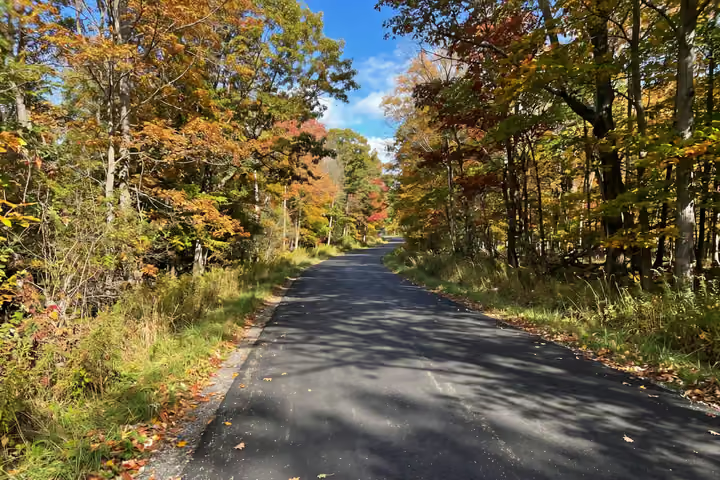
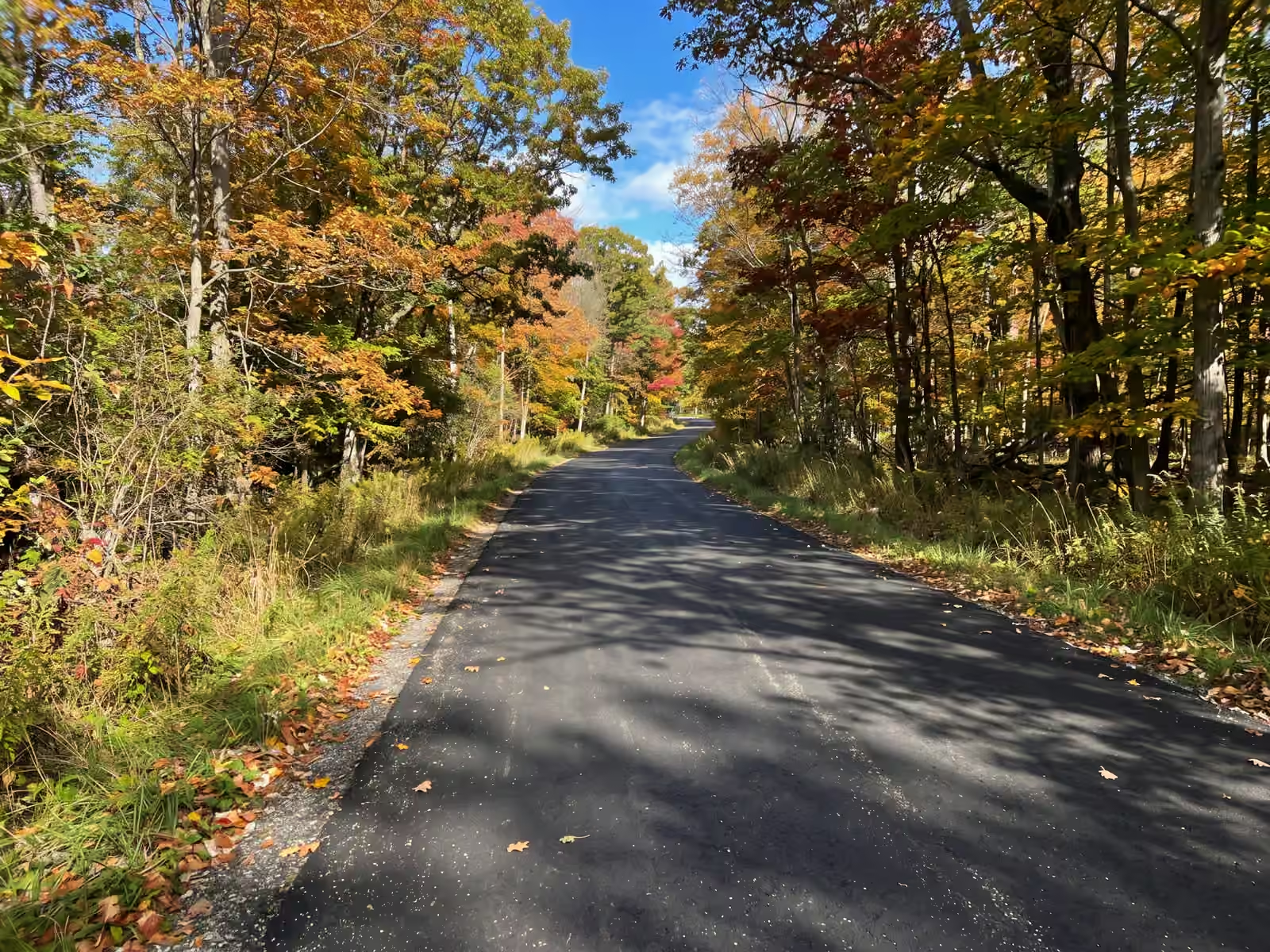
Much of Whitchurch-Stouffville, especially the hamlets, sits on the Oak Ridges Moraine: sand and gravel left by glacial meltwater, dotted with kettle lakes such as Musselman’s Lake and Preston Lake. That ground shapes how a driveway base is built here. The other thing that shapes the job is where you are: a subdivision lot in Stouffville itself, or a long driveway out in the hamlets.
Building on moraine sand and gravel
Moraine ground behaves differently from the silty, clay-bearing glacial tills found across much of the GTA, which drain slowly and are frost-susceptible. Sand and gravel let water through, which helps a base. But the moraine isn’t uniform. Patches of clayey-silt till sit on top in places, and the water table can be high, especially in low ground.
What that means for the build:
- Compaction counts for more than usual. Loose sand shifts under a car if it isn’t compacted, and edges can slump into a garden or ditch. The stone base goes down in compacted layers and runs past the edge of the asphalt to hold it up.
- Wet spots get dug out. A dip in the old driveway often marks water or soft material in that spot. It comes out once the old surface is lifted.
- Slope still decides the outcome. A driveway that drains toward the garage fails at the door, whatever the soil. It has to shed water away from the house.
Newer subdivisions in Stouffville
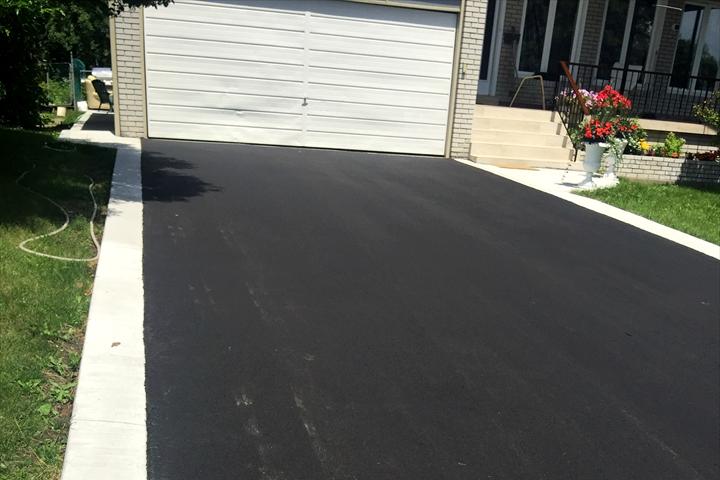
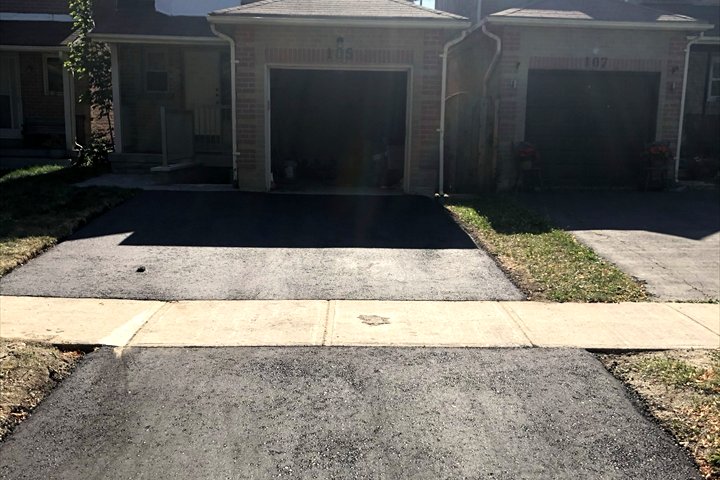
Stouffville has grown quickly, and many homes sit in newer subdivisions. On those lots, the ground around the house was disturbed during construction. Backfill against the foundation settles, so driveways tend to dip in front of the garage, and the trench for the water and sewer services can show as a shallow sunken strip across the driveway.
Both are base problems, not surface ones. An overlay on top follows the dip. The fix is to dig out the settled material, rebuild with compacted stone and shape the surface to drain toward the street. On the older streets around Main Street, the questions are more often mature tree roots and driveways that have been topped up more than once.
From gravel to asphalt
Many rural driveways here are gravel, and paving one for the first time is a different job from replacing asphalt. Old gravel is rarely a ready-made base. Years of grading and plowing push stone to the sides, ruts fill with soil, and low spots hold water.
The usual sequence:
- Look at the low spots first. Anywhere water crosses or sits after rain needs a solution before paving, often a rebuilt, raised base or a new path for the water.
- Dig out what’s soft. Ruts, organic material and wet patches come out and are replaced with compacted stone.
- Regrade and compact the rest. Sound gravel can stay and be shaped to a crown or cross-slope so water runs off both sides or one.
- Pave and finish the edges. The stone runs past the asphalt, and the shoulders are dressed so the edge doesn’t hang over loose material.
Long driveways in the hamlets
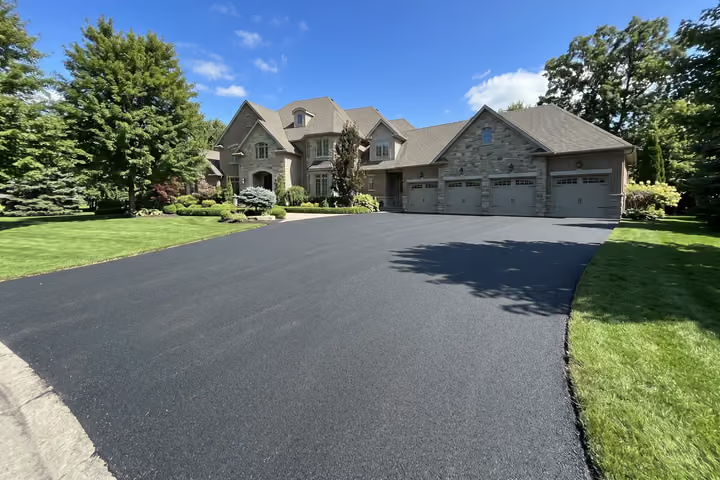
Outside Stouffville itself, in Ballantrae, Gormley, Vandorf, Bloomington, Lemonville, Ringwood or Vivian, a rural lot often means a longer driveway. Length brings its own problems: water crossing at low points, soft shoulders, a ditch and culvert at the road, and delivery trucks that need room to turn. On a lot in low ground or near one of the kettle lakes, plan the drainage before anything else. Where groundwater sits close to the surface, the base has to be built up out of it.
Length also changes the price quickly, because area drives most of the cost and a rural driveway can be several times the size of a subdivision one. The cost guide explains what moves a job up or down.
Choosing the work
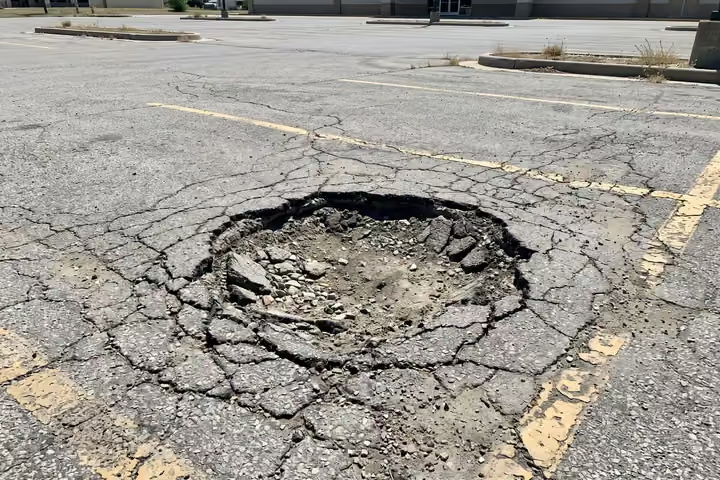
On a rural lot, the job may be paving a gravel driveway for the first time, which is a new asphalt driveway. On a subdivision lot in town, it’s more often a replacement over a settled base, a widening, resurfacing a worn but firm surface, or asphalt repair and hot rubber crack filling for isolated damage. For plazas and offices in Stouffville, see parking lot paving, parking lot repair and line painting.
For a rural driveway, pace out the rough length and note where water crosses it after rain, then send us both. Those two details shape the estimate more than anything else. Neighbouring areas: Markham, Aurora and Richmond Hill.