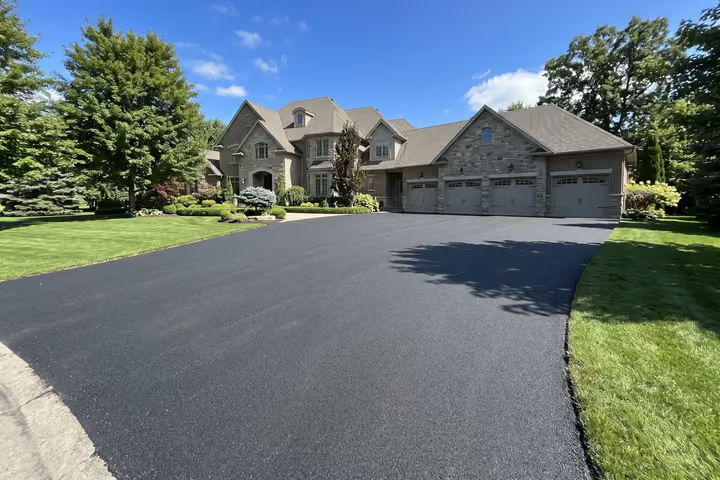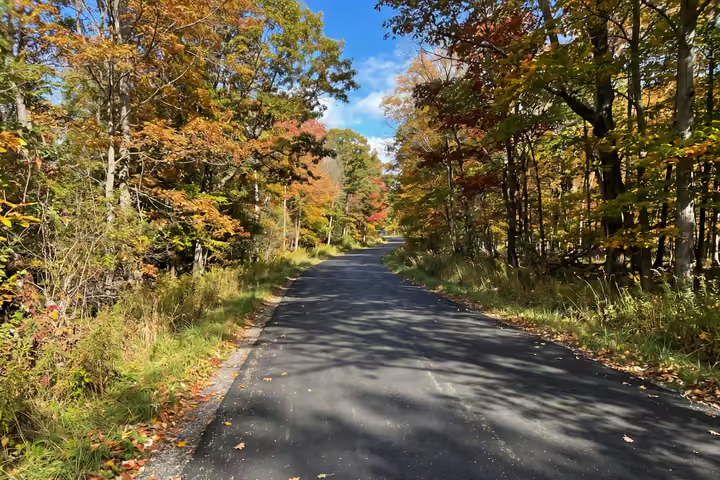
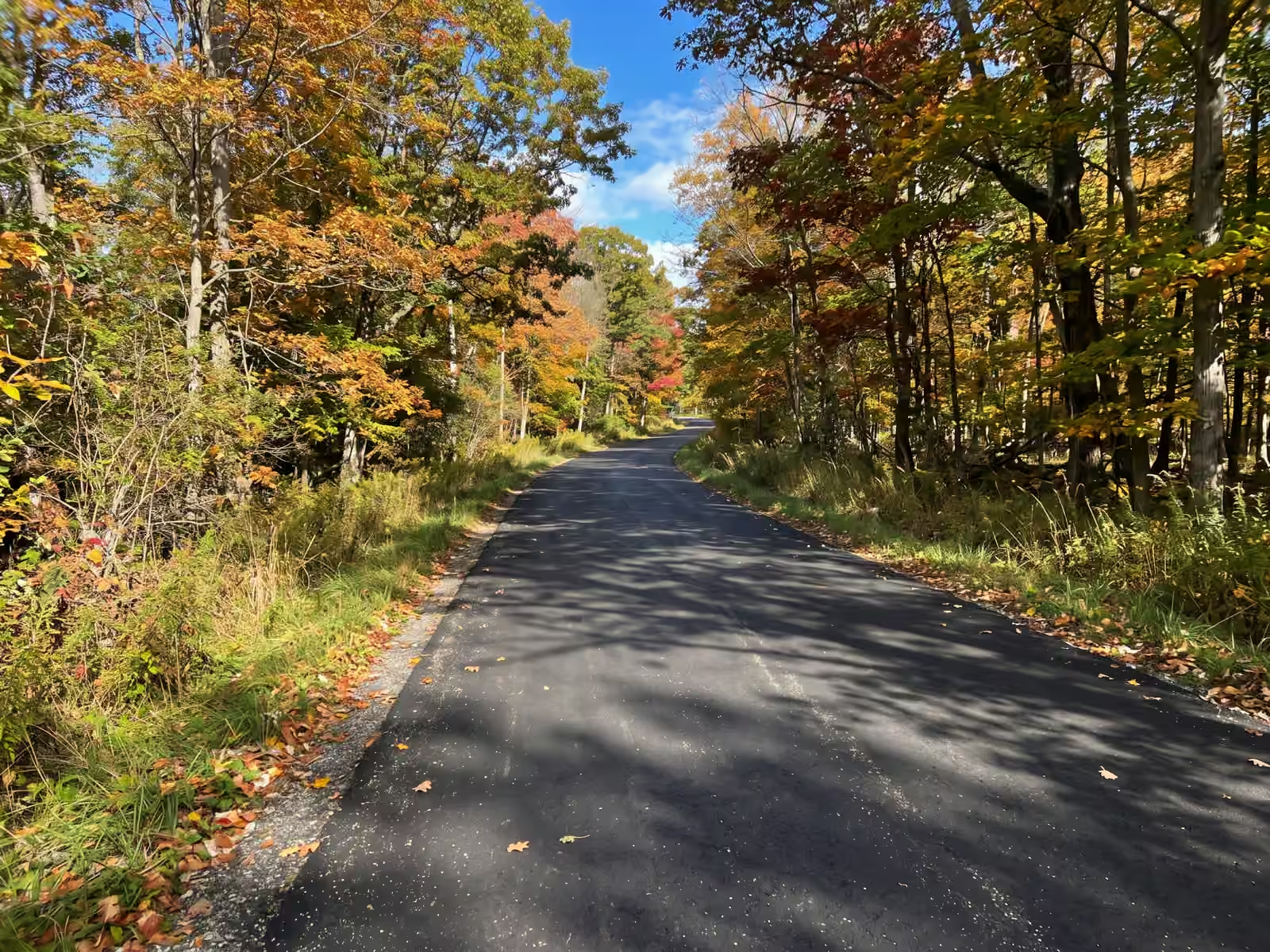
On the rural lots around Kettleby, Pottageville, Laskay and Snowball, and across most of King Township, the house sits well back from the road. The driveway is closer to a small private road: a culvert at one end, a parking court at the other, and a long run of mixed ground between them. Paving in King City and Nobleton also takes in ordinary subdivision driveways. The long lanes come first: that’s where the money and the mistakes are.
One lane, more than one kind of ground
The Oak Ridges Moraine runs across King Township. It is sand and gravel, with a high water table in places. Across much of the rest of the township the ground is silty, clay-bearing glacial till that drains slowly and is frost-susceptible. A long lane can cross both.
An old lane shows where the changes are. Stretches that heave and crack sit on ground that holds water, which freezes under the base and lifts it. Stretches that stay flat but shed their edges are often on loose sand, with a base too narrow to hold it in. So the build isn’t one recipe repeated from road to house: more stone where the ground stays wet, and a base raised above the water in low spots.
Paving a gravel lane for the first time
A gravel lane is a record of the ground. Hard wheel tracks mark a firm base. The spots that swallow fresh stone every spring mark soft ground, and those are dug out and rebuilt in compacted stone before any asphalt goes down.
Two decisions are cheapest now:
- Width. On a lane 150 metres long, as an example, each extra metre of width adds 150 square metres (about 1,600 sq ft) of paving, more than most subdivision driveways. Pick the width the fuel truck and the plow need, then widen only where vehicles pass or park. The driveway cost guide covers what else moves the price.
- Line. A lane that kinks around a long-gone fence post or dips through a hollow can be moved to drier ground. Once it’s asphalt, moving it means paying twice.
Hills, swales and water from the land around
On a large lot, most of the water on a lane doesn’t fall on it. It runs off the lawn, paddock or field uphill. A lane cut across a hillside needs a shallow swale along its high side to catch that water, and a surface tilted so rain leaves sideways within a few metres. Water left to run the length of a hill is a stream by the bottom, and it takes the shoulder with it.
Where water has to cross the lane, it needs a pipe underneath. We pave over existing pipes that are sound. Installing or replacing one is a drainage contractor’s job, finished before the base goes in.
The road end
A rural King lane usually meets the road over a ditch and a culvert, and the culvert’s length sets the width of the entrance. Flare the asphalt wider than the pipe and the corners hang over the ditch slope, where the first delivery truck to cut the turn drops a wheel and breaks them off. Keep the asphalt within the pipe’s length, and build the corners on a stronger base. The road end takes the plow’s windrow and every turning tire, which is why it gets more stone than the straight run.
Trucks on a single lane
On a lane one vehicle wide, loaded trucks can’t pass each other, so deliveries are spaced out. Paving usually starts at the house and works back toward the road, so no loaded truck crosses fresh asphalt. Look up, too: a raised dump box has to clear any hydro and phone wires over the lane.
Which stretches need what
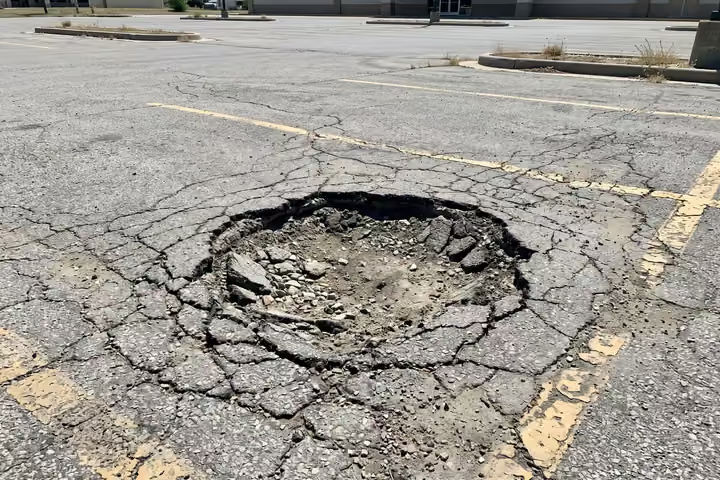
A paved lane rarely fails everywhere. Stretches where the base has gone, with tight cracking, ruts or dropped edges, need a full rebuild; a stretch that is rough but still flat can take resurfacing only where there is room for a full layer of new asphalt, because a thin one doesn’t last. A few open cracks or a single pothole go to asphalt repair.
Resurfacing raises the lane, so the shoulders are topped up to meet the new edge. Leave a drop there and the next tire breaks it off. For a lane shared by several properties, see private roads.
Subdivision lots in King City and Nobleton
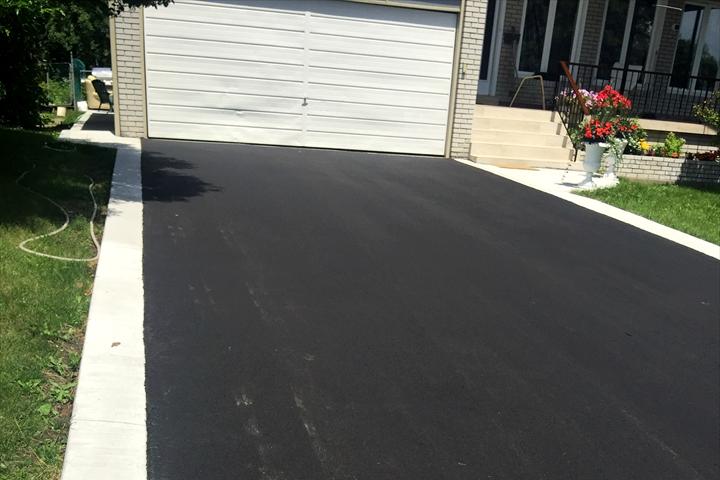
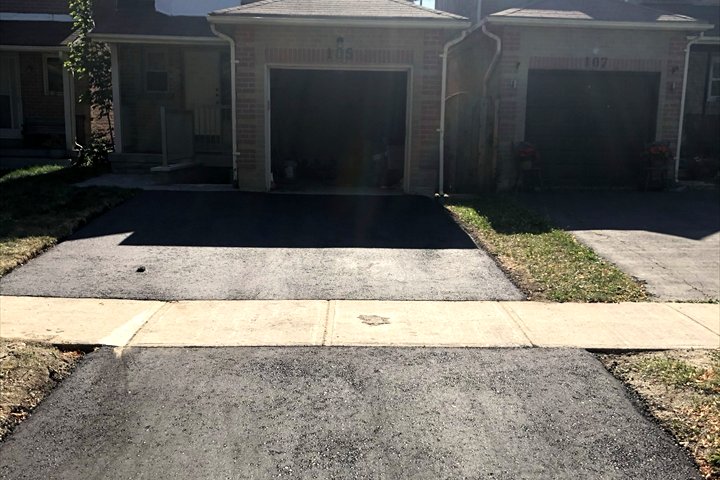
The newer streets here are a different job: a short, wide driveway with a curb at the street. A driveway two or three cars wide has little fall to work with, so small low spots become puddles that freeze. It needs one steady slope to the street, and any sunken strip at the garage rebuilt in stone first. For more parking, see driveway widening.
When to walk it and when to pave it
The best time to look at a lane is the spring thaw, when soft spots and water crossings show. Those same weeks are the worst time to run loaded trucks down it, so the walk happens in spring and the digging waits for firmer ground. A long lane also needs several dry working days in a row, which get scarce late in the fall, so book it earlier than a short driveway.
When you ask for a free written estimate, tell us roughly how long the lane is, whether it’s gravel or asphalt now, and whether a full-size truck can turn around at the house. Next door: Aurora and Kleinburg.