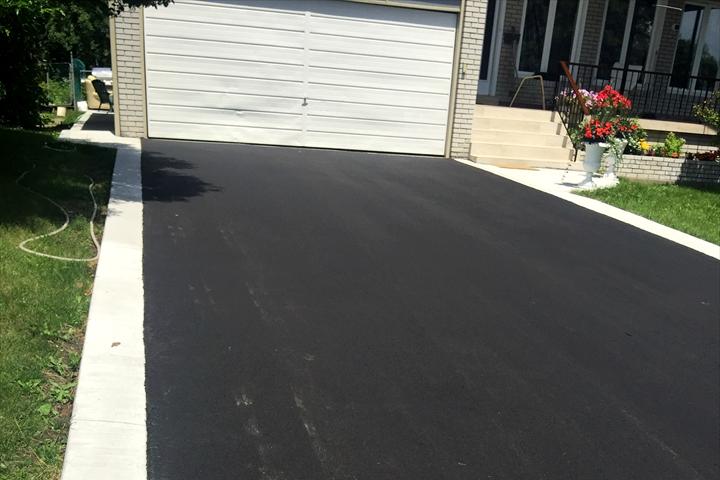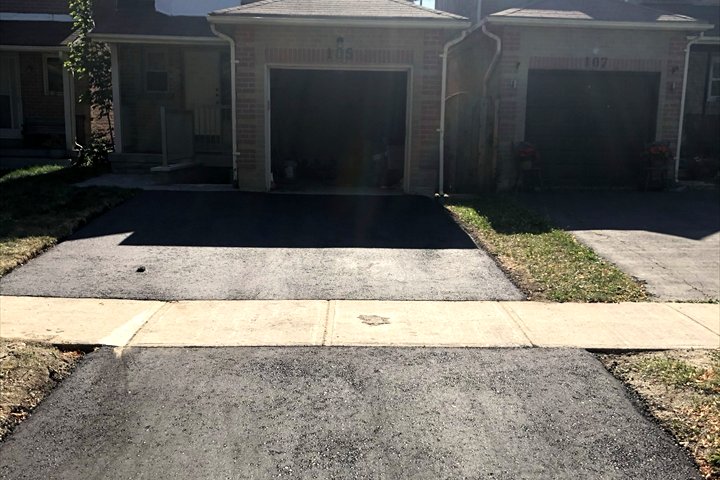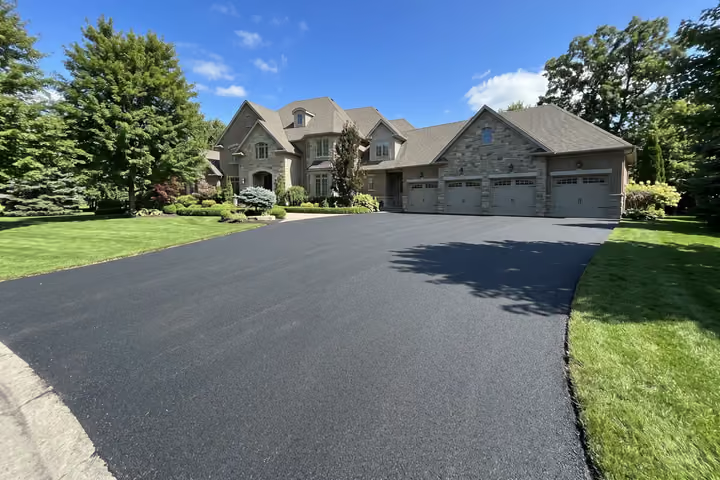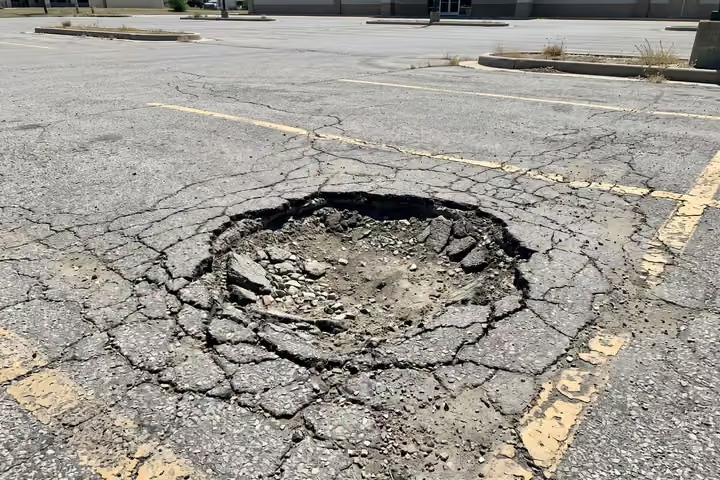
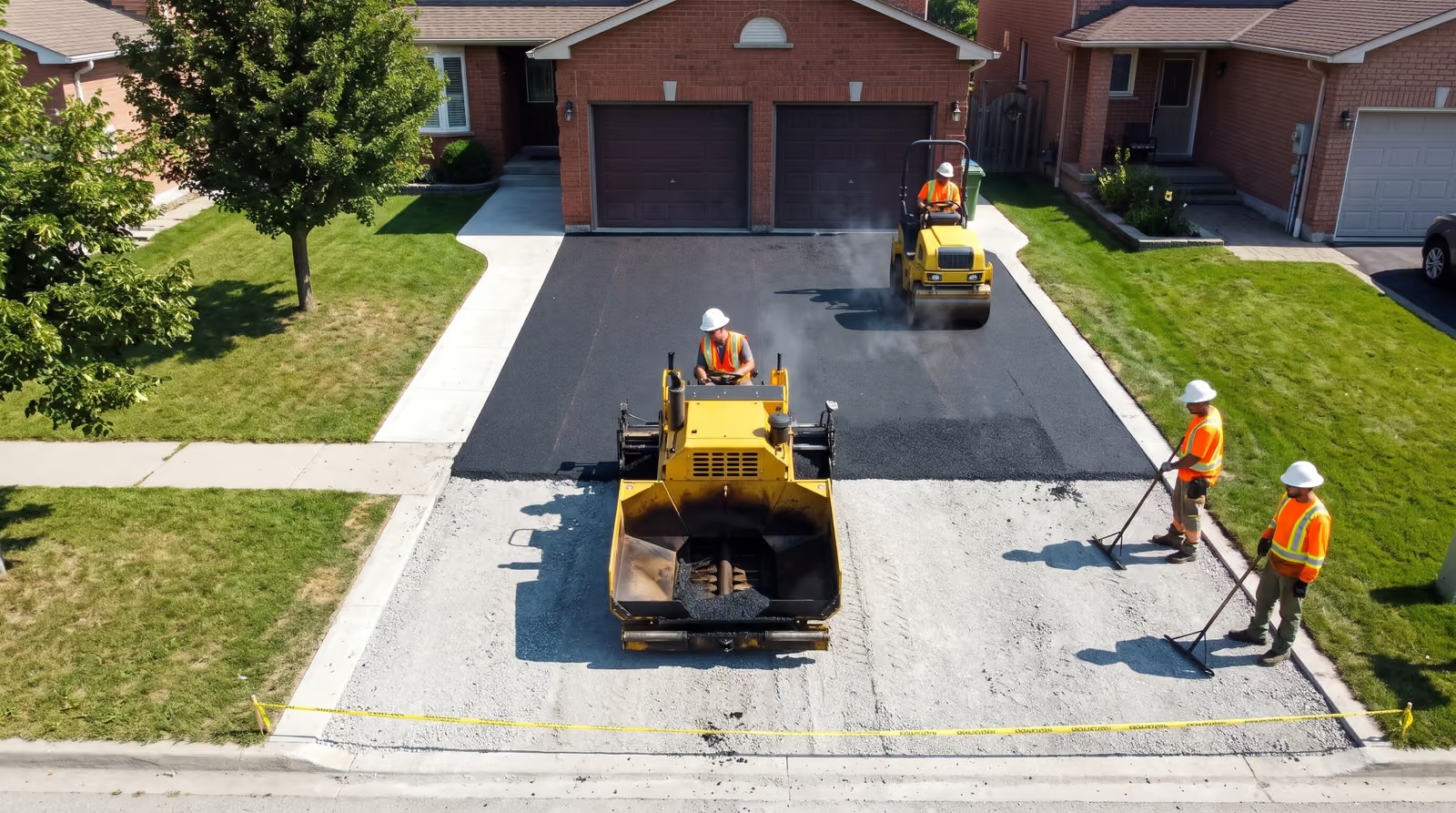
Many Woodbridge driveways have been paved more than once, and by the time a second or third surface wears out, the real question is what’s happening underneath. If the base is still firm, the driveway may only need a new top layer. If it has gone soft, nothing laid on top will last. Telling the two apart is the first job on any older driveway here.
Replace, resurface or repair
The surface usually tells you which one you’re dealing with.
- Replace when cracks come back every spring in the same places, the asphalt sinks where the car sits, or dips hold water for a day after rain. Those all point to a base that has given out. The lasting fix is a full replacement: dig out, rebuild the granular base, pave.
- Resurface when the base is sound and the surface is just worn: grey, ravelled, with fine cracks but no sinking, and there is height for a full layer. A new layer over the old one, explained on our resurfacing page, costs less than a replacement and gives you a new surface.
- Repair when the problems are isolated: one pothole, a cracked edge, a few open cracks. Patching and hot rubber crack filling buy time on a driveway that’s otherwise holding up.
Resurfacing has a catch that decides most driveways. To last, the new layer needs roughly 1.5 to 2 inches of asphalt, because new asphalt never fuses to old and a thinner layer works loose. That height has to go somewhere, so along the garage slab, sidewalk and walkway the old asphalt is cut or milled down first. Skip that and you get a lip at the garage door with water running toward it, or a layer too thin to hold.
Older lots near the Humber
The Humber River runs through Woodbridge, and much of the ground in this part of the GTA is silty, clay-bearing glacial till that drains slowly and is frost-susceptible. Ground like that holds water under a driveway, and freezing water lifts it. What’s under yours only shows once the old asphalt comes up, and anything soft or wet gets dug out.
Streets closer to the valley also have more grade change. A driveway that falls toward the garage sends every rainstorm at the door. A replacement is the one chance to reshape that slope, so the new surface falls toward the street or a lawn edge instead, and that’s worth raising when the driveway is measured.
Swapping interlock for asphalt
Some Woodbridge homes have interlock driveways that have heaved, sunk or grown weeds in every joint, and owners want asphalt instead. The pavers come out, and so does the bedding sand under them, because loose sand is a levelling layer for pavers, not a base for asphalt. What’s under the sand varies a lot, so the stone base is checked once it’s exposed and rebuilt where it’s thin or soft.
Interlock driveways often have a concrete or stone edge restraint along the sides. If it’s staying, the asphalt is finished against it. If it’s coming out, the new asphalt edge needs its own compacted base beside it. An interlock walkway or step that stays is left as it is, with the asphalt meeting it flush. If it has sunk or shifted, we can re-level it in the same job.
Narrow driveways between houses
Semis, townhouses and older detached homes on tight lots often have a driveway squeezed between two walls. That changes how the job is done, and the extra hand work can raise the price per square foot:
- Smaller equipment. A narrow driveway can’t take the largest machines, so more of the work near walls and corners is done with smaller rollers and hand tools.
- Things in the way. Air conditioners, gas meters, downspouts and window wells beside the driveway need clearance and protection while the old surface comes out.
- Water with nowhere to go. Between two houses, roof water from both sides lands on the driveway. The new surface needs a clear fall toward the street, and downspouts are best redirected before paving.
- Cars and neighbours. The driveway is out of use for the paving and the first day or two after, so plan where the cars will park.
Replacing now, widening later
If you’re replacing anyway and might want more width, decide now. We repave the whole driveway when we widen, so adding width a few years later means paving the same driveway twice. Doing both at once puts everything on one base with no seam. Our Vaughan driveway widening guide explains how the added area is built. Prices and what moves them are in the driveway cost guide.
Not sure whether yours needs a replacement or a resurfacing? When you ask us for an estimate, ask for both to be priced. Seeing the two numbers side by side, with the reason one would last longer, makes the decision much easier.