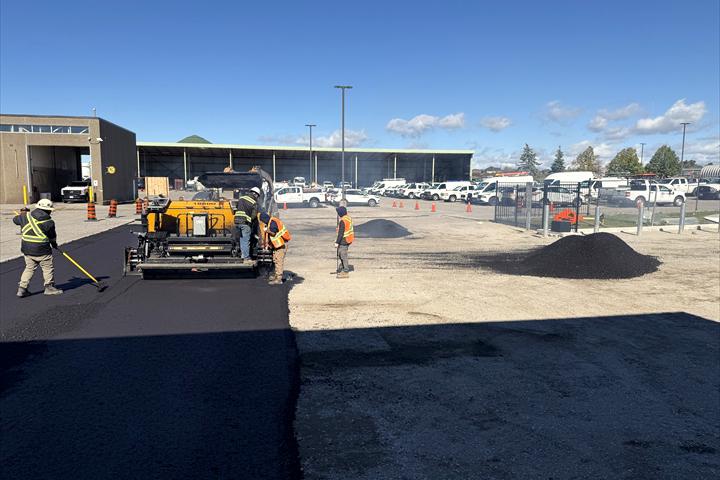
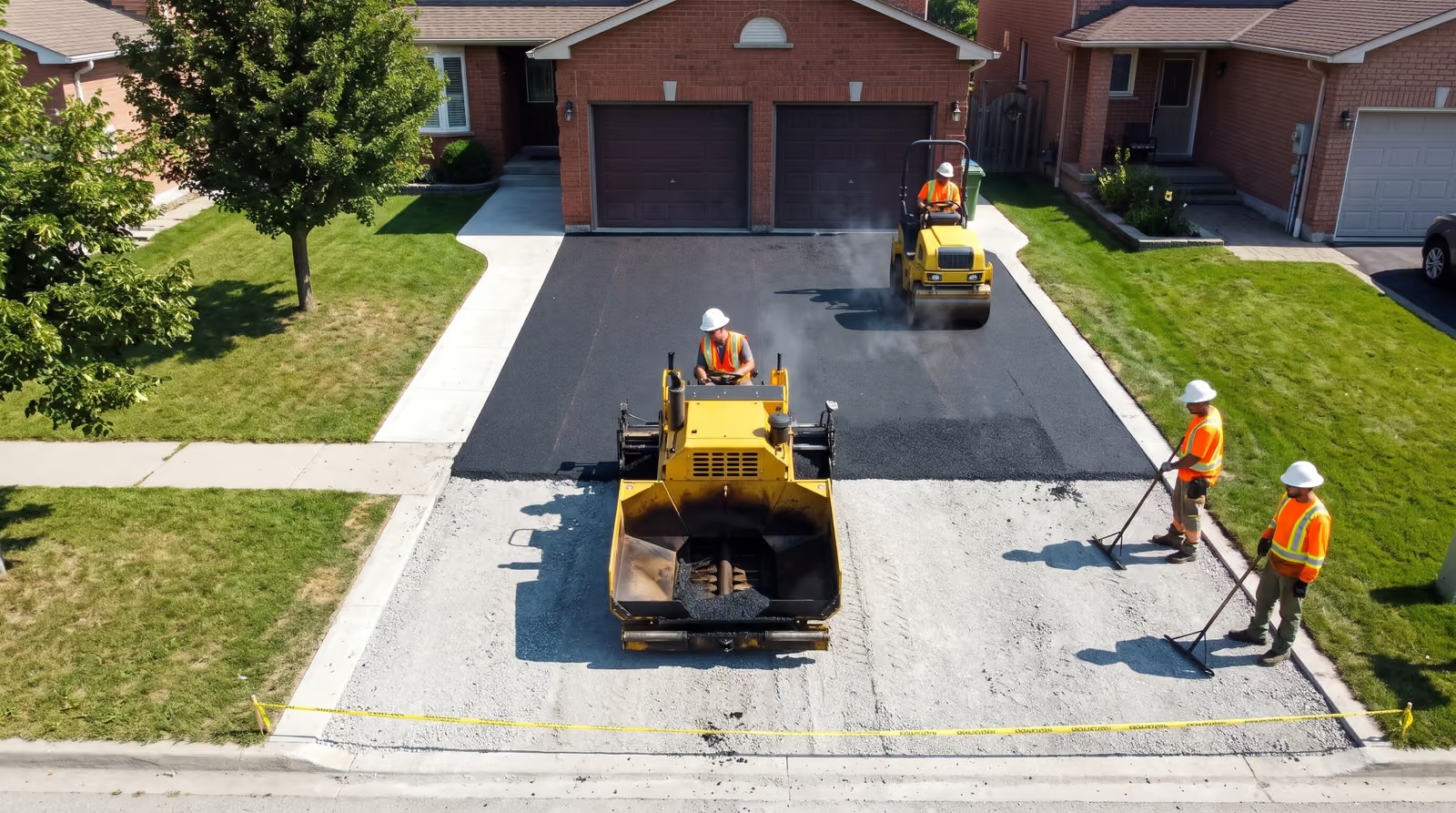
Richmond Hill sits on two kinds of ground. The Oak Ridges Moraine covers roughly the northern third of the city, including the Oak Ridges area. Further south, toward Richvale and Langstaff, the ground is closer to the glacial till found across much of the GTA. A driveway here has to be built for whichever one is under it, and in the north, for the slope it sits on too.
Moraine ground in the north
The moraine has a sand-and-gravel core, with patches of clayey-silt till on top in places. Sand and gravel drain well in general, but the moraine’s loose, porous ground can hold a high water table, so one lot can be dry in one corner and wet in another.
For a driveway, the risk is a base sitting in groundwater. Stone that stays saturated loses strength, and when it freezes it lifts the asphalt. Signs to look for on a moraine lot:
- Sinking in one area of the old driveway, which often points to water underneath that spot.
- Wet or soft subgrade once the old surface comes up. It has to be dug out and replaced, not paved over.
- Water that collects at the garage after rain. The new base needs shaping so surface water leaves quickly.
Sloped lots in Oak Ridges and around Lake Wilcox
The moraine’s surface is rolling, and many northern lots sit on a grade. A driveway that climbs or drops to the street brings its own problems. Water runs down it fast and collects at the low end, either at the street or, worse, at the garage. Loose sand at the edges washes out if water runs along them. And a steep surface is harder to compact: the asphalt has to be placed and rolled in passes the roller can handle safely, usually working up from the bottom.
On a sloped lot, the plan starts with where water leaves the driveway. Edges on a slope need a base that runs well past the asphalt, so runoff doesn’t undercut them.
Till further south
South of the moraine, much of the ground is silty, clay-bearing glacial till that drains slowly and is frost-susceptible. Here water doesn’t sink away. It sits on top of the subgrade. The fix comes from the other direction: enough compacted stone to carry the load, and a surface sloped to shed water before it can reach the base.
Snow piled at the end of the driveway melts in the afternoon and refreezes overnight, and the apron takes the worst of it. That’s the stretch to build carefully and to keep crack-filled.
Large lots and long driveways
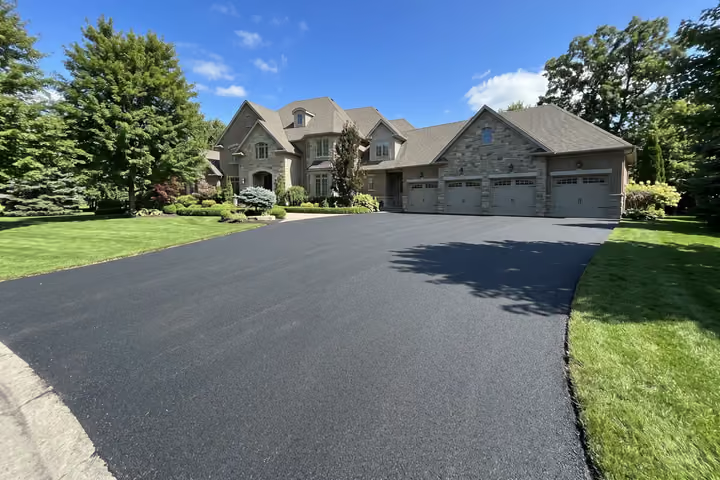
Some Richmond Hill lots are large, with long or circular driveways. Length changes the plan more than the method. A long driveway rarely fails evenly: one stretch over wet ground breaks up while the rest stays firm. Rebuilding the failed stretches and resurfacing the rest can be a better spend than tearing out everything. Delivery trucks and the paver also need room to turn, so a long driveway is often paved in a sequence that lets them back out.
Replacement, widening or repair
If you’re replacing an existing driveway, the questions are base and drainage, and they depend on which ground you’re on. If you’re widening, the new strip needs its own base, built for the same ground as the rest. A driveway that’s firm but worn, with height to spare at the garage, may only need resurfacing, and isolated damage can go to asphalt repair. The cost guide covers pricing.
Catch basins on commercial lots
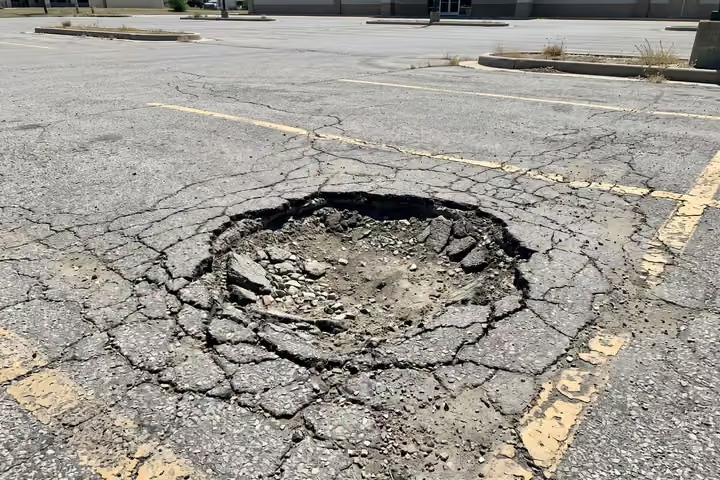
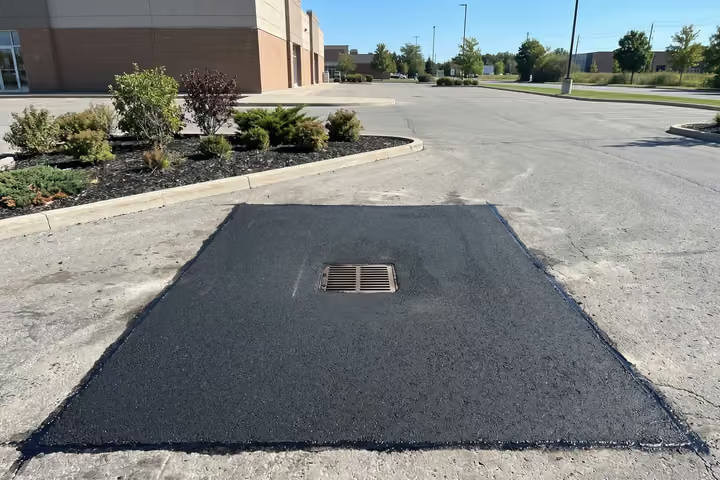
On plazas, offices and multi-unit sites, high groundwater and slow-draining till both end up at the catch basins. A basin that has settled or cracked lets water into the base around it, and the asphalt fails in a ring. See catch basin repair, parking lot paving, parking lot repair and our maintenance programs.
When you request a quote, tell us your neighbourhood and whether the driveway runs uphill or downhill to the street. On a moraine lot, add a note on any spot that stays wet for days after rain.