Faded lines cost a property manager more than paint. When stall lines, fire routes and accessible stalls wear away, drivers make their own rules: fire routes get blocked, accessible stalls get misused and cars clip each other in the drive aisles. Lines decide where cars park, how traffic moves, where people cross and where a fire truck gets through.
We paint lines on lots we have just paved and on existing lots that need refreshing.
What we paint: line striping, stalls and fire routes
Stall lines
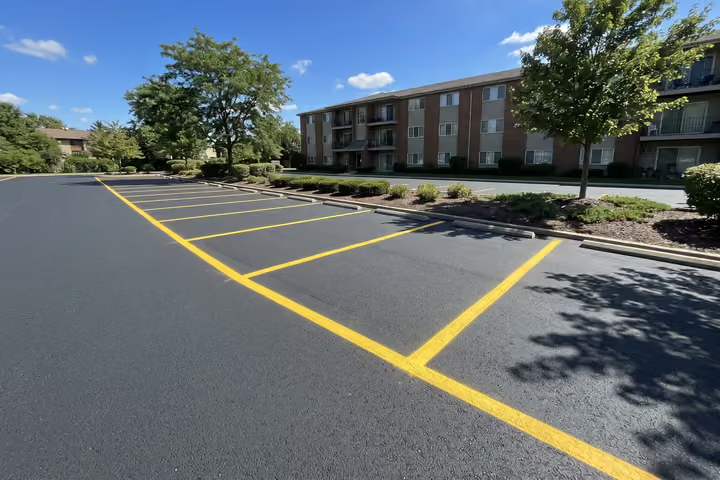
Standard parking stalls, angled or straight, with the stall count planned to suit the drive aisles and how the lot is used. Compact, visitor and reserved stalls can be marked or stencilled.
Fire routes
Fire route markings show the lane kept clear for fire trucks and ambulances. Repaint them to match the route on your site plan, not the faded paint, which may have drifted over several restripes.
When the lines are redone, walk the whole route at the same time. Faded paint is obvious, but damage further along, like a broken curb or a sunken patch, is easy to miss.
Accessible parking stalls
Accessible stalls, their access aisles and the accessible symbol. These are the markings drivers most need to read clearly, so they belong near the top of the repaint list each year.
Arrows and traffic flow
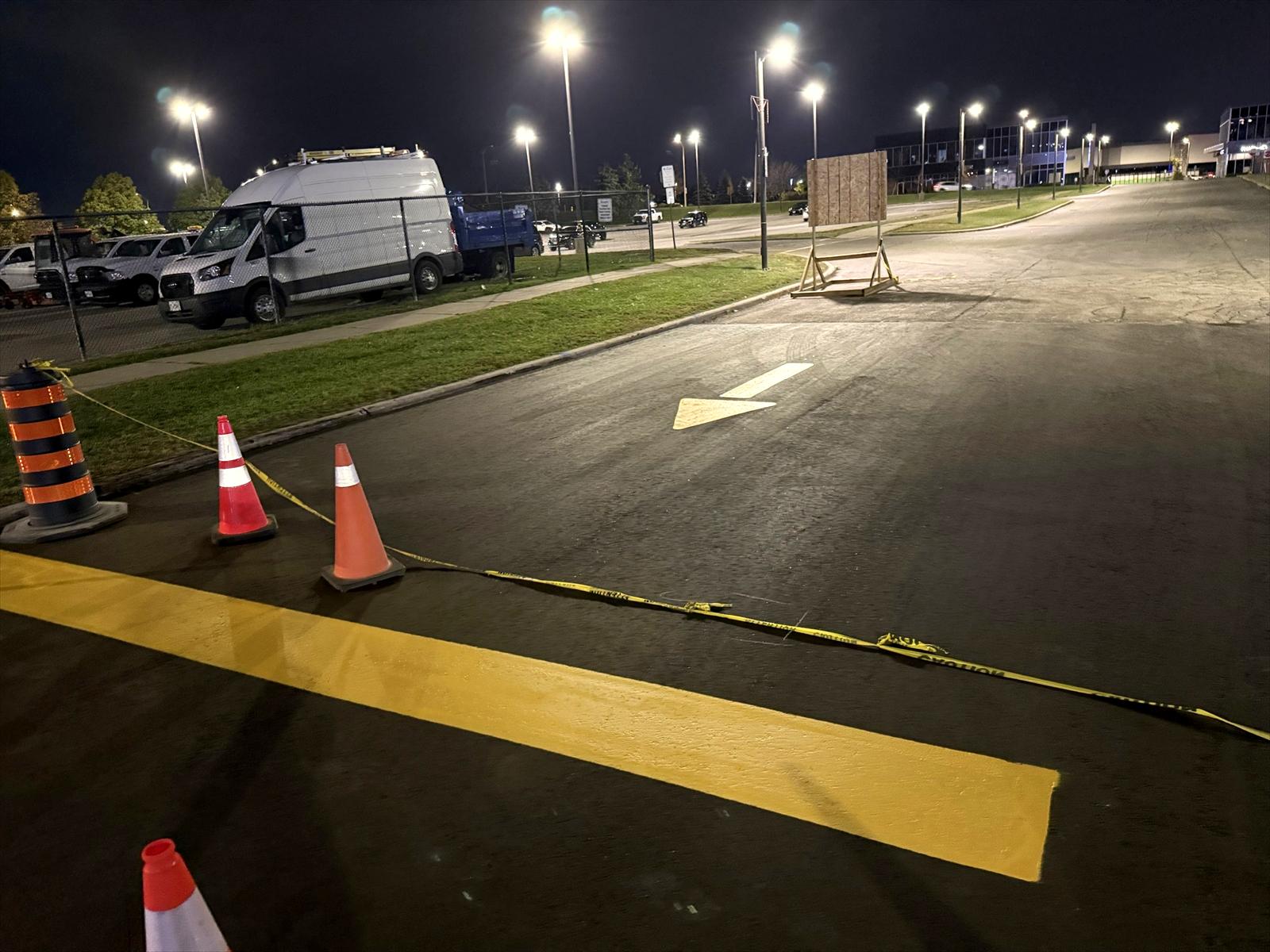
Directional arrows, one-way markings and stop bars that guide traffic through the lot, especially at entrances, exits and around drive-throughs or pickup areas.
Crosswalks
Pedestrian crossings from the parking area to building entrances, so people walking have a clear path and drivers know where to expect them.
Loading zones and no-parking areas
Hatched no-parking areas, loading zones, curbside pickup stalls and areas kept clear for garbage bins or snow storage.
Starting from a blank lot
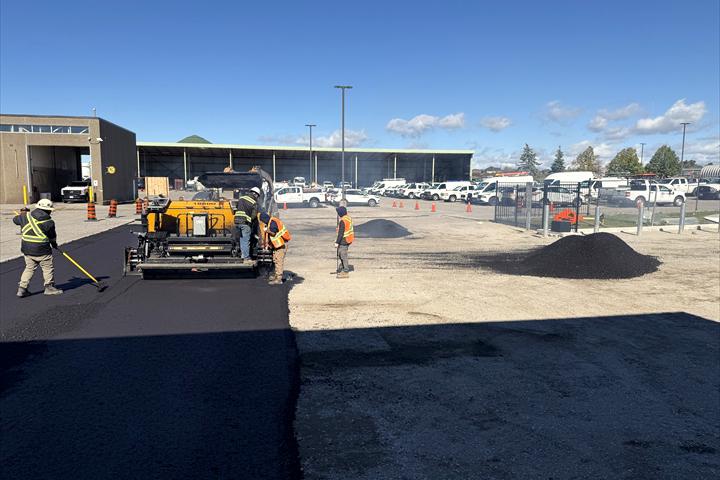
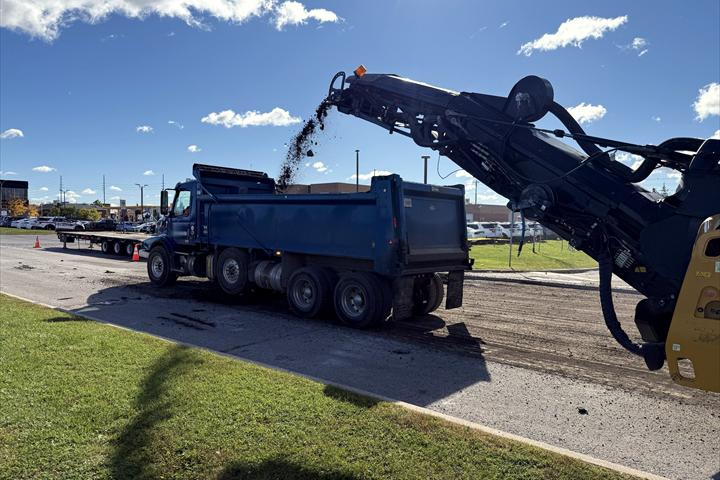
A newly paved or milled lot has no markings, so painting is the last step before it reopens. It’s also the best chance to fix a layout that has never worked well:
- Add or rearrange stalls to use space better.
- Widen drive aisles where cars and trucks keep clipping each other.
- Move accessible stalls closer to the entrance they serve.
- Add crosswalks where people actually walk.
Paint goes down once the new asphalt has firmed up enough to hold it. On a job done in sections, each section is painted as it is finished, so no large area sits open without markings for long. The parking lot paving and resurfacing pages cover the work that comes before.
Before you change the layout
A straight repaint follows the old lines. Anything else is worth settling on paper first:
- Start from the site plan. If the property has one, its stall layout, fire route and accessible stalls are the starting point.
- Note what doesn’t work. Where cars clip each other, where snow gets piled, where people actually walk and where delivery trucks stop. Those are the reasons to change a layout, so mark them on the plan.
- Approve a proposed layout. We supply a proposed layout for you to approve, marked on your plan or an aerial photo, so the board or owner sees the stall count before any paint goes down.
- Walk it afterwards. Check the finished lot against the agreed layout, especially the accessible stalls and the fire route.
Repainting on a schedule
Lines on an existing lot fade from traffic, plows and salt. Drive aisles, entrances and stop bars wear first, followed by fire routes and accessible stalls near busy doors. Waiting until every line is gone makes the lot harder to use and, for fire routes and accessible stalls, harder for drivers to follow.
Repainting over existing lines is faster, and cheaper, than laying out a new pattern. Repainting can also be part of a yearly maintenance program with the spring repairs, so the lot is patched and marked in one visit.
Painting an open lot
Painting is quick and usually done with the lot open. Rows are coned off while the paint dries and then reopened, and fire routes and entrances are painted in parts so access is never fully blocked. Lines in front of busy storefronts can be done early in the day or after closing.
For a quote, send a site plan or aerial photo through our contact page and say whether the layout stays the same. A repaint over existing lines and a new layout on a blank lot are priced differently.