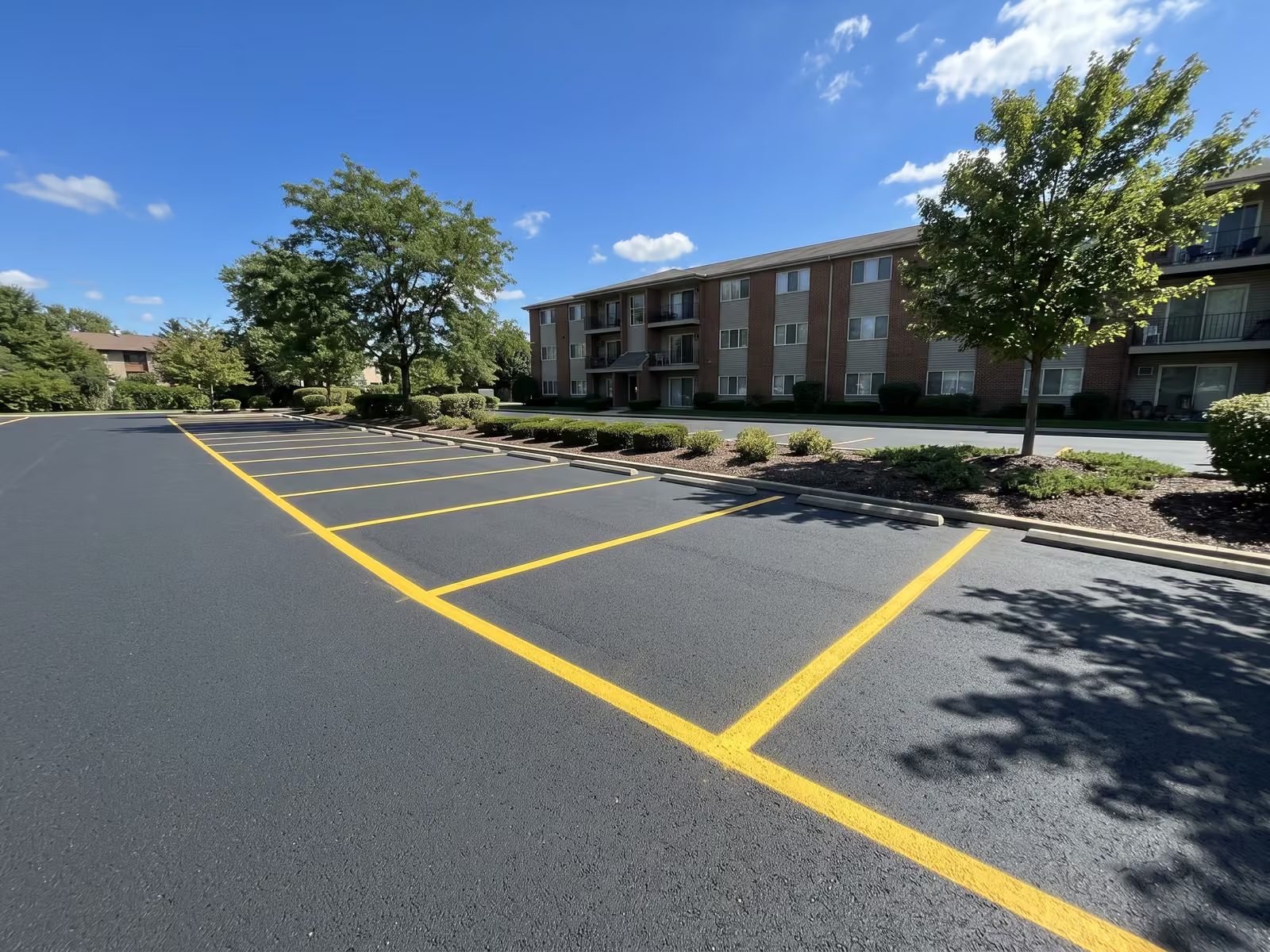
For a board or property manager, the parking lot is rarely one big decision. It’s a long series of small ones: which potholes to fix this spring, whether the cracks can wait, when condo parking lot paving should go into the reserve fund, and how to tell residents their parking is closed on Tuesday. Most of those decisions get easier with one walk-through a year and an itemized price for what it finds, and that holds for a condo corporation, an apartment building, a retail plaza or a management company juggling several of each.
What a board can and can’t defer
When a board is deciding whether a repair can wait, the useful question is what one more winter will do to it.
- Potholes and trip hazards near doors can’t wait. They are the items most likely to lead to a claim, and every freeze-thaw cycle makes them bigger.
- Open cracks can wait months, not years. Filled before winter, they keep water out of the base. Left open, they often become next spring's potholes.
- Ponding near walkways moves up the list in winter, when the water refreezes into ice on the same low spots every morning.
- Temporary fills buy weeks, not seasons. A permanent hot-mix patch costs more on the day, but it bonds to the surface around it and usually costs less over a few years than refilling the same hole.
- Faded stall lines can usually wait for the next repaint, as long as the fire route and accessible stalls are still clear to read.
Adding stalls is a different kind of decision. New parking on former lawn needs its own excavated base and changes the line layout, so treat it as a small paving project, not a repair item.
An annual maintenance program
Small defects are cheapest in the year they appear: a crack filled this fall doesn’t become next spring’s pothole. Our maintenance program is built around one main visit a year, with follow-up where needed.
1. Spring walk-through
Once the snow is gone, we walk the property with you and identify what it needs: potholes, cracking, trip hazards, settled catch basins, ponding and faded markings. You get an itemized quote you can take to the board, with safety items first.
2. Patching
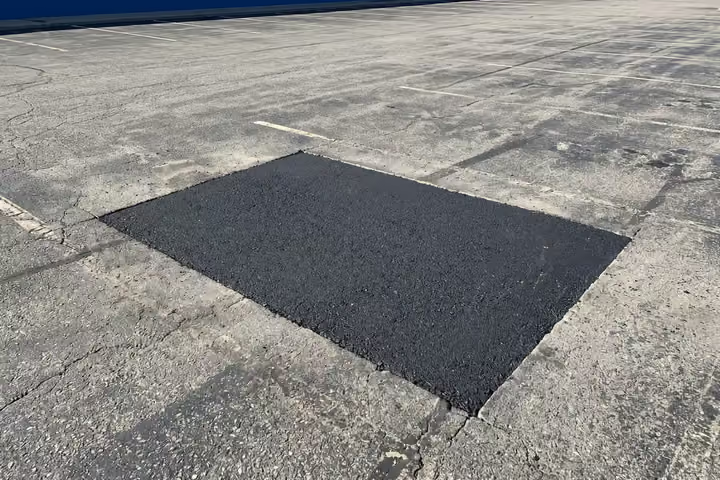
Potholes and failed areas are repaired with cut-and-patch: saw-cut, dig out the soft base, rebuild and pave with hot mix. The order follows the parking lot repair priorities: hazards, then water, then appearance.
3. Hot rubber crack filling
Cracks are cleaned and filled with hot rubber crack filler to stop water getting into the base. It is a low-cost way to slow damage, and the main reason to make maintenance a yearly habit.
4. Catch basins
Basins that have started to settle are rebuilt before the dip around them becomes a hazard. Our catch basin repair page explains why the top of the basin, not the asphalt, is usually the cause.
5. Line repainting
Fire routes, accessible stalls, stop bars and high-wear areas are checked each year and repainted when they're hard to read, with the full lot on a longer cycle. Details are on our line painting page.
Multi-year budgeting
Most condo corporations plan major repairs through a reserve fund, and most plaza and apartment owners have a capital plan. Paving is usually one of the larger lines in either, and the figure is often a rough estimate made years earlier.
A yearly walk-through can make it more accurate:
- Condition. Which sections are sound, which need repair and which are nearing resurfacing or a rebuild.
- Timing. When each area is likely to need more than routine repair, based on how fast it has changed from one spring to the next.
- Budget figures. Our 2026 range for parking lot paving is $3.50 to $5.00 per square foot, depending on the location and complexity of the job. The cost guide shows worked examples.
- Phased options. Rebuilding the worst areas first and resurfacing the rest later, so a large cost is spread over more than one year.
Complexes with internal roads should budget for them separately; they carry garbage and fire trucks and are built heavier than a lot, as our private roads page explains.
Telling residents and tenants
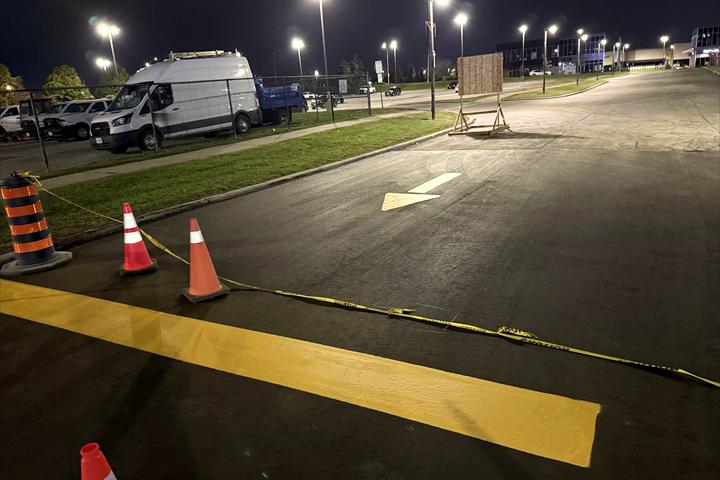
Closures cause more complaints than the work itself. Residents who find their spot closed without notice call the manager, and plaza tenants who lose their frontage on a Saturday call the owner. The work goes in sections so parts of the lot stay open, and before you post a notice, make sure you know:
- Which areas close, and on which days. Ask to be told as early as possible if weather moves a date.
- Where to park instead, including temporary accessible stalls.
- Which vehicles need to move, and by when.
- How access stays open, including the fire route and at least one entrance.
Evening or Saturday work can help at plazas with busy weekdays or buildings with limited parking. Ask for it as its own line in the quote, so the schedule is clear.
What the board will ask for
- Insurance. We carry $7 million in liability insurance.
- An itemized scope. Every area, method and material listed, so the board knows exactly what it is approving.
Getting started
Send the property address, a site plan or aerial photo if you have one, and any known problem areas through our contact page. For a maintenance program, tell us how many properties you manage and when your budget year starts, so the spring walk-through and quote land in time for your planning.