Most sunken or uneven interlock can be repaired without replacing it. The pavers in the low area are lifted, the reason the base moved is found and fixed, and the same pavers go back down. Once the joints are filled, the patch blends back into the rest. What decides whether an interlock repair lasts is the cause: pavers relaid over a base that is still wet, thin or soft sink again within a season or two.
We repair interlock driveways, patios, walkways and steps from our office in Vaughan, and across York Region, Toronto and Peel.
Common interlock problems and what they mean
- Sunken spots. A dip of a few pavers, often holding a puddle. The ground under that one area has settled, usually because water collects there or it was never compacted.
- Tire ruts. Two low lines where the wheels run. The base is too thin or soft for a car, or the bedding was laid too thick and the tires have pushed it aside.
- Heaved areas. Pavers pushed up into a hump. Near a tree it is usually a root. Elsewhere it is often frost: water held in the base froze and expanded.
- Empty joints and weeds. Without sand in the joints, pavers lose their grip on each other and start to shift, and seeds take root in the gaps.
- Rocking pavers. A paver that clicks or tilts underfoot has lost the bedding under one side, often washed out through open joints.
- Broken or stained pavers. Chips from a plow blade, cracks from a heavy truck, oil or rust stains. The base is usually fine.
- Edges spreading. The outside rows drift into the lawn and gaps open along the side. The edge has let go, and the surface loosens from the outside in.
- Water pooling or running toward the house. Settling can flatten or reverse the slope, so rain runs to the garage door or the foundation wall. Fix this one first, because it sends water toward the basement.
Interlock re-levelling
Re-levelling is the most common interlock repair we do. When part of a driveway, patio or walkway has sunk or heaved, the pavers in that area are lifted, the base under them is rebuilt and compacted, and the same pavers are laid back at the right height, so the surface is flat again and water runs where it should.
Signs a re-level is due:
- Dips and low spots where puddles sit for a day after rain, or where ice forms first in winter.
- Raised edges and trip lips where one paver or a whole section sits higher than the next.
- Rocking pavers that move or click when you step or drive on them.
- Weeds and washed-out joints in one area, a sign the pavers have spread apart as the base moved.
- Water flowing toward the house because the slope has reversed in one corner.
Re-levelling makes sense when the pavers are still in good shape and the problem is limited to some areas. Your own pavers go back in, so there is nothing new to match. When most of the surface has moved, or the pavers themselves are worn and broken, a rebuild is the better use of money; the section on repair or full rebuild below explains how we decide.
How an interlock repair is done
- Mark out the area. The repair runs past the visible dip to where the pavers sit level and firm.
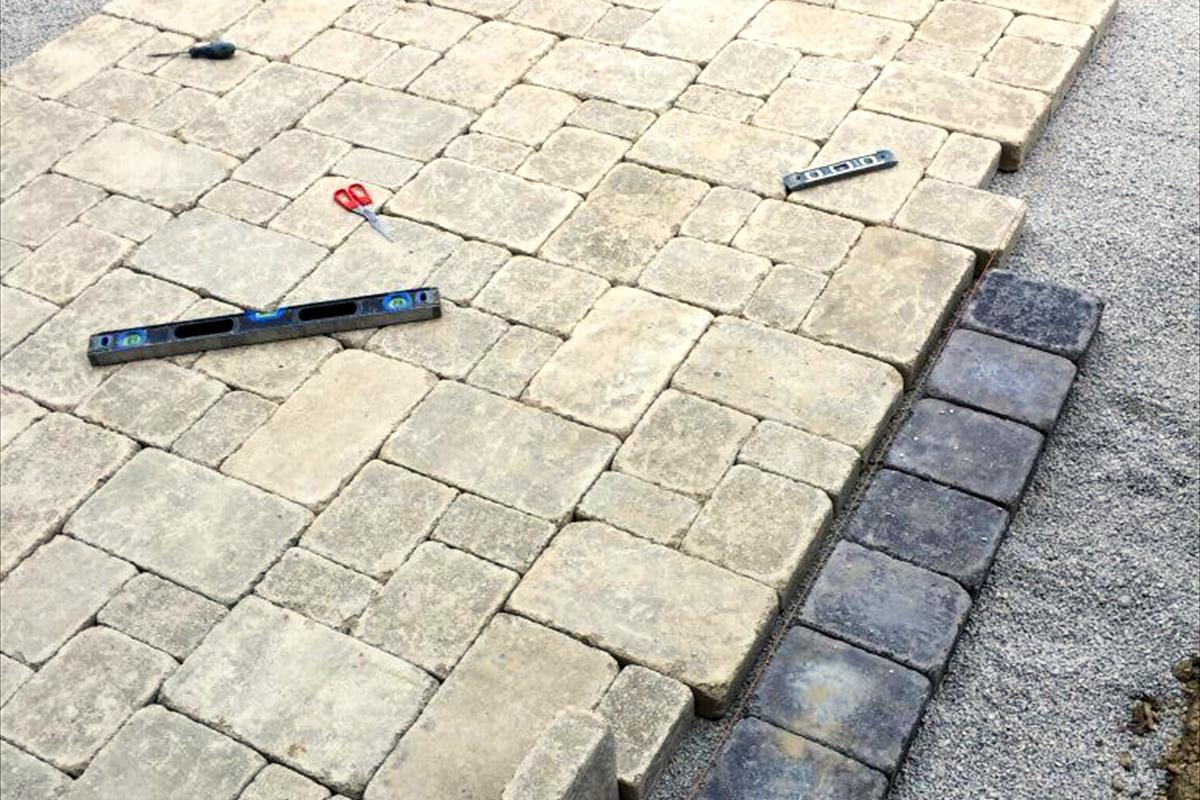
- Lift the pavers. They are stacked in the order of the pattern, cut pieces and borders included, so each one goes back where it came from.
- Dig to the problem. The old bedding is scraped off and the gravel and soil are opened up until firm ground is reached.
- Fix the cause. Water, a root, a trench or a failed edge is dealt with before anything is rebuilt.
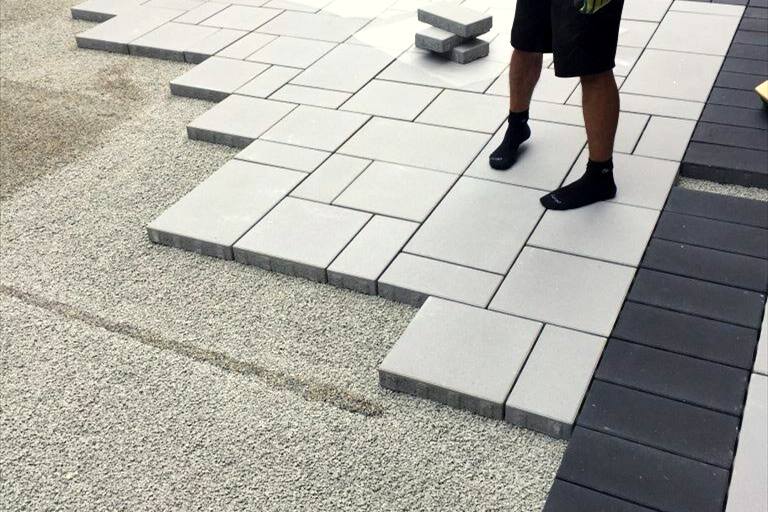
- Rebuild the base. Compacted soil, black geotextile fabric, then 3/4 inch clear gravel compacted in 1 to 2 inch lifts and shaped to the slope around it.
- Screed new bedding. HPB bedding, small limestone chips, is screeded flat between rails so the repair finishes at the same height as its neighbours.
- Relay and sand. The pavers go back in their pattern and polymeric sand goes in two coats: the first swept in, the surface compacted, the second swept in right after.
Finding and fixing the cause
Re-levelling alone treats the symptom. These causes turn up most often:
| Cause | What it looks like | How it is fixed |
|---|---|---|
| Downspout | A dip where it empties, and ice there in winter. | Extended or turned so roof water lands past the pavers. |
| Low spot | A puddle in the same place after every rain. | The base is reshaped so water runs off, away from the house. |
| Tree roots | A hump or a line of lifted pavers near a tree. | Base corrected and pavers relaid. Cutting the root depends on the tree; sometimes the edge is pulled back. |
| Utility trench | A long, narrow sunken strip. | Loose fill dug out and replaced with clear gravel compacted in thin lifts. |
| Thin or loose base | Ruts, or dips where cars park. | Rebuilt in that area. If it is thin everywhere, see the rebuild section below. |
| Failed edge | Outside rows spreading along one side. | Outer rows lifted, the base under them rebuilt, a new edge restraint set. |
Some causes cannot be removed, such as a tree you want to keep. You hear that at the site visit, so you know the area may need re-levelling again later.
Joints, broken pavers and colour matching
Joints that have dropped below the paver edges, or have weeds in them, need new polymeric sand. Loose old sand and weeds are cleared out first so the new sand fills each joint to full depth, and the surface has to be dry, because polymeric sand hardens once it is wetted.
A cracked, chipped or deeply oil-stained paver can be replaced on its own: split out, the bedding under it levelled, and a new paver tapped in and sanded.
Matching is the hard part. Pavers fade in the sun, and yours may no longer be made. Because a repair reuses every whole paver, only the broken ones need a match:
- Spares from the original job. The same product, though they may look brighter because they have not been outside.
- Pavers from a hidden spot. Pavers from under a planter or behind a shed go where they will be seen, and the new ones go in the hidden spot.
- A border or inlay. Where a larger area needs new pavers, a contrasting band at the join looks planned. A near match beside the old colour usually shows.
Repair or full rebuild
A repair is the right call when the trouble is in one or two places and the rest is flat and tight. When dips, ruts and spreading show up across most of the surface, the base has failed everywhere, and fixing one area after another means paying for the same work again and again. Signs of that:
- Ruts along both wheel paths for most of the driveway.
- Low spots in several places, not one.
- Wherever pavers are lifted, the gravel is thin or mixed with soil.
- Edges spreading on more than one side.
A rebuild does not have to mean new pavers. The whole surface can be lifted, the base rebuilt from the soil up, and the same pavers relaid if most are whole. If you want a new colour or pattern anyway, this is the time. How a new driveway is built is on our interlocking page.
Patios, walkways, steps and walls
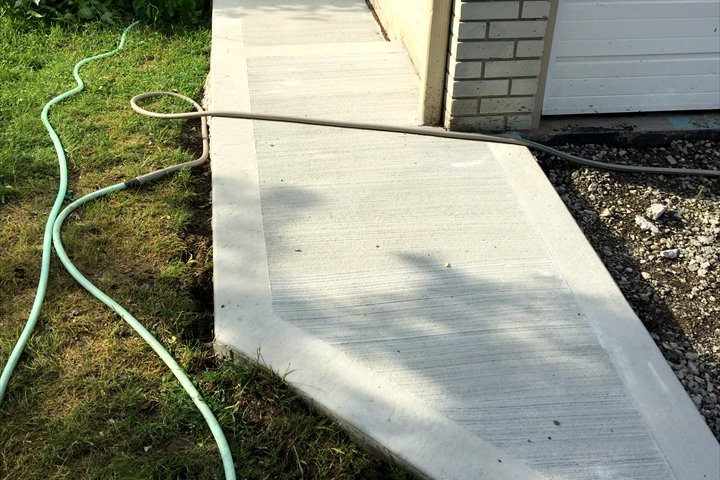
Patios and walkways carry people, not cars, so ruts are rare, but water does the same damage. A patio often sinks along the back of the house, where the soil dug out for the foundation was put back loose and keeps settling. The fix is the same lift, rebuild and relay. For a larger patio or a new path, see interlocking patios and walkways.
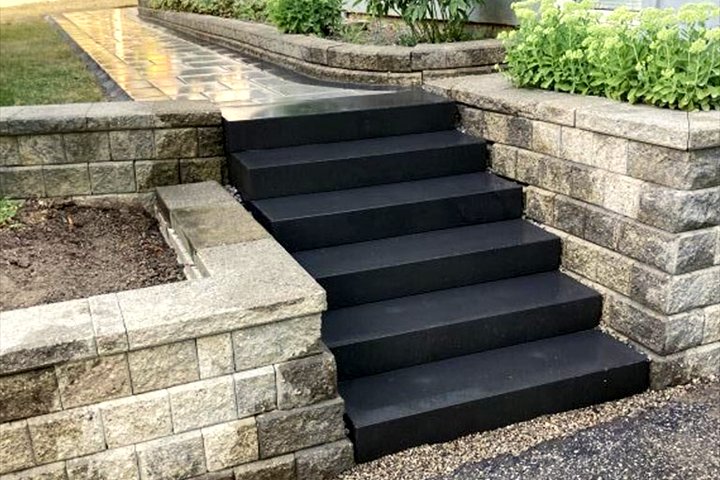
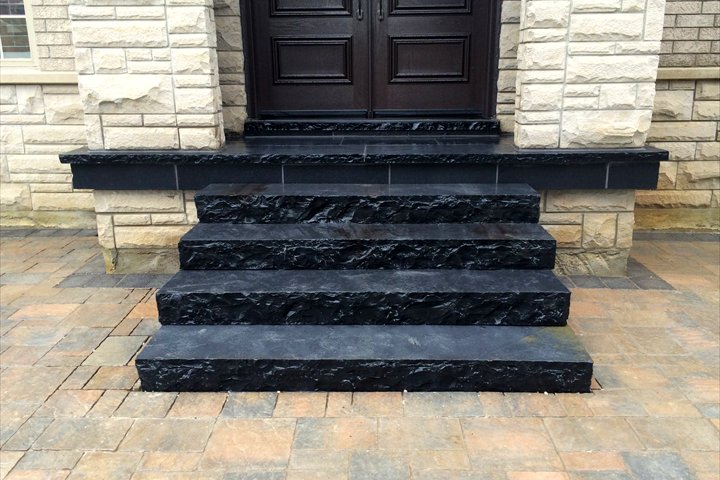
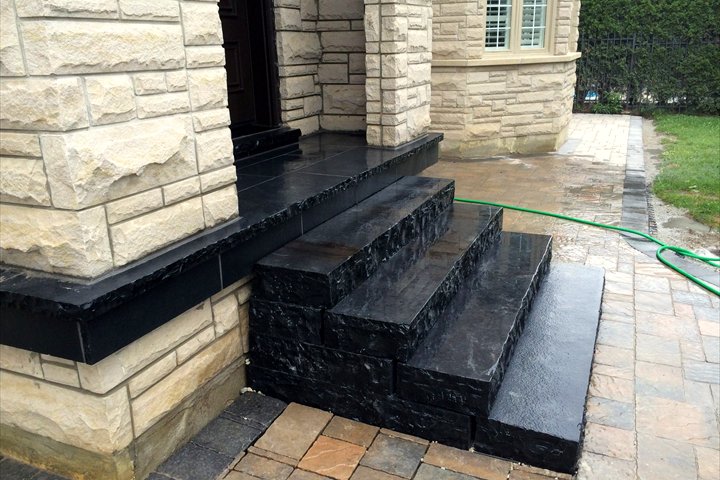
Steps that rock, or a tread that tips forward, sit on a base that has settled or stayed wet. They are taken apart, rebuilt and reset with every riser the same height. See interlock steps.
A retaining wall that leans or bulges is being pushed by wet, frozen soil behind it, and resetting the top rows will not hold. The leaning section is taken down to the base course, drainage stone goes in behind it, and the wall is rebuilt. See retaining walls.
What moves the price of a repair
Repairs are priced on what is found on site, and your free written estimate lists each part:
- Size and depth. How far past the dip the repair goes, and whether it needs new bedding only or a rebuilt base.
- The cause. Extending a downspout is a small addition. A utility trench or a root means more digging.
- The pattern. Herringbone, borders and curves mean more cut pieces to keep in order and refit.
- Replacement pavers. How many are broken, and whether a match can be found.
- Edges and joints. Whether a new edge restraint is needed, and whether the whole surface gets new sand so all the joints look alike.
- Access. A backyard reached only through a side gate means stone and pavers moved by hand.
Interlock repair quotes in Vaughan and nearby
Our office is in Vaughan, so interlock repair in Woodbridge, Maple, Kleinburg and Concord is close by. We also work in Richmond Hill, Aurora, Newmarket, King City, Markham, Toronto, Mississauga and Brampton. The area is measured on site and the estimate is free and in writing. To start, send these through the contact page or the form on this page:
- Close photos of the problem, with a shoe in the frame for scale, and one wide photo of the whole area.
- Where the downspouts empty, and where water goes in a heavy rain.
- Any digging you know of underneath: a gas or water line, cable or sprinklers.
- Trees near the problem, and any spare pavers you still have.
If you can, take the photos while it rains. Standing water shows exactly where the surface has moved.