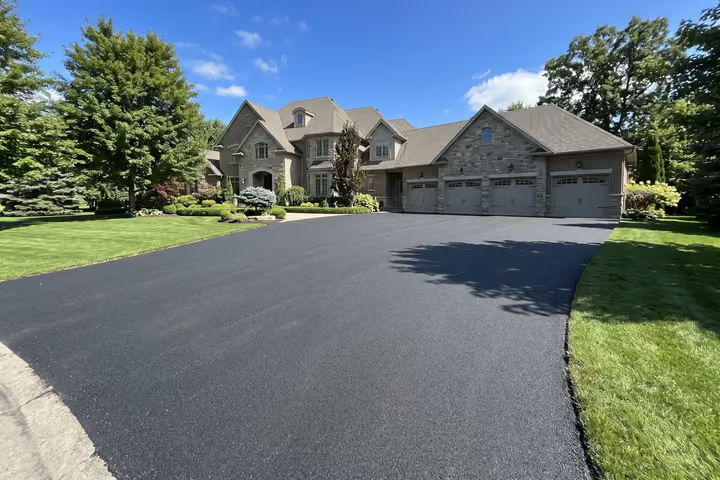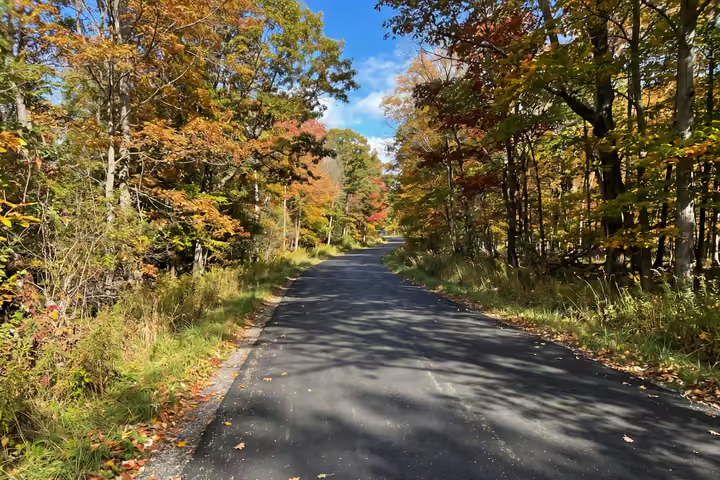
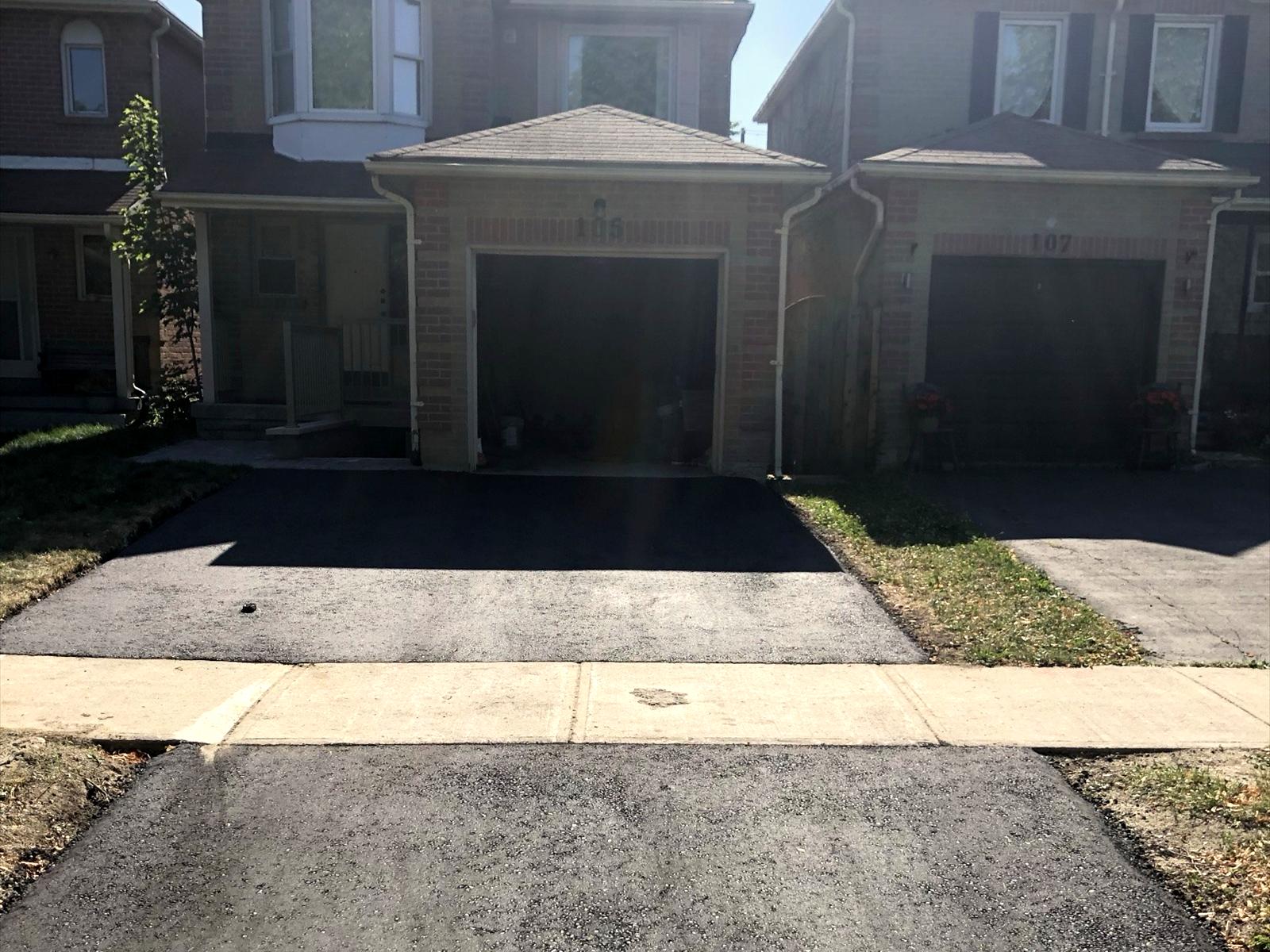
A Kleinburg driveway is more likely than most to be long, curved, sloped or circular, and each of those makes drainage and logistics matter as much as the asphalt itself. A short suburban driveway forgives a small mistake. A 60-metre drive down a slope turns the same mistake into a washed-out edge every spring. How paving works elsewhere in the city is on our Vaughan page.
If the driveway is long
Three things decide how a long driveway holds up:
- Cross slope. The surface needs a consistent fall to one side, or a crown, so water leaves the asphalt instead of running down it.
- Edges. An asphalt edge with nothing under it cracks and crumbles. A long driveway has a lot of edge, and a compacted base that extends past the paved edge gives it something to bear on.
- The road end. The first few metres take the most turning and braking, and they often collect runoff from the road.
The Oak Ridges Moraine reaches into the north of Vaughan, and moraine sand and gravel drains very differently from the slow-draining till around it. A long driveway can cross both, so the ground is looked at along its whole length once the old surface comes up, and soft or wet sections get dug out, not paved over.
Slopes and valley lots
Kleinburg sits on rolling ground above the Humber valley, and plenty of driveways climb or drop to reach the house. On a slope, water picks up speed as it runs down the asphalt, and it follows the edges. Those edges need a firm, well-compacted shoulder, or the runoff undercuts them and they break off in pieces.
The bottom of a slope is the other weak point. If the driveway drops toward the garage, every rainstorm ends up at the door, and in winter that water freezes into the worst patch of ice on the property. Before paving, decide where that water will go: a fall to one side onto a lawn or ditch is the usual answer. The asphalt can be shaped to carry water, but it can’t make it disappear.
Circular driveways
A circular drive works when a car can follow the loop without cutting across the lawn. That means curves wide enough for a full-size vehicle, and an inside island that isn’t so small the tires clip it on every turn. Draw the loop around the way you actually drive in and out, and it’ll show you where the edges need to be.
Drainage is the part people miss. The loop surrounds a planted island, and water on the asphalt has to be shaped to fall outward or into the island, not trapped in the low point of the curve. A loop is paved together with the main driveway as one surface, the way we handle any widening; our Vaughan driveway widening guide explains how the added area is built.
Getting the trucks in
On a long or tight driveway, access shapes the job:
- Weight. Loaded asphalt and stone trucks are far heavier than cars. If they have to drive over an old section that’s staying, it may crack, so the route is planned before the work starts.
- Clearance. Low branches, gate posts, lamp posts and narrow entrances all limit what can get in. Branches that would scrape a dump truck’s box are best trimmed before paving day.
- Soft shoulders. Lawn beside a driveway won’t carry a truck after rain, so trucks stay on the hard surface.
- Distance. The farther the asphalt has to travel from truck to paver, the more the job relies on planning to keep the mix hot until it’s rolled.
Rebuild the worst stretches, resurface the rest
On a big driveway, choosing the right fix for each section makes a real difference to the price. Where the base has failed, a full replacement is the lasting fix. Where the base is sound, the surface is tired and there is height for a full layer, resurfacing puts a new layer over what’s there. Isolated potholes and cracks can be handled with repair and hot rubber crack filling. A long driveway often needs a mix of all three, and the driveway cost guide explains how size and complexity affect our per-square-foot range.
A lane that serves several homes or outbuildings is closer to a small road than a driveway. See private roads.
A long driveway is easier to price when it’s walked end to end. When you book an estimate, say whether you want the whole length done or only the worst stretches, and point out where water runs in a storm and where the ice forms in winter.