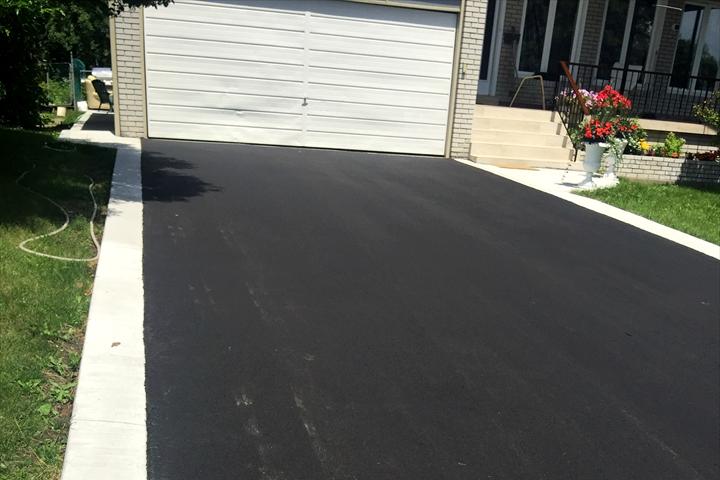
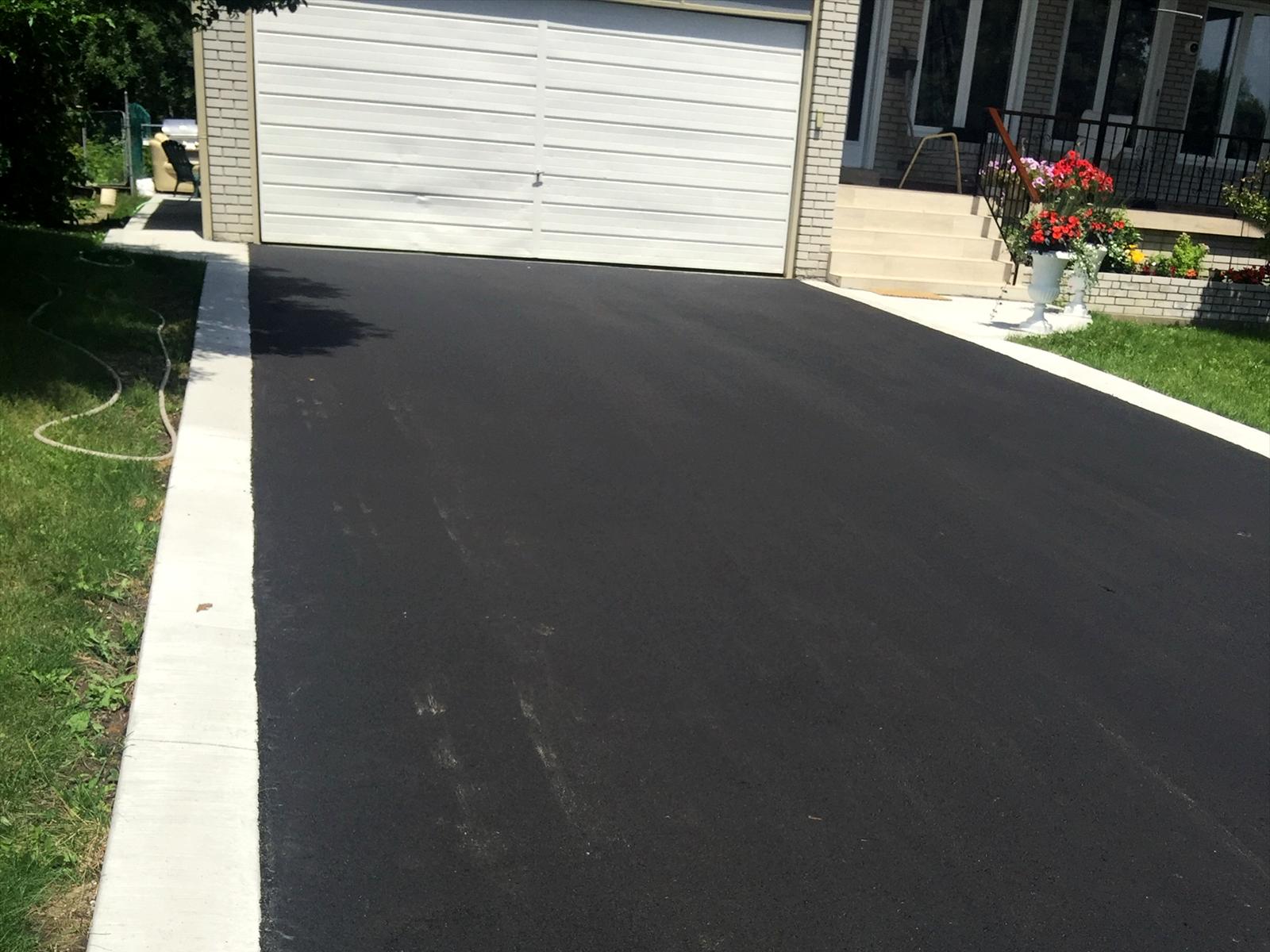
If your home in Maple was built in the last few decades, your driveway sits on ground that was dug up, filled and graded not long ago. That brings problems older streets don’t have: fill that’s still settling, drainage swales the driveway has to respect, and on semis and townhouses, a driveway that runs right beside the neighbour’s. For how paving works across the rest of the city, see our Vaughan page.
Fresh backfill under the driveway
On a new lot, the ground along the foundation and over the service trenches was backfilled during construction, and backfill can keep settling for a while. Asphalt follows whatever is under it. Fresh dips along the foundation, or sunken lines where water and sewer services were laid, are signs the fill is still moving.
The choices then are to dig the soft fill out and rebuild the base with compacted stone, or to wait and patch in the meantime. Digging out costs more now but ends the problem. Waiting is cheaper if the settling has nearly finished, and a few small repairs can carry the driveway until it has. A new asphalt driveway only lasts as long as its base.
Swales you inherited
Newer lots are graded so water flows away from the houses, often along shallow swales on the side lot lines that carry it to the street or the back of the lot. You may not notice yours until a heavy rain, when it’s carrying water from your roof and your neighbour’s.
A driveway project, and especially a widening toward the side of the lot, is where this goes wrong. Build the asphalt up into the swale and you’ve made a dam: water backs up toward the foundation or spills onto the neighbour’s side. The new edge has to stop short of the swale, or the asphalt has to be shaped so water keeps the same path it had.
Side-by-side driveways on semis and townhouses
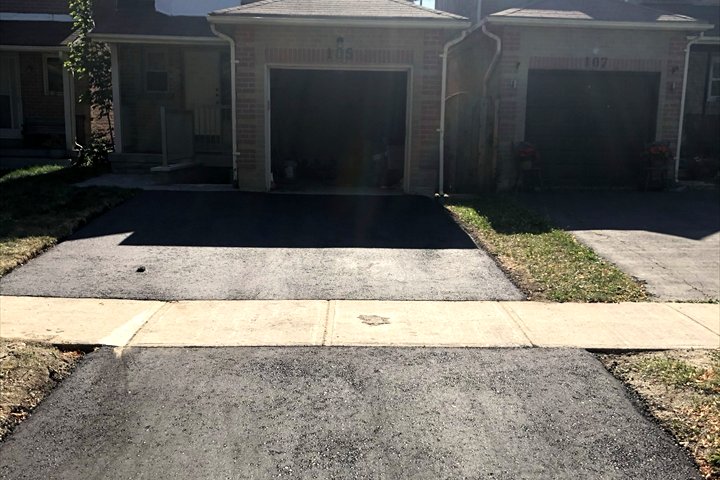
Many Maple semis and townhouses have paired driveways: yours and the neighbour’s running side by side with only a lot line between them. That changes the job in a few ways.
- The shared edge. Where your new asphalt meets the neighbour’s old asphalt, there’s a joint. Their edge is cut back to sound material so the new mix has a clean face to bond to.
- Doing both at once. If both driveways are tired, paving them in one visit means the middle joint is built hot on both sides, and neither owner ends up with a new driveway beside a crumbling one.
- Space for the trucks. A single-car driveway leaves little room for a paver, roller and truck. Cars on both sides, and sometimes on the street in front, need to move for the day.
Young trees beside the driveway
Trees planted along new streets are small now, but their roots will spread under nearby asphalt as they grow and lift it in ridges. When a driveway is rebuilt or widened, it pays to keep the new edge back from a young tree on that side, because the tree will only get bigger. Cutting large roots to make room is hard on the tree and doesn’t stop new ones growing back.
Looking after a new driveway in its first season
Fresh asphalt is at its softest in the first weeks, especially in summer heat. A few habits keep it looking new:
- Park in a slightly different spot each day, and don’t turn the wheels while the car isn’t moving. That’s what leaves scuffs and twisted marks.
- Keep point loads off it: bike and motorcycle kickstands, trailer jacks, ladder feet, a car jack. Put a board under anything that has to stand on it.
- Keep heavy trucks off for the first while. A loaded moving truck or a delivery of landscape stone can leave ruts a car never would.
- Stay off the edges. The unsupported edge is the weakest part, so don’t drive or park with a wheel hanging over it.
- In winter, ask whoever clears your snow to keep the plow blade off the surface and away from the edges.
Plazas and small lots in Maple
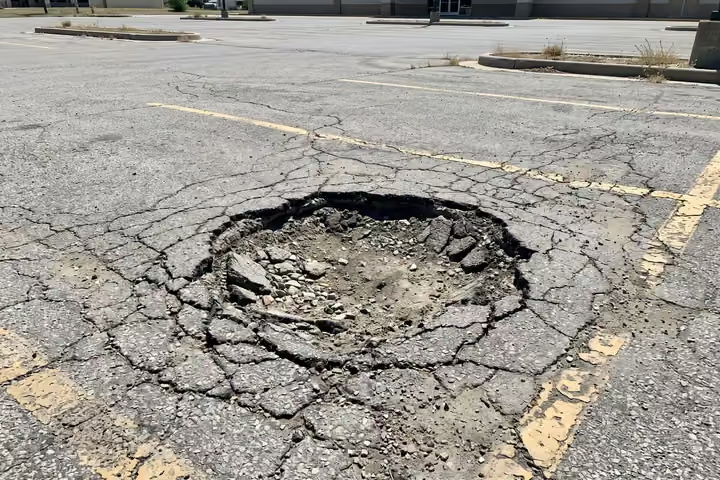
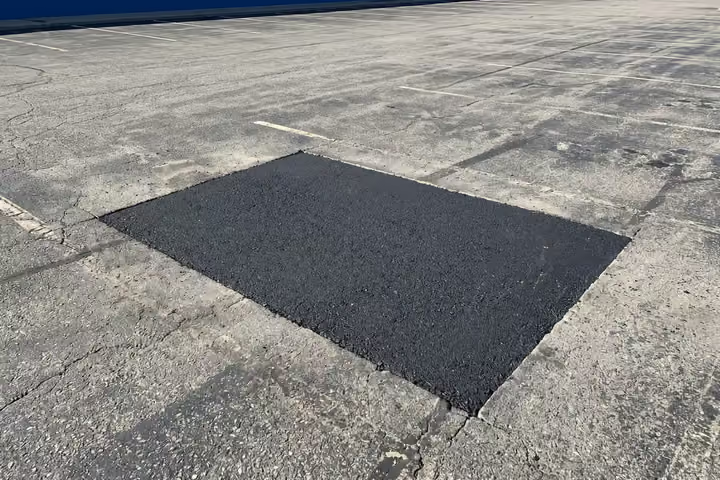
Maple’s older core and its main roads have small plazas and offices where a lot often just needs patching, crack filling and fresh lines between full repaves. That’s parking lot repair, and it’s usually done in sections so the businesses stay open.
For what a Maple driveway costs, the driveway cost guide sets out our range and what moves a job within it. If you share a driveway line with a neighbour who’s also thinking about paving, mention it when you book the estimate, so both driveways can be looked at on the same visit.