Two things decide how long a Newmarket driveway lasts: what kind of lot it sits on, and how water leaves it. Much of the town is built on silty, clay-bearing glacial tills that drain slowly and are frost-susceptible, so water that gets under a driveway tends to stay there and freeze. The houses on top range from narrow lots near Main Street to subdivisions with two-car garages, and each brings its own problems.
Three kinds of Newmarket driveway
Older lots near the historic downtown
Around Main Street and the older streets nearby, many houses sit on narrow lots with a single driveway running beside the house, sometimes to a garage at the back. Some driveways are shared between neighbours. Mature trees are common, and their roots lift asphalt near the edges.
These jobs are about access and care. A long, narrow driveway with a house on one side and a fence on the other leaves little room for equipment, so more of the work is done with smaller machines and by hand. That takes longer and shows up in the price. Roots near the surface limit how deep an edge can be dug without harming the tree.
Older bungalows and split-levels
Many of Newmarket’s established neighbourhoods have older bungalows and split-levels. Their driveways have often been overlaid more than once. Each overlay adds height, and after two or three the surface can sit level with the garage floor or above it, sending water under the door.
The fix is to take the old layers off, not add another. Removing them down to the base also shows what the base is like after decades on till: whether it’s still firm or has gone soft in the low spots.
Newer subdivisions
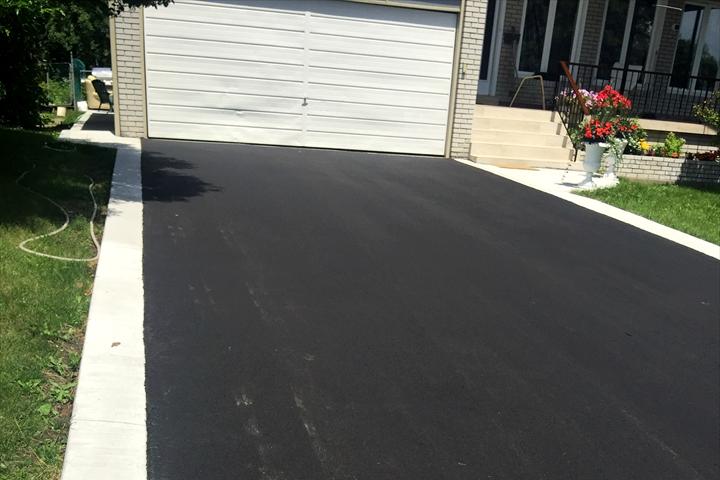
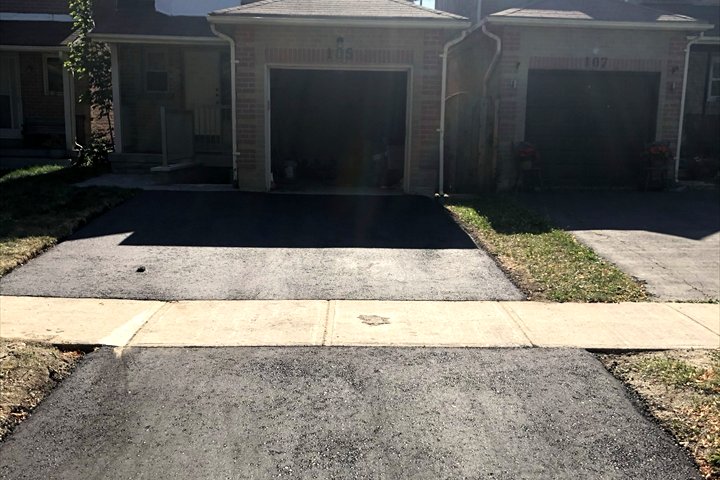
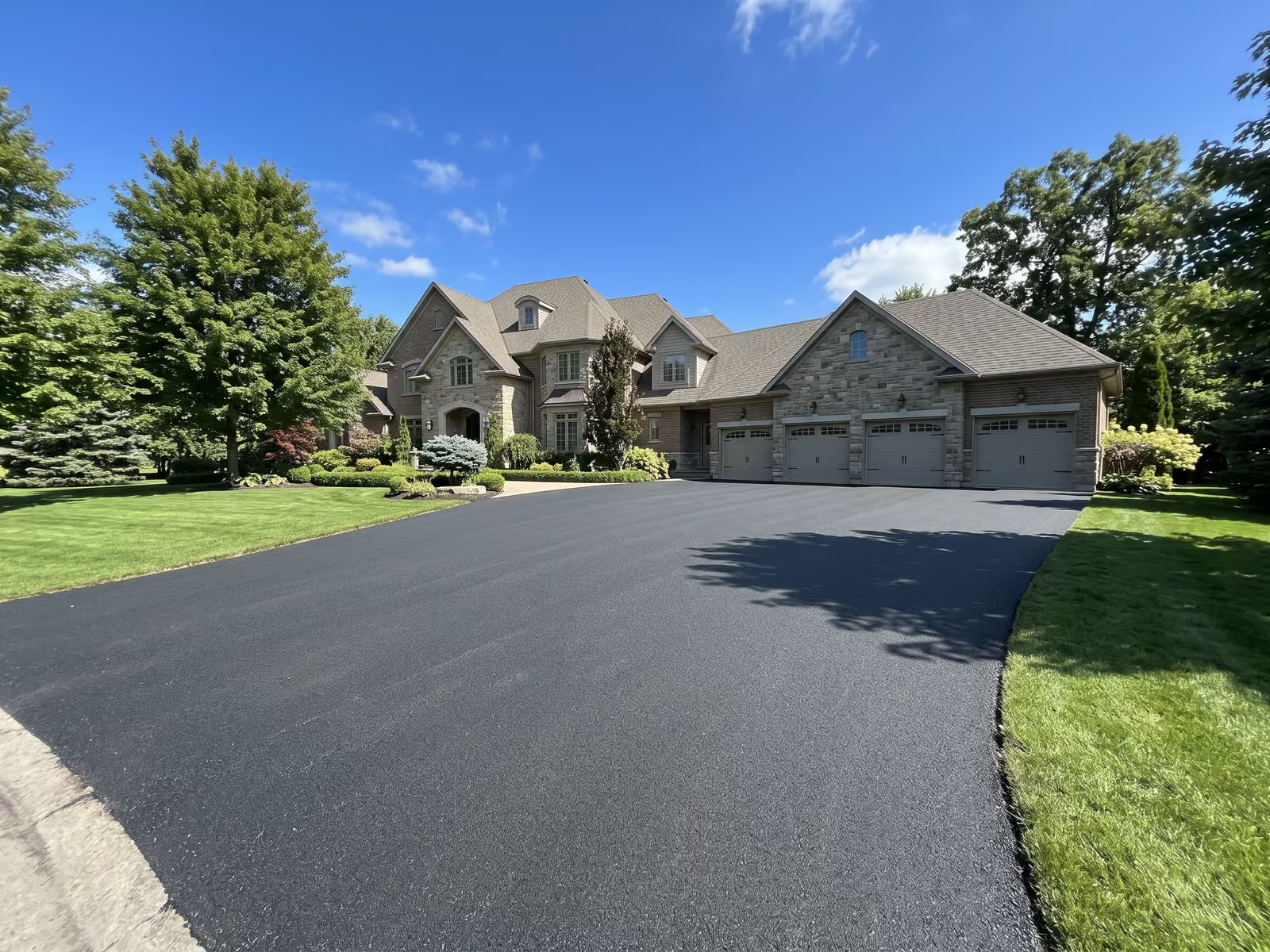
Houses in the newer subdivisions tend to have wider frontages and double garages, while semis and townhouses in newer areas usually have single-car driveways. Two problems come up again and again. The ground beside the foundation was backfilled when the house was built, and if it wasn’t compacted well, the driveway dips near the garage. And single-car driveways in tight rows leave nowhere for snow except the edges, which get crushed by plows and shovels.
If you’re short of parking, our Newmarket driveway widening guide covers how the extra strip is built on this ground.
Till, moraine and the river
The till that covers most of Newmarket holds water. Under a driveway, that means a base that stays wet through the spring thaw and heaves when it freezes. The Oak Ridges Moraine begins just south of town, and the southwest edge sits on its sand and gravel with a high water table in places, so it drains better but can still be wet underneath. The East Holland River runs through the middle of town, and the low ground around it and Fairy Lake stays damp longer than the higher streets.
For a driveway, that shapes the work:
- Soft or wet subgrade comes out. Once the old asphalt is lifted, anything that’s wet, organic or pumping under foot is dug out and replaced with compacted stone. Paving over it only hides the problem for a winter or two.
- The surface sheds water to the street. A fall away from the garage and the house keeps water off the base. On a flat lot the margin is small, and getting it right matters more than on a sloped one.
- Downspouts get a look. A downspout that empties onto the driveway puts roof water right on the asphalt, and on till it soaks into the edges and turns to ice in winter. Moving the outlet is often the cheapest drainage fix there is.
Replace, resurface or repair
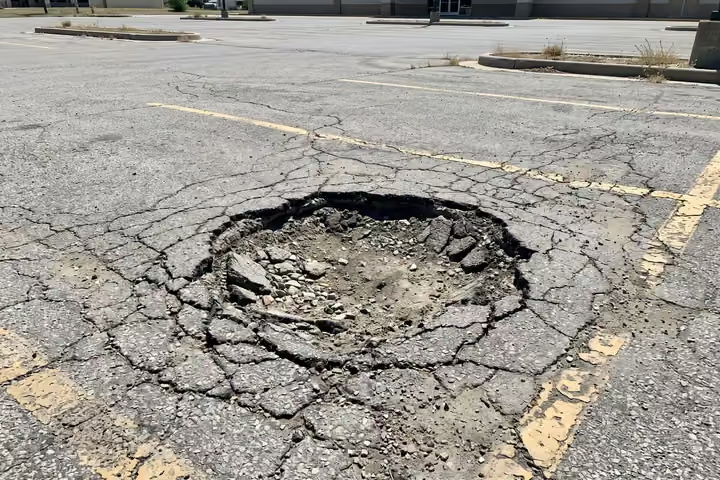
A driveway that has sunk in patches, cracked into a pattern like alligator skin or broken up at the edges has a base problem, and a full replacement is the only lasting fix. If the surface is worn and cracked but the driveway is still level and firm, and there is height for a full layer, resurfacing costs less and buys years. A few potholes or open cracks on an otherwise sound driveway are a job for asphalt repair and hot rubber crack filling.
For budgeting, our asphalt driveway cost guide shows what moves the price. On older downtown lots, the narrow access and hand work push a job toward the upper end; on a straightforward subdivision driveway the price depends mostly on size and the state of the base.
When to book
Spring is the busiest time to call and often not the best time to dig. Till is at its wettest after the thaw, and a base built on saturated ground is harder to compact. Late spring through early fall gives the most reliable conditions. Booking in the winter or early spring gets you a place in the schedule before it fills.
Commercial lots in Newmarket
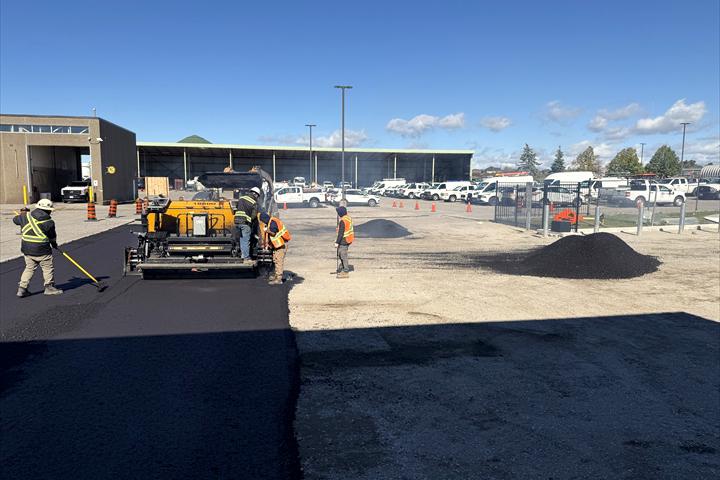
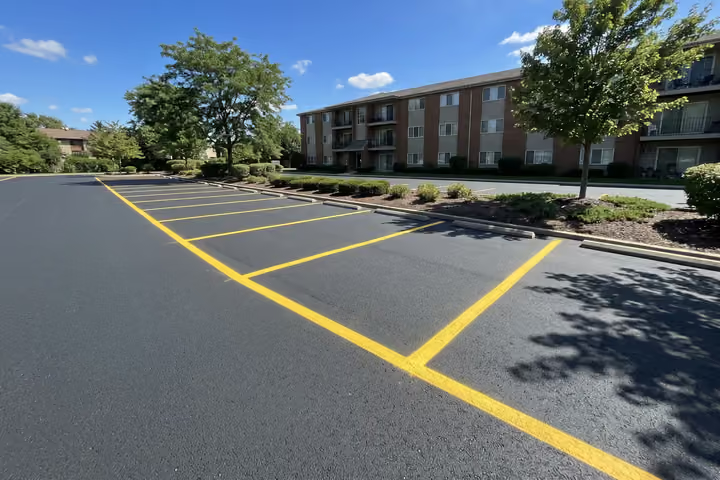
Plazas along Davis Drive and Yonge Street, offices, condo and apartment lots, schools and places of worship all deal with the same ground, with heavier traffic on top. We work for all of them, and where a job needs concrete or drain work alongside the asphalt, we coordinate those trades. Parking lot paving in Newmarket covers building and repaving lots here; for upkeep, see parking lot repair, catch basin repair, line painting and our maintenance programs.
What to send us
A photo of the whole driveway from the street and one of the spot that bothers you most tell us a lot: sinking near the garage, roots at the edge, water by the door. Add your address and roughly when you’d like the work done, and ask for a free written estimate. Nearby, we also work in Aurora and Whitchurch-Stouffville.