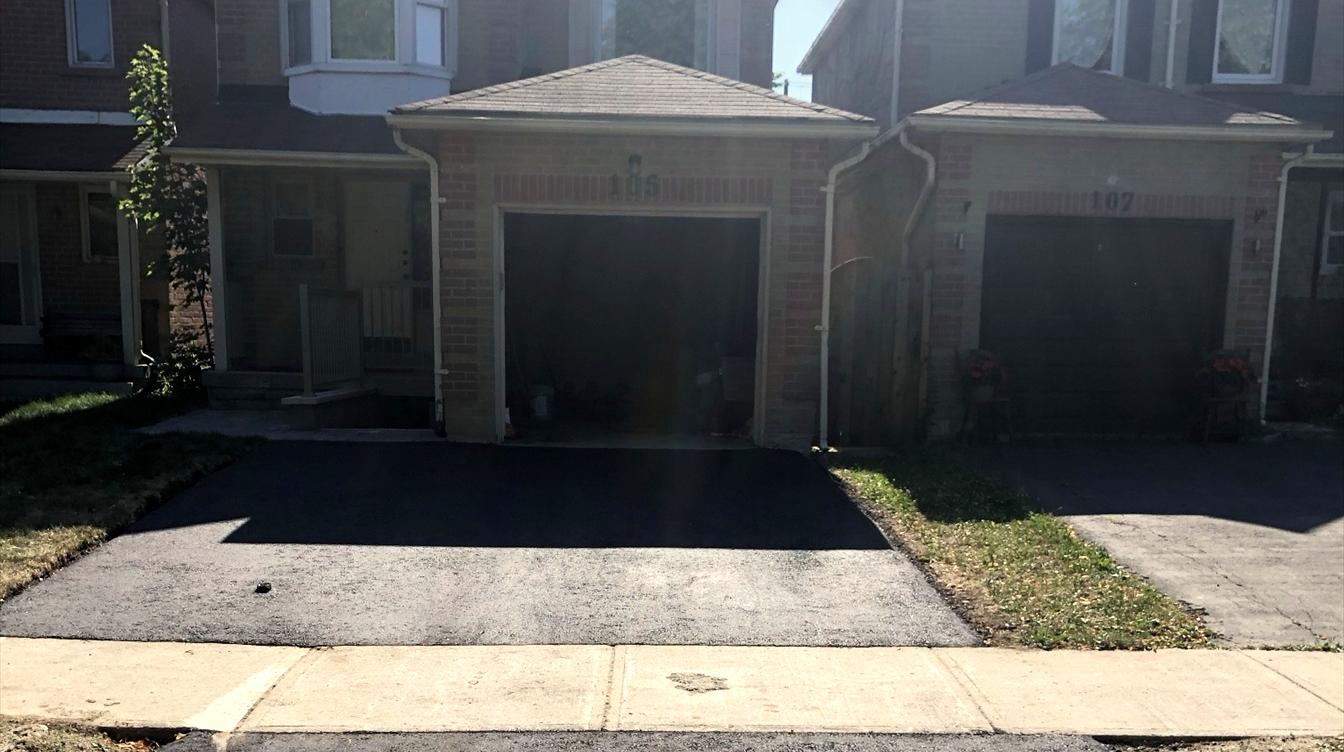
A widened driveway is only as good as the base under the new area, and you can’t see it once the asphalt is down. On almost every widening we build, the whole driveway is then repaved as one surface, so there’s no seam between old and new to open up in the first winter. Our Vaughan page covers paving across the rest of the city.
When widening makes sense
Widening is a good spend when:
- A car is already parking on the lawn. Tires on grass leave ruts and bare mud, and a second car half on the driveway breaks its edge.
- You need a turning or parking spot, not necessarily a full second lane.
- The driveway is due for replacement anyway. Since the whole driveway is repaved with the widening, a cracked or sinking surface is dealt with in the same job: the old asphalt comes out and soft spots under it are rebuilt.
The new strip gets its own base
The ground being paved is usually lawn, a garden bed or old interlock, and none of that is a base. Here’s how the added strip is built:
- Locate buried services first. Gas, hydro, cable and water lines can run under a front lawn, so they’re located and marked before any digging.
- Dig out all the topsoil. Topsoil holds water and compresses under weight. In much of Vaughan it sits on silty, clay-bearing glacial till that drains slowly and is frost-susceptible, so the dig goes down to firm ground, and any soft or wet pocket goes deeper.
- Build the base to match. Crushed granular stone goes in at least as deep as the base under the existing driveway, so the two sides don’t settle at different rates.
- Compact in layers. Each layer is compacted before the next goes on. A thick layer compacted all at once stays loose at the bottom, and that’s the strip that sinks two winters later.
One surface, old and new
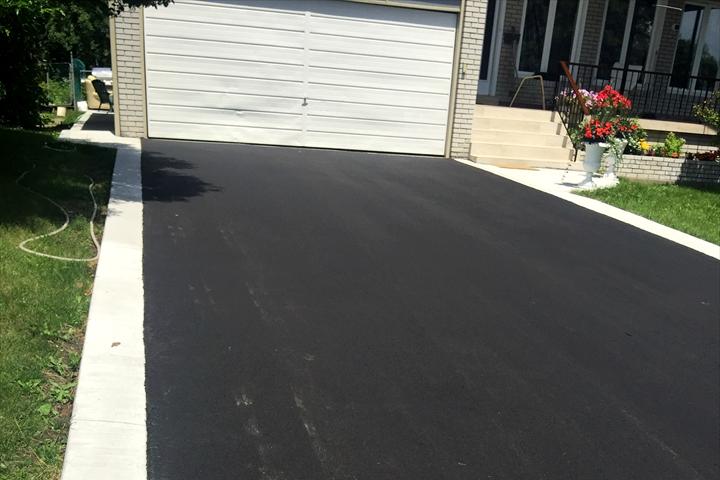
Once the new area’s base is in, the old asphalt comes out, any soft spots under it are rebuilt, and the whole width is paved in one pass. That gives one surface with no seam in the wheel path, one colour, and one slope from the garage to the street. Why we build widenings this way is on our widening and extensions page.
Drainage and slope
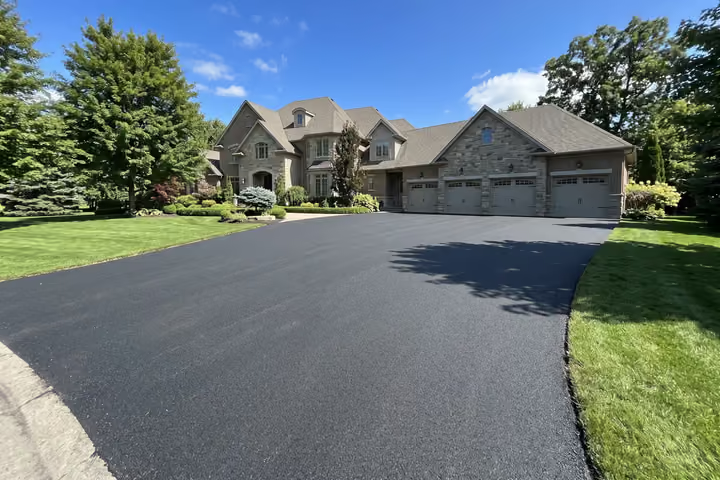
Repaving the full width lets the slope be set once, from the garage to the street and across the whole driveway, so water runs off in one direction. There’s no ridge or dip where the old edge used to be for water to collect along and freeze in.
Watch the side of the lot you’re widening toward. On many Vaughan lots, a shallow swale along the side lot line carries roof and yard water to the street or the backyard. Paving into it, or raising it, sends that water toward your foundation or your neighbour’s. A widening that leaves the swale working is worth more than one extra half-metre of asphalt. Downspouts on that side should be redirected onto the lawn, not onto the new edge.
Edges and the lawn
The outside edge of a widening takes a beating: tires, snow plows and shovels all hit it. Three things keep it from crumbling:
- Base past the edge. The compacted stone extends a little beyond the asphalt so the edge has something solid under it.
- A compacted, slightly tapered edge. The roller works right to the edge, and the edge is shaped so it doesn’t stand as a thin, unsupported lip.
- Soil back against it. Topsoil is put back and levelled with the asphalt once paving is done. Seed or sod that strip quickly, before rain washes it away.
Widening on Maple and Woodbridge lots
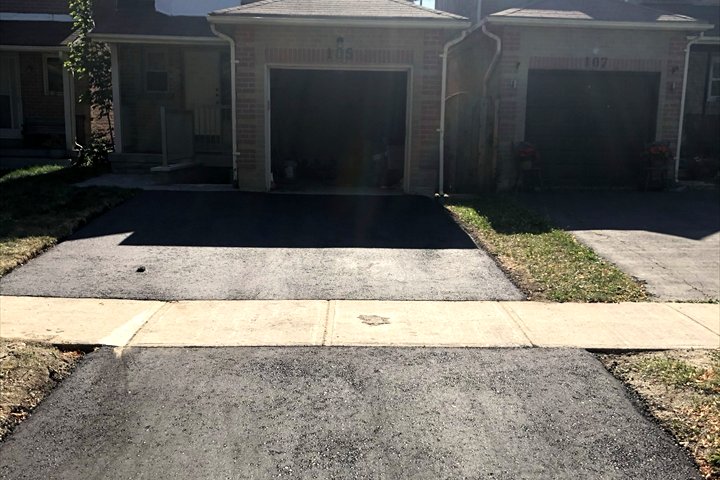
Paired driveways in Maple
On a Maple semi or townhouse, the room to widen is usually a narrow strip between your driveway and the side-lot swale, with the neighbour’s asphalt on the other side. Where there’s enough of it, the extra width stops short of the swale. If it runs toward the neighbour’s driveway instead, the new asphalt meets their edge, which is cut back to sound material first. On a newer lot, a dip along the foundation or over the service trench can mean the fill is still settling, so that area is dug out before the new strip goes in beside it. Paving across the rest of the community is on our Maple page.
Older driveways in Woodbridge
On a Woodbridge driveway that’s been topped up a few times, the old edge has often spread past the base under it and the surface has climbed toward the garage slab. Widening takes all those old layers off and repaves the whole width, which also brings the surface back to the right height at the garage. On streets near the Humber, where driveways fall more steeply, the slope is set once for the full width, so water runs straight to the street.
Flaring at the street to clear the swale
Instead of widening the whole length, the driveway widens only near the road, so cars turning in don’t clip the lawn edges. Because the added area is short, it’s easier to place where it leaves the side-yard swale its path to the street, and it fixes the worn, muddy corners many driveways have where the asphalt meets the road.
When to book it
The paving itself takes a day or two, and like any asphalt work it needs dry weather and ground that isn’t frozen, from spring into fall. Booking in late winter or early spring gives you the widest choice of dates. For how widening fits our pricing, the driveway cost guide covers the factors.
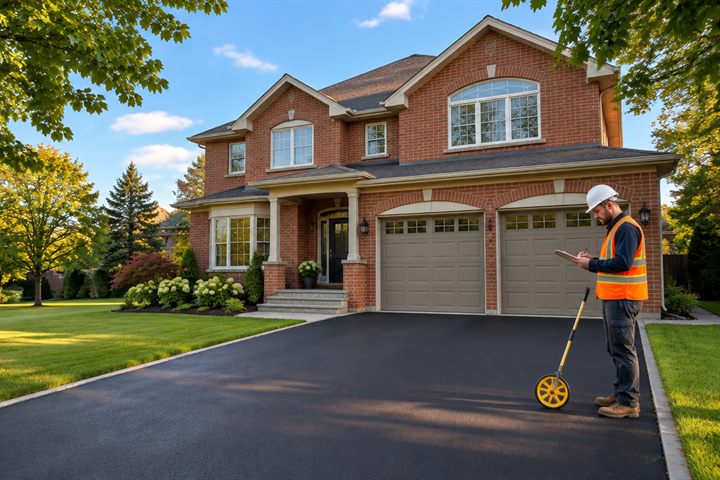
When you contact us for a free written estimate, mark on a photo or your survey where you’d like the new edge to go, and note where water runs across the lawn in a heavy rain. Both shape how the widening is built.