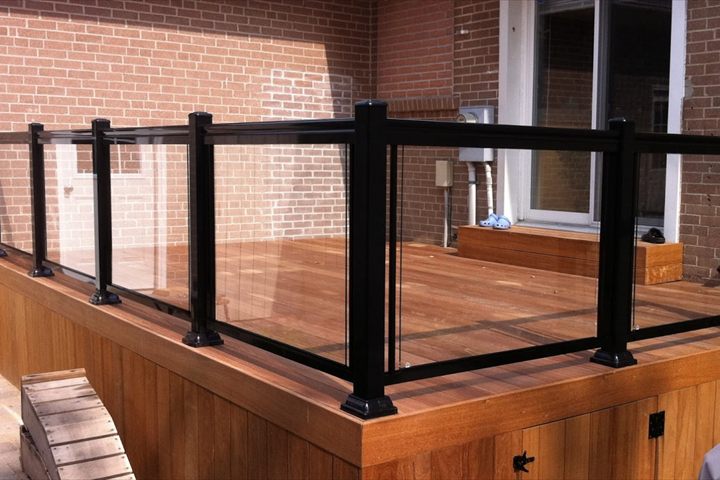
A glass railing does one thing a picket railing can't: it lets you see straight through it. Our glass railings are aluminum railings with tempered glass panels in place of pickets, for decks, balconies and stairs where the view is the reason you sit outside, or where the wind makes a raised deck hard to enjoy. We install them on homes in Vaughan, Toronto and the towns around them in York Region and Peel.
Glass costs more than pickets and weighs more, so two questions decide it: is the view worth it, and can the structure underneath carry it?
How aluminum glass railings are built
Every glass railing we install has the same skeleton as a picket railing: powder-coated aluminum posts fastened to the structure, with a top rail between them. What changes is how the glass is held.
Framed glass panels
Each panel sits in a channel in the top rail and a bottom rail, with a post at either end, so the glass is held on all four sides. The frame covers the edges of the glass and gives a solid, finished look. It suits most decks, balconies and stairs.
Post-mounted glass
Here the panels are held to the posts with clamps, under a top rail, with no bottom rail and a small gap below the glass. With less aluminum in sight, the railing looks lighter, and rain and leaves clear out underneath instead of collecting in a channel.
Railings with no posts at all, where thick glass stands in a base channel, are a different product with different structural demands, and we don't install them. A post-mounted railing comes close to that look while keeping posts to carry the load.
Tempered glass: clear, frosted or tinted
Railing glass is tempered: heat-treated to be far stronger than ordinary window glass. If it does break, it crumbles into small, blunt pieces instead of long, sharp shards. Tempered glass also can't be cut or drilled once it is made, so every panel is ordered to the measured size of its opening. That is why the whole railing is measured on site before anything is ordered.
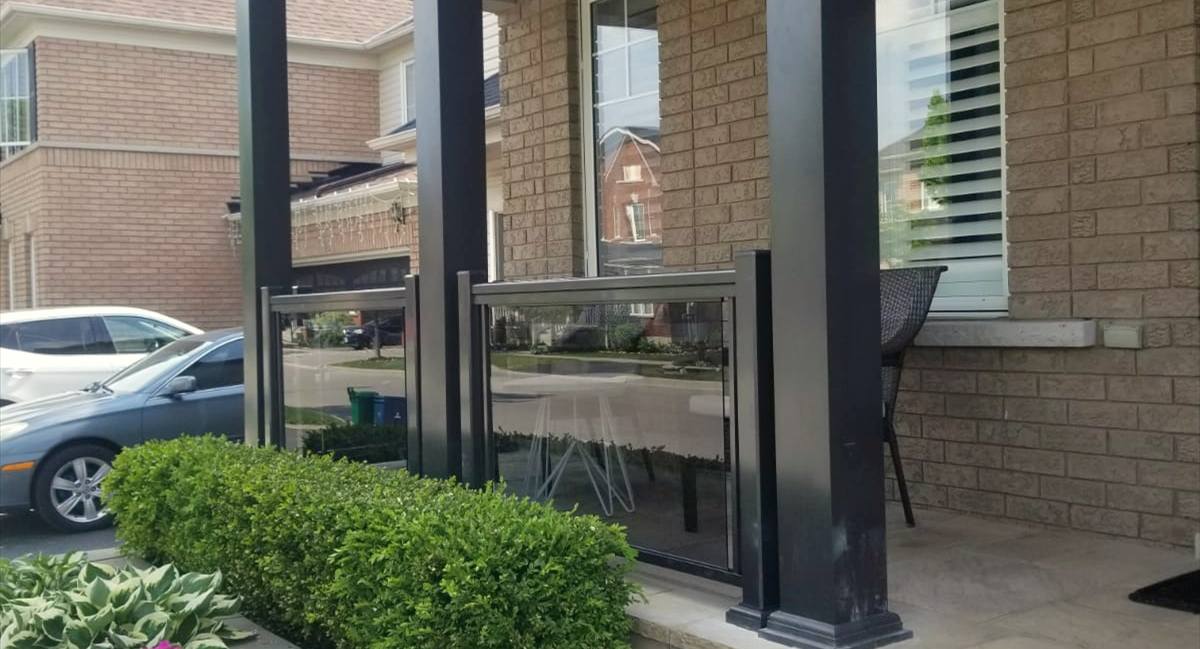
- Clear glass keeps the view open, whether it looks onto a yard, a ravine or a pool.
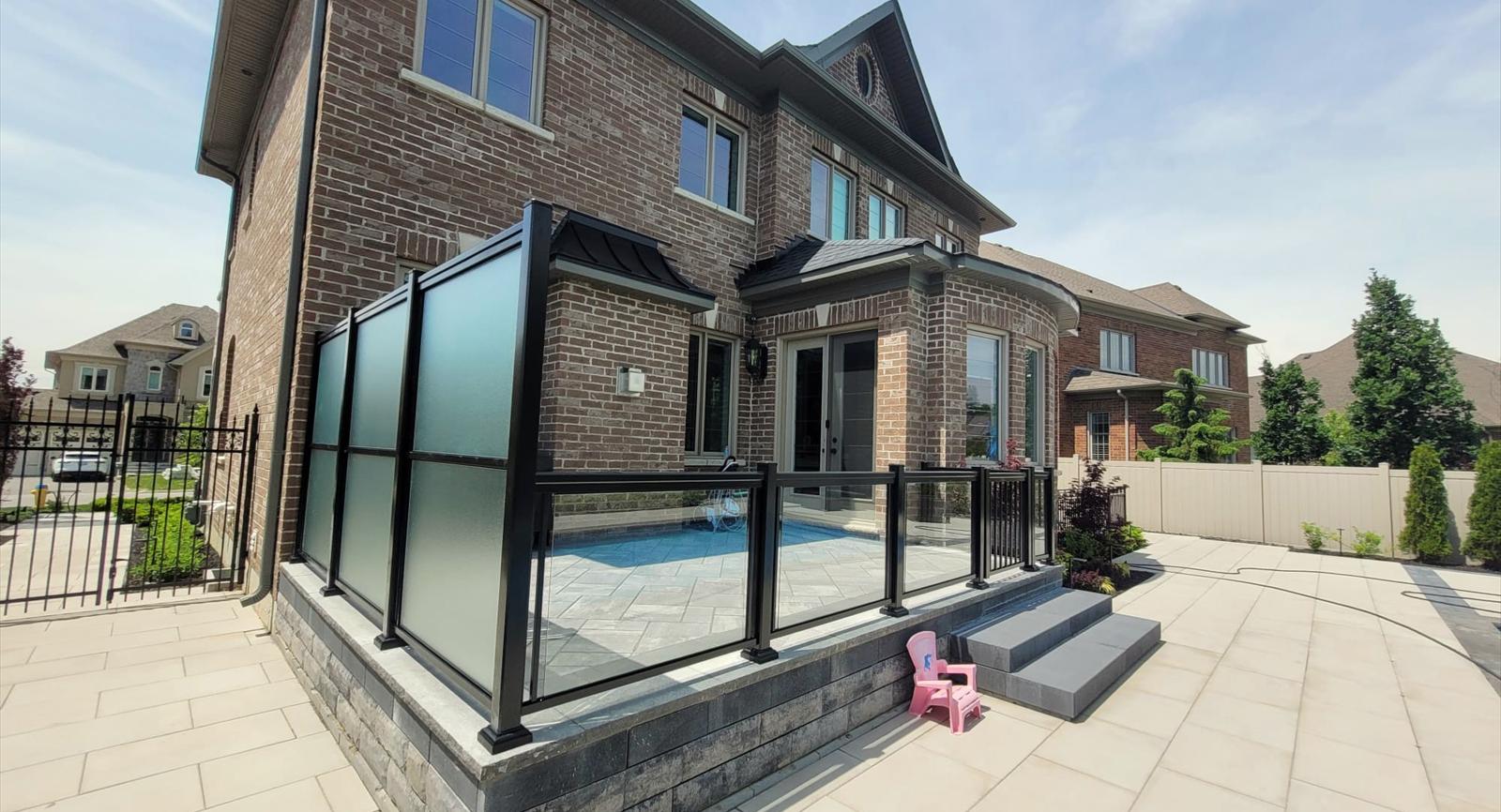
- Frosted glass lets light through but blurs what is behind it. It works as a privacy screen, and it shows water spots less than clear glass.
- Tinted glass cuts glare and gives some daytime privacy while keeping a view.
Many backyards need both: frosted panels on the side that faces a neighbour's windows, clear glass on the side that faces your own yard. We show you the panel options at the estimate.
Where glass deck and balcony railings suit
- Decks with a view. Pickets break up the view, more so from a chair or when you look along the railing. Glass doesn't.
- Glass balcony railings. A second-floor balcony catches more wind than the yard below, and glass keeps it usable on a breezy evening.
- Pool areas and patios. Glass keeps the water in sight from the deck. Expect more spots here, from splashing.
- Open, windy lots. On a raised deck with nothing around it, glass blocks wind at the height of a seated person.
Pickets are often the better call on a front porch and entrance steps, where hands touch the railing every day and the view matters less, and on a low deck with little view to save.
Glass, pickets or a mix
| Question | Glass panels | Aluminum pickets | Mixed |
|---|---|---|---|
| Cost | Highest. | Lowest. | In between, depending on how much is glass. |
| View when seated | Open. | Broken up by the pickets. | Open where it counts. |
| Weight on the structure | Heaviest, and the panels catch wind. | Light, and wind passes through. | Depends on the layout. |
| Cleaning | Regular washing to stay clear. | An occasional rinse. | Only the glass runs need regular washing. |
| Common use | Back decks and balconies with a view. | Front porches, steps and ramps. | Glass on the deck, pickets down the stairs. |
For picket styles, colours and porch railings, see our aluminum railings page.
What the posts fasten to
The glass doesn't hold anything up. The posts do. A glass panel adds weight and catches wind like a sail, so every post has to be fastened to something that won't move.
- Wood decks. Posts fasten into the framing, with blocking added where a post lands between joists. Soft or rotted framing gets fixed first.
- Concrete porches, slabs and steps. Posts are anchored into the concrete, which has to be solid. Cracked or hollow concrete steps are best rebuilt before a glass railing goes on them.
- Balconies. Posts are anchored to the slab or the structure of the balcony.
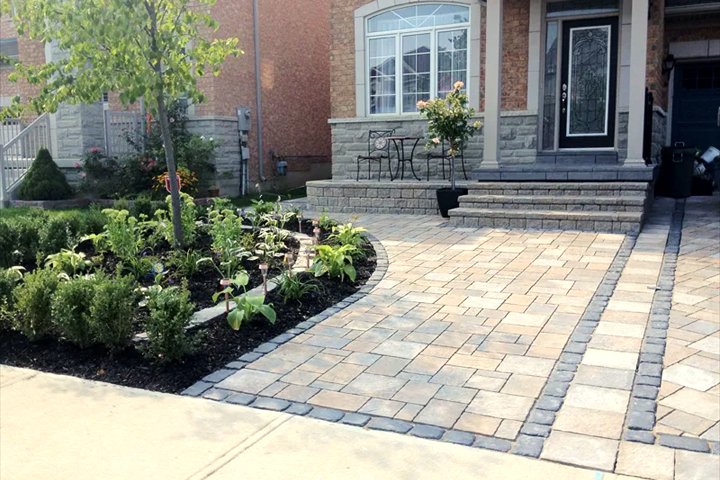
- Interlock patios. Pavers sit on gravel and bedding and shift too much to hold a post. A raised interlocking patio needs concrete under each post, which is easiest to plan while the patio is being built.
Posts can stand on the surface (top mount) or fasten to the outside edge of the deck or slab (side mount). Side mounting keeps the full width of the deck usable, if the edge is strong enough to take it. We recommend one after seeing your deck.
Glass stair railings
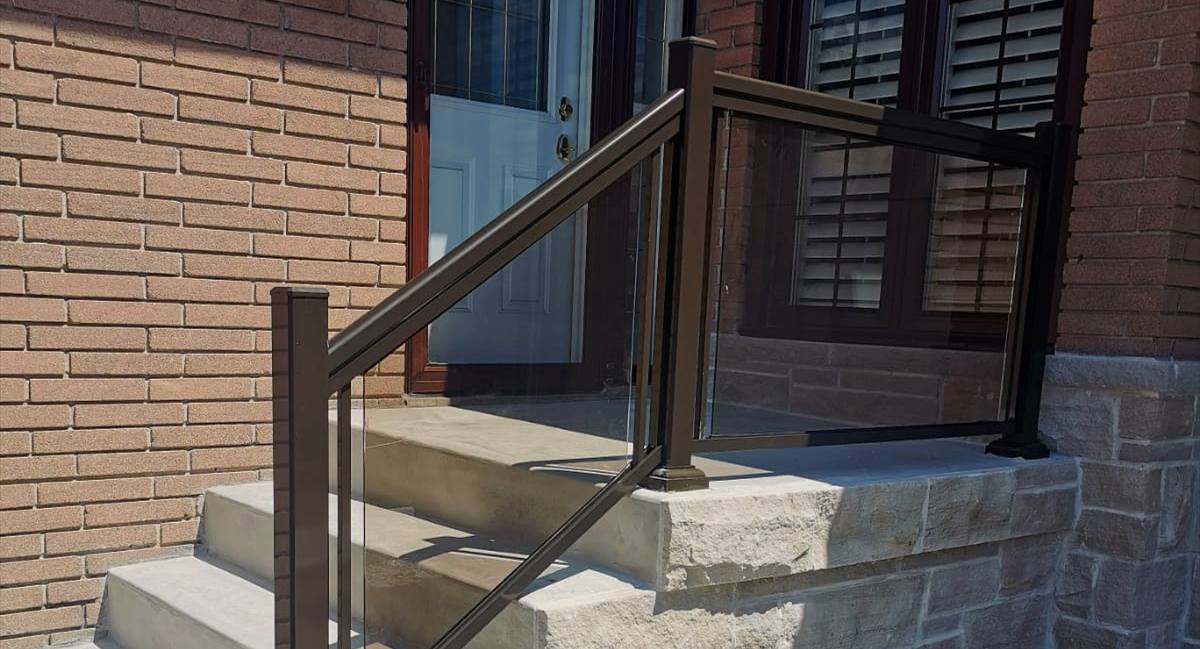
On stairs, each panel is made to the angle of the flight, so the top rail runs parallel to the steps and the glass follows their line. Because tempered glass can't be trimmed on site, every flight is measured carefully and gets its own panels.
Uneven steps make this harder. The panels follow one straight angle, so when the risers vary in height, the gap under the glass grows and shrinks along the flight. If your steps are being rebuilt anyway, have them poured with even risers before the railing is measured. We do the concrete as well, so the post locations can be planned into the new steps.
A lot of homes put glass on the deck, where the view is, and pickets on the stairs.
Cleaning and upkeep through the seasons
Tempered glass and powder-coated aluminum don't rot or rust, so upkeep is mostly keeping the glass clear. Wash it with mild soap, water and a soft cloth, then squeegee or dry it so the water doesn't leave spots. Skip abrasive pads, razor blades and harsh solvents, which scratch glass and dull the finish on the aluminum.
- Spring: rinse off road salt and ice melt left from winter, then keep up with pollen and sap.
- Summer: sprinklers and pool splash leave mineral spots that harden in the sun. Aim sprinklers away and wipe spots before they set.
- Fall: clear leaves from the bottom rail so water can drain.
- Winter: don't pile snow against the panels, and keep shovels and metal scrapers off the glass.
Once a year, push on each post. If one moves, call us before the fastening loosens further.
Is a glass railing expensive?
It costs more than an aluminum picket railing of the same length, because each tempered panel is made to measure, and the posts and anchoring have to suit the extra weight. How much more depends on the job:
- The total length, and the number of runs and corners. Every corner and end adds a post.
- Stairs. Angled panels made for each flight cost more than straight runs, and a landing adds another set.
- Framed or post-mounted glass, and clear, frosted or tinted panels.
- Top or side mounting, and what the posts fasten to.
- Concrete steps or a porch that need fixing before the posts go on.
- Access. A second-floor balcony or a yard reached only through the house takes more handling.
- How much of the railing is glass and how much is pickets.
For a glass stair railing, the cost to install comes down mostly to the number of steps and flights, any landing, and what the posts anchor into. Your free written estimate prices the railing you want, and can price a picket or mixed version beside it.
What to send for a glass railing quote
- Photos of every side where the railing will go, plus a close-up of the surface or edge the posts will sit on, and the deck's underside if you can reach it.
- The rough length of each run, and the number of steps on each flight.
- Clear, frosted or tinted glass, framed or post-mounted, and black or white aluminum, if you know.
- Any steps, slabs or framing that need work, and your town.
Send it through the contact page. Nothing is ordered until it has been measured on site, and the written estimate lists each run, the glass and how the posts are mounted.