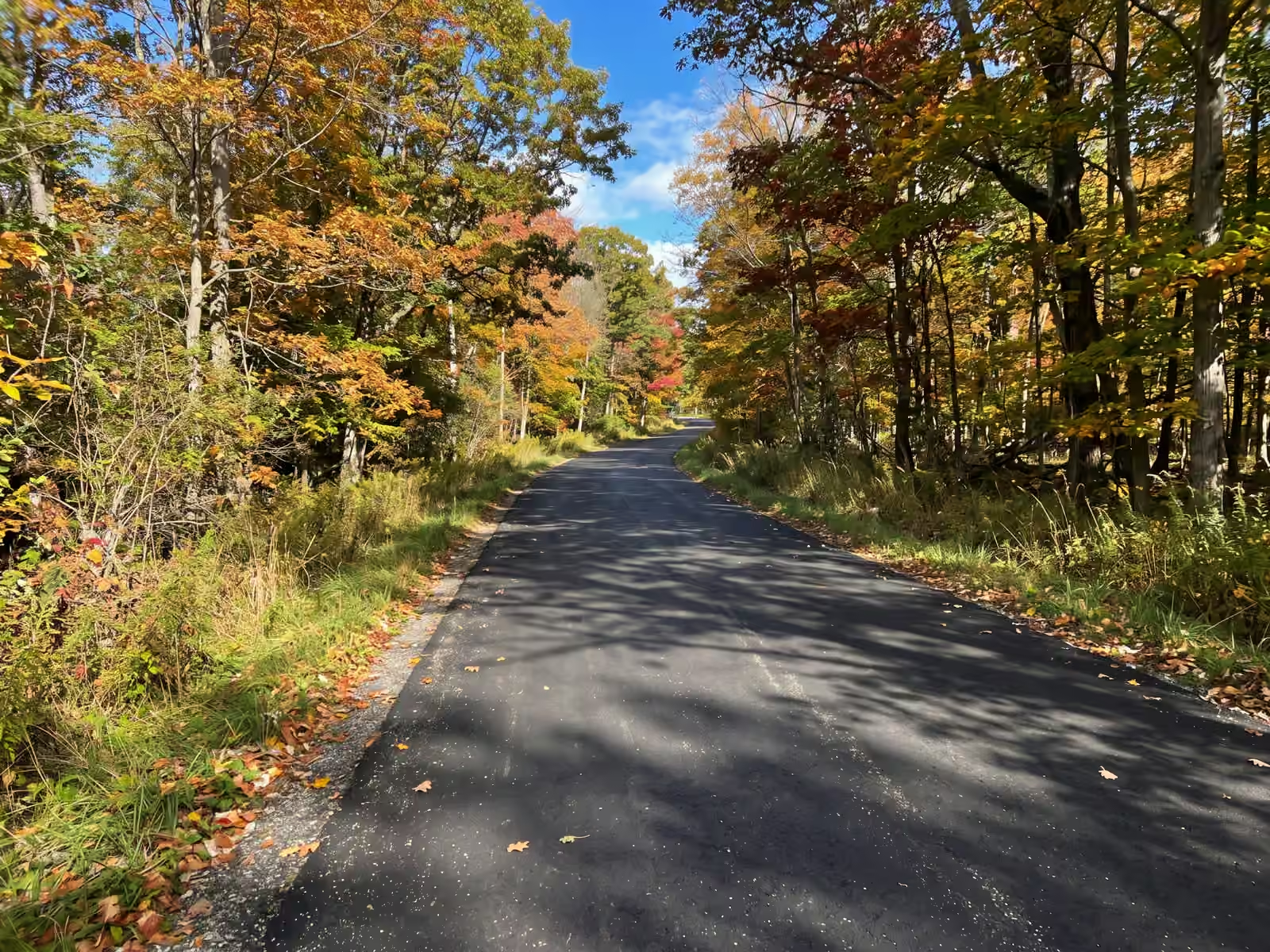
A condo’s internal road looks like a public street, but no city crew will fix it. The internal roads of condominium and townhouse complexes, long lanes to rural and estate properties and access roads to facilities are paid for by a condo corporation, an owner or a group of owners, and they carry far more weight than most people expect.
The roads we pave
Condo and townhouse complex roads
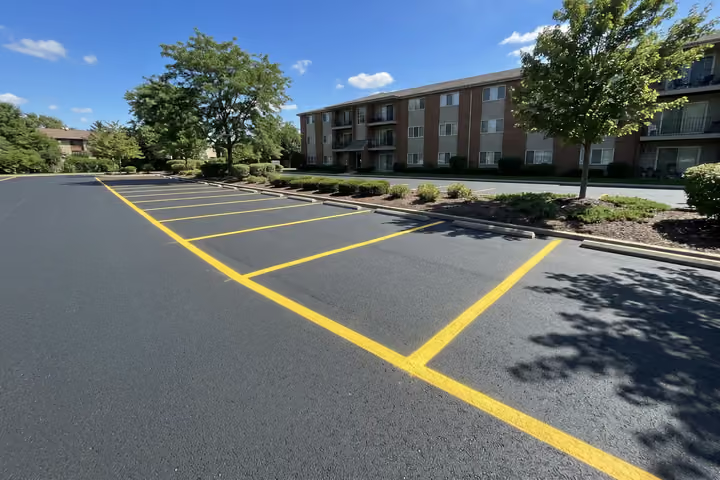
Internal roads in a townhouse or condo complex are usually common elements. They carry residents’ cars every day, garbage and recycling trucks every week, moving trucks, delivery vans and, when needed, fire trucks. Many complexes were built with roads that look like long driveways, and they wear like them. Speed humps, tight turning circles and parking along the edges add more stress.
Long rural and estate lanes
On larger properties in Whitchurch-Stouffville, Aurora and the north of Vaughan and Markham, a driveway can run hundreds of feet from the road. These lanes often start as gravel, and paving them means building a proper road profile, with a crown and shoulders, instead of a longer driveway. Parts of this area sit on the Oak Ridges Moraine, which is sand and gravel with a high water table in places, so drainage along the lane decides how long it lasts.
Access roads
Roads into industrial sites, storage yards, places of worship, schools and private facilities. They often see a mix of cars and heavy vehicles and need to stay open while they are worked on.
Built for heavy vehicles
The biggest difference between a private road and a driveway is the heaviest vehicle that uses it. A loaded garbage truck or fire truck puts far more weight on each wheel than a car, and it does so on the same narrow strip every time.
As general practice, private roads get:
- A deeper granular base than a residential driveway, compacted in layers.
- A binder course and a surface course of asphalt, not a single layer.
- Wider, supported edges, because trucks drift toward the edge on narrow roads and break off unsupported asphalt.
- Stronger construction at turning areas, cul-de-sacs and the bulbs at the ends of roads, where trucks turn tightly.
Ask for the base and asphalt depths in any quote. They depend on the soil, the vehicles and how the road drains, and they are the main difference between a road that lasts and a driveway that happens to be long.
Drainage: crown, shoulders and ditches
Water is what breaks up private roads, especially long ones with no curbs.
- Crown or cross-slope. The surface is shaped so water runs off to the sides instead of down the middle.
- Shoulders. Gravel or stabilized shoulders support the asphalt edge and carry water away from it. A road paved right to a soft lawn edge breaks off quickly.
- Ditches. On rural lanes, water from the road needs a ditch to go to. If the ditch has filled in or the road edge has built up above it, water sits along the edge and softens the base.
- Culverts and crossings. Where a lane crosses a ditch, the culvert has to be clear and set to the right level, or water backs up onto the road.
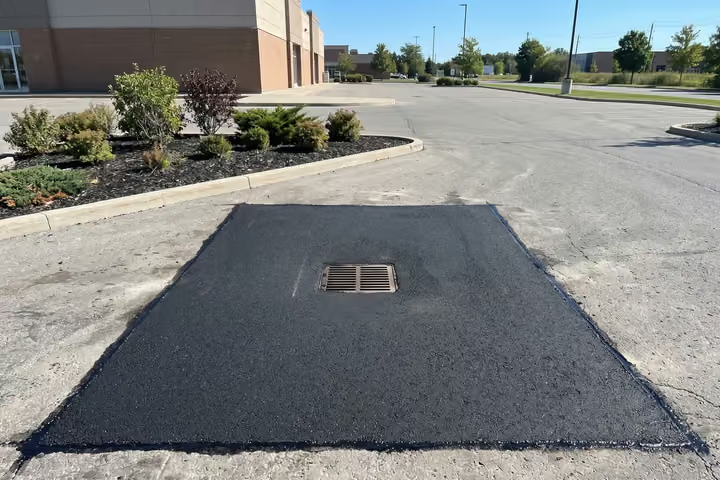
- Catch basins. Condo roads with curbs drain to catch basins, which need to sit at the right height; a sunken one is a hazard for every car that turns past it, as our catch basin repair page explains.
Where the road meets the public road
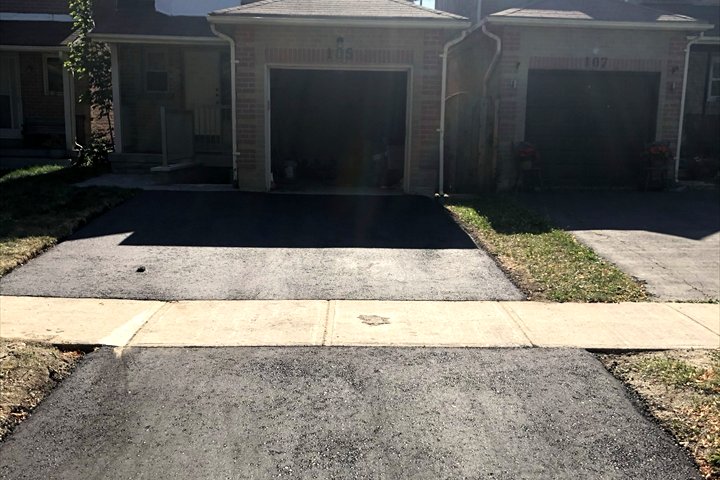
The few metres where a private road joins the street carry every vehicle that uses it, most of them turning, braking or accelerating. That makes the entrance the first place a private road ruts and breaks up, and the place where a careful build pays off most.
- A heavier section at the entrance. Turning garbage trucks and moving vans scuff and push the asphalt there, so the entrance often needs a deeper base than the straight runs.
- A clean joint with the road edge. The end of the old private road is cut back to a straight, sound edge so the new paving finishes tight and level at the road edge. A ragged joint lets water in and breaks off under plows.
- Levels that keep road water out. The entrance is set so water from the street runs along the gutter or ditch, not up onto the private road.
- The ditch crossing. On rural lanes, the culvert under the entrance has to be clear and sized to carry the ditch flow, or water backs up across the road every spring.
- Buried lines. Hydro, gas and telecom lines often run along or under a rural entrance. Utility locates through Ontario One Call are booked before any digging starts.
The entrance can be paved as its own short stage, so the road stays usable for as long as possible and the entrance closure is as short as it can be.
Keeping residents moving
Paving a condo road is different from paving a parking lot because people live at the end of it. Every unit needs a way in and out, and so do emergency vehicles.
- Paving in sections. The road is split by stretch or by half-width, so there is always a route through.
- Dates for each section. The closure dates are agreed with the manager ahead of time, so notices can go to owners; our page for property managers and condos lists what residents need to know.
- Garbage day and moving days. Closures are planned around collection and any booked moves.
- Cars parked on the road. Residents who park on or along the road need to know which stretch has to be clear, and from when.
- Evening or Saturday work can be booked when weekday closures are hard on residents.
Repair or rebuild
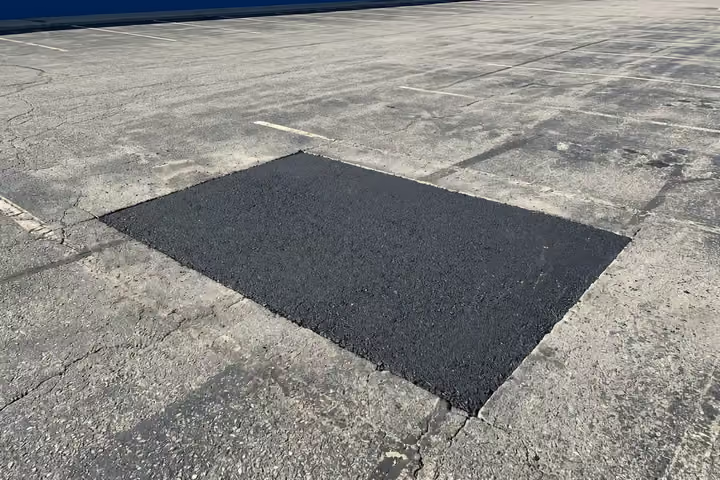
Not every private road needs full reconstruction. Potholes, cracking at edges and settled areas around catch basins can often be repaired, and hot rubber crack filling slows further damage; the methods are the same ones used in parking lot repair. When the road is rutted, breaking up across its width or failing along every edge, a rebuild is usually the better use of reserve fund money.
Ready to price it? For a condo road, have the road’s length and the reserve fund study’s paving line to hand when you contact us. For a rural lane, tell us its length and width and whether it crosses a ditch.