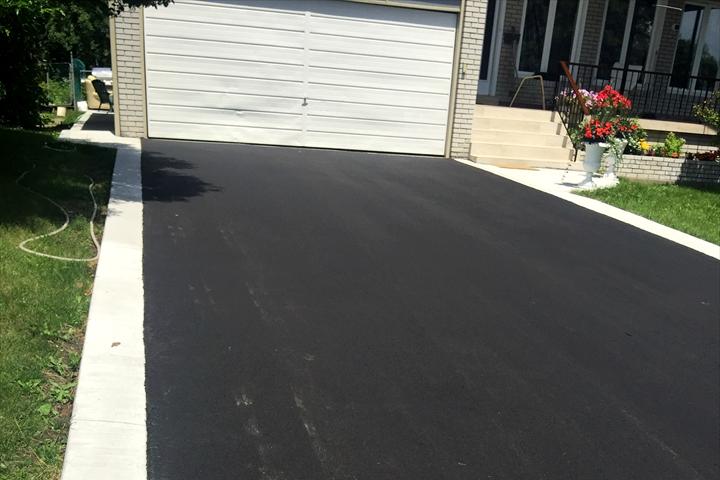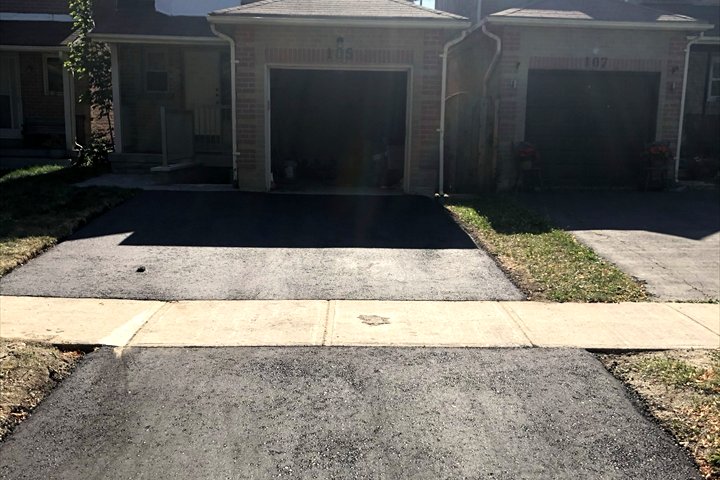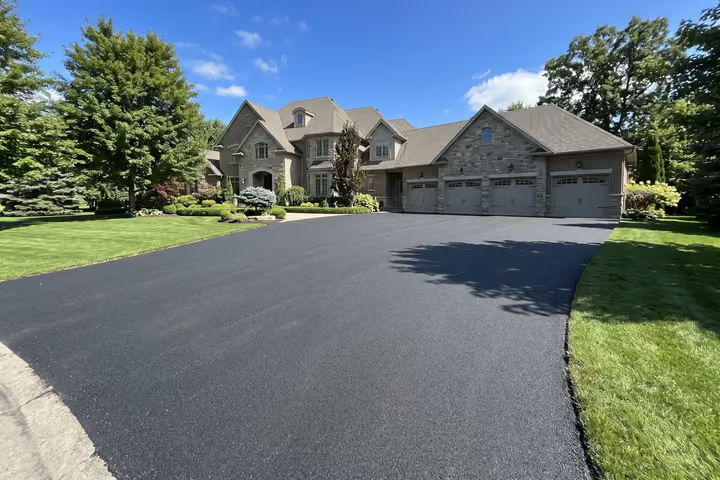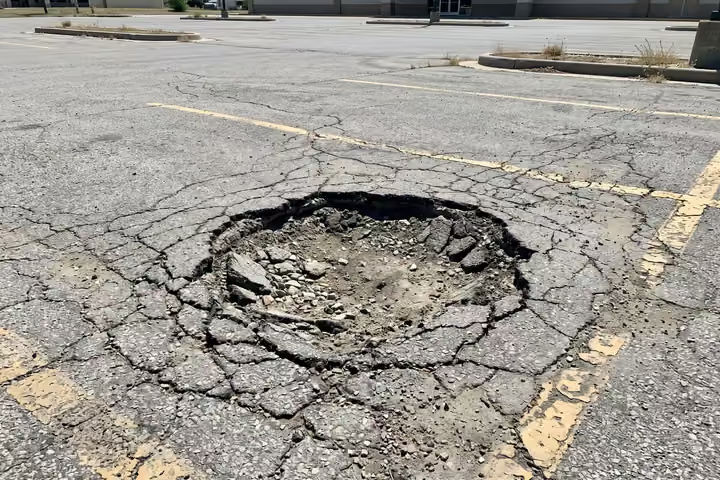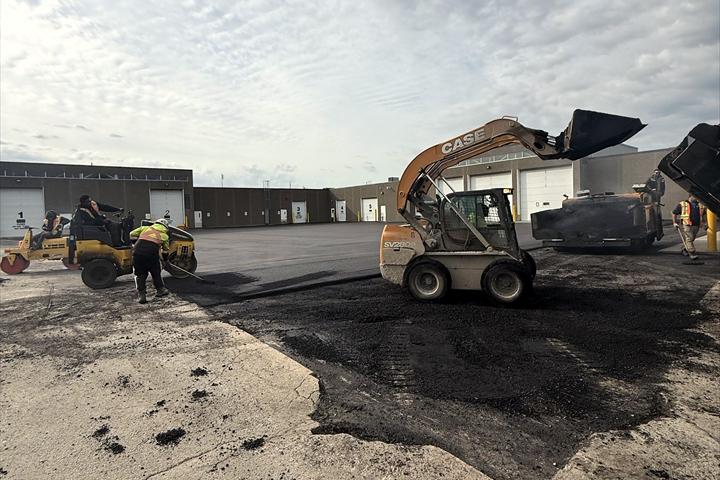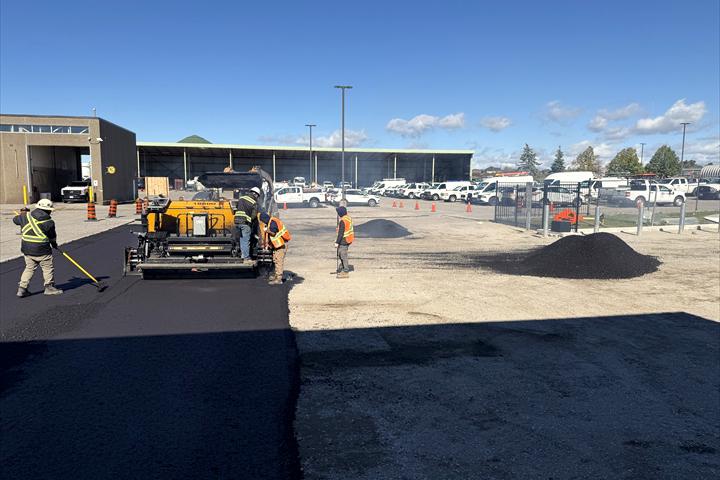
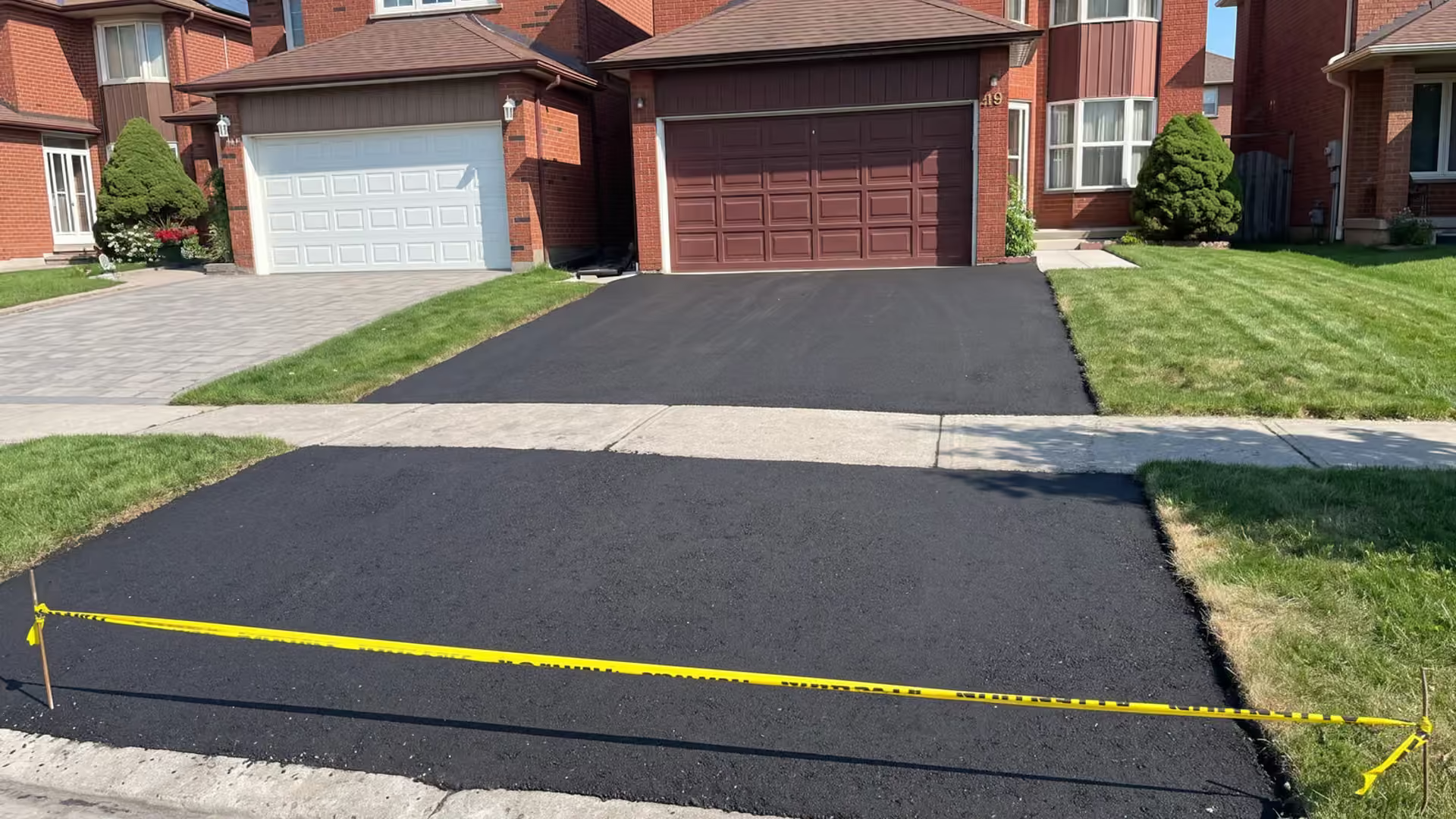
Our office is in Vaughan, so most of the driveways and lots we price are a short drive away. What changes across the city is the ground under the asphalt and the kind of property on top of it. A double driveway in Woodbridge, a narrow townhouse driveway in Maple, a long drive in Kleinburg and a truck yard in Concord all fail for different reasons, and each needs a different build.
The ground under south and north Vaughan
South of the Oak Ridges Moraine, much of Vaughan sits on silty, clay-bearing glacial tills that drain slowly and are frost-susceptible. Water that gets under a driveway stays there, and when it freezes it lifts the asphalt. The north of the city reaches onto the moraine itself, which is sand and gravel. That drains better, but the water table is high in places, so a low corner can stay wet long after the rain stops.
The difference shows once the old driveway comes up. On till, the usual find is a soft, wet layer that the weight of a car keeps squeezing down. On moraine sand, the ground drains but has to be compacted firmly before stone goes on it. Either way, soft or wet material gets dug out and replaced with compacted granular stone. Paved over, it’s how driveways end up sinking in patches two or three winters later.
How a driveway replacement is built
A replacement is mostly work you never see once it’s finished:
- The old surface comes out. Asphalt, broken base and anything soft underneath are removed down to firm ground.
- A new granular base goes in. Crushed stone such as Granular A is spread and compacted in layers, because a thick layer compacted all at once stays loose at the bottom and settles later. Depths are set after the site visit and written into your quote.
- The base is shaped for water. The finished surface needs a steady fall away from the house and toward the street or a side lawn, with no flat spots where a puddle can sit and soak in.
- Hot asphalt is laid and rolled. Driveways are finished in HL3, a durable surface mix, rolled while it’s hot so it compacts tight and sheds water.
- Edges and transitions are finished. Where the asphalt meets the garage slab, the sidewalk or a walkway, it’s set flush so water crosses the joint instead of collecting against it. Along lawn edges, the base runs a little past the asphalt so the edge has something to bear on.
How long a driveway takes depends on the job. Tight access for trucks, a lot of soft ground to dig out or a very long driveway add time, and the estimate tells you what to expect.
Timing your paving in the season
Asphalt is laid hot and has to be compacted before it cools, so the paving season runs from spring, once the ground has thawed and dried, into fall, until the nights turn cold. In the middle of summer the mix stays workable longer, but the finished surface also stays soft for longer, so a driveway paved in July needs more care in its first weeks than one paved in October.
If your driveway also needs widening or drainage changes, plan those into the same visit. Doing it all at once puts the whole surface on one base, laid the same day, with no seam to watch.
What changes from one community to the next
Woodbridge
Many Woodbridge driveways are on their second or third surface, so the decision is usually replace, resurface or repair. Streets nearer the Humber have more slope to deal with. Our Woodbridge page covers that choice, interlock-to-asphalt conversions and narrow driveways between houses. The older streets on the Vaughan side of Thornhill raise the same replace-or-resurface question, often with mature tree roots close to the driveway edge.
Maple
Newer subdivision lots bring settling backfill, drainage swales along the side lot lines and semis and townhouses with driveways side by side. Our Maple page covers those, along with looking after a new driveway in its first season.
Kleinburg
Long, sloped and circular driveways are common, and getting paving trucks in and out matters as much as the asphalt. More on our Kleinburg page.
Concord
Concord is Vaughan’s main industrial district, and it’s where most of our Vaughan industrial paving is. Truck yards and loading areas carry loads no driveway sees and need a heavier base and thicker asphalt. Our Concord page covers truck courts, drainage on large flat lots and working around a site that can’t close.
Parking lots across the city
A lot with faded stalls and a pond by the entrance is a trip hazard and a liability, and the pond is usually a sign that water is already getting into the base. Catch basins that have sunk below the surrounding asphalt, patches that have dropped and cracks left open over a winter all get worse together.
We work for condo boards, plazas, schools and places of worship. For the work itself, see parking lot paving, repair, line painting and catch basin repair, or our maintenance programs for property managers. For budgeting a repave, the parking lot cost guide has our per-square-foot range and what moves it.
What moves the price of a Vaughan driveway
Size sets the starting point, and the rest comes from the site: how much soft ground has to come out, how far the trucks have to reach, how much the slope has to be reshaped for drainage and how many edges and transitions there are. A long, narrow driveway with a garage at the far end costs more per square foot than a wide, short one of the same area. The driveway cost guide has our range and explains each factor.
Before you ask us for an estimate, walk the driveway after a heavy rain and note where water sits and where it runs. That tells the estimator more about your base than anything visible on a dry day.