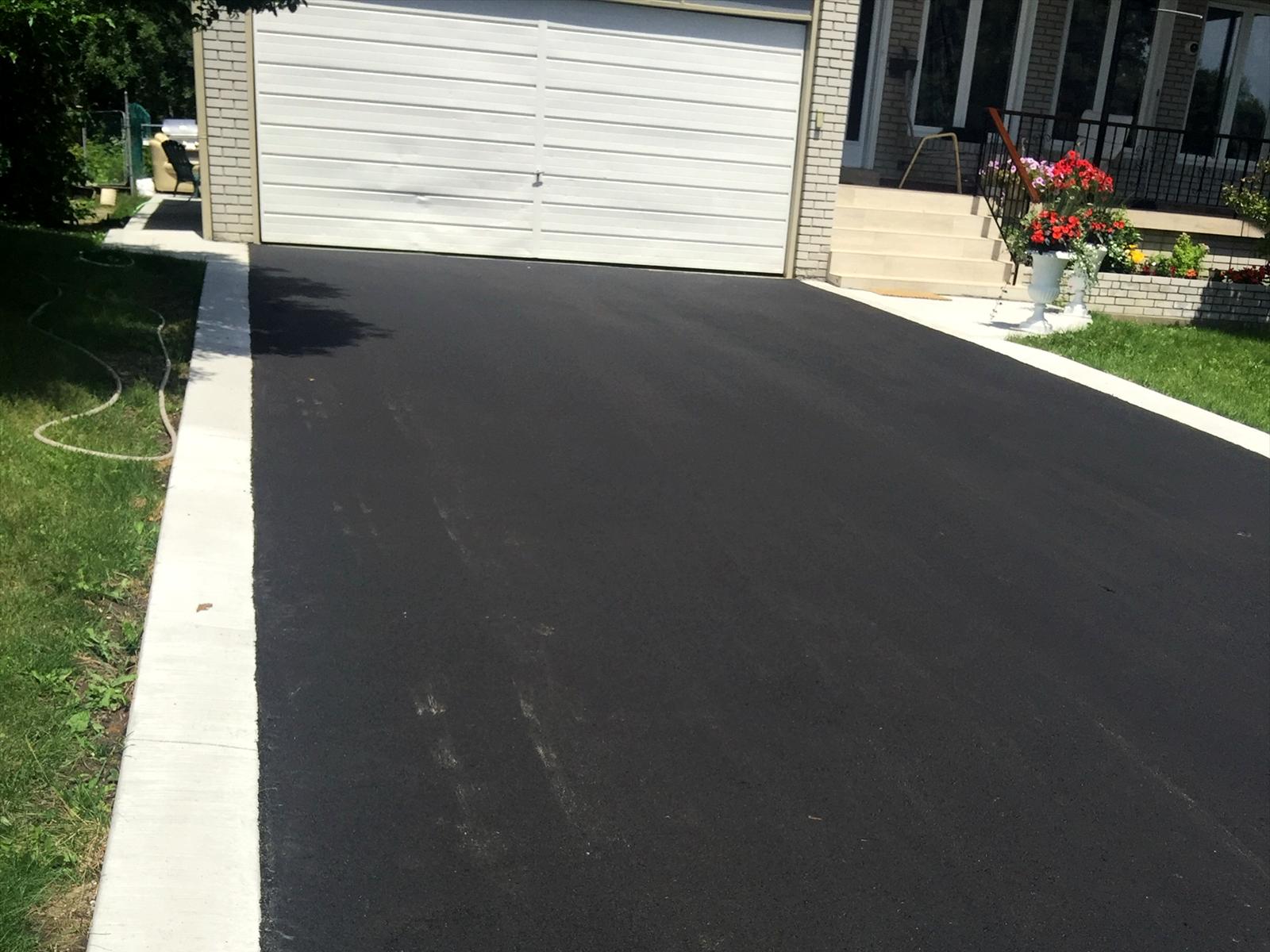
A driveway fails from the bottom up. Cracks, dips and puddles on the surface are almost always a sign that the stone base underneath has shifted, softened or was never thick enough. So when we pave an asphalt driveway, most of the work happens before any hot mix arrives. Below is what driveway paving with us includes, from the excavation to the last pass of the roller, for homes across Vaughan, Newmarket, Aurora and the rest of the GTA.
When a new driveway makes sense
A repair costs less, and on a driveway with a sound base it is often enough. Replacement is usually the better value when you see:
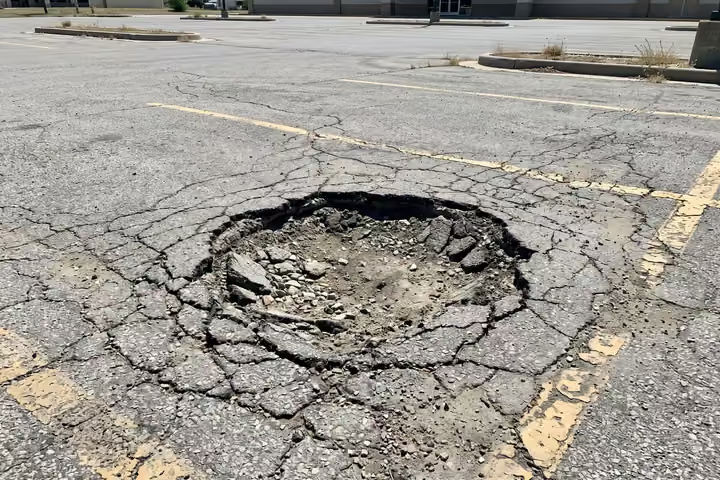
- Cracks running across most of the surface, often in a pattern like alligator skin. That pattern means the base is moving.
- Low spots where water sits after rain, or where ice forms every winter.
- Edges crumbling into the lawn or garden.
- Sinking near the garage or the curb, where water and plow damage collect.
- Patches on top of patches, where each repair fails faster than the last.
If only a few areas are damaged, see asphalt repair. If the surface is tired but solid, see resurfacing. If you also want room for another car, a driveway widening can be built in the same visit on its own new base.
What driveway paving with us includes
- Measuring and drainage. The area is measured, and the slope to the garage and the street is checked, because the finished surface has to shed water away from the house. Truck access and where your cars will go during the work are sorted out at this stage too.
- Removal. The old asphalt is broken out and hauled away. Older driveways that have been paved over more than once are thicker and take longer.
- Excavation. Underground utilities are located first. Then the ground is dug to the depth the new base needs. Soft or wet soil is dug out, not buried, because stone laid over a soft spot simply moves the weak point down a layer.
- Granular base. Crushed stone is spread in layers and each layer is compacted before the next goes on. Thin layers compact all the way through; one thick layer stays loose at the bottom and settles later. The base is shaped so water runs away from the house.
- Asphalt. Hot-mix asphalt is placed and rolled while it is still hot. Asphalt that cools before it is rolled stays porous, lets water in and wears faster.
- Finishing and clean-up. Edges are shaped so they sit on the base, transitions to the garage and the road are smoothed, and the site is cleaned.
Materials
Most GTA residential driveways are built on a compacted Granular A base, crushed stone that locks together and drains, with a hot-mix asphalt surface course. We use HL3, the same surface mix that’s standard on commercial parking lots. Some contractors use HL3A instead, a sandier mix that looks a little smoother when new but is softer and wears faster. The right depth for each layer depends on your soil, drainage and what parks on the driveway. Your written quote lists exactly what will be installed.
What affects the price
Size is the biggest factor. Removal, how much base needs replacing, truck access, the shape of the driveway, and drainage work all move the price as well. The driveway cost guide has the 2026 range and worked examples.
Built for Ontario winters
Water that gets into cracks or a soft base expands when it freezes, lifting and breaking the asphalt, and GTA driveways go through that cycle many times every winter. Much of the soil across Toronto, York Region and Peel is a silty, clay-bearing glacial till that drains slowly and is frost-susceptible, so water that reaches the base tends to stay there. On the sand and gravel of the Oak Ridges Moraine, in the north of Vaughan, Richmond Hill and Aurora, drainage is usually better but the water table is high in places. Either way, the defence is in the build: enough compacted stone underneath, a surface shaped to shed water, and edges that are supported instead of hanging over loose soil.
Looking after a new driveway
- Keep water moving. Make sure downspouts and the lawn don’t drain onto the driveway and pool.
- Fill cracks early. A small crack filled with hot rubber crack filler keeps water out of the base. We offer this as part of asphalt repair.
- Go easy in the first summer. New asphalt is soft in heat. Avoid jack stands, trailer tongues, kickstands and turning your wheels while parked.
- Plow with care. Set plow blades and snowblower skids slightly high, and use de-icer sparingly near the edges.
Problems a replacement should fix
- Puddles at the garage door caused by a base that was never sloped properly.
- A sunken strip at the street end, where the driveway meets the curb.
- Edges breaking off because the asphalt was laid past the end of the base.
- Cracks over old patches where a utility trench was never compacted.
Each of these starts below the asphalt, so paving over the top won’t cure it. A rebuild designs it out: the slope is reset, the trench is dug out and recompacted, and the base is carried past the edge.
If your driveway has one of these problems and you’re unsure whether it needs a rebuild or a repair, send photos of the garage end, the street end and the worst cracking through our contact page. Estimates are free and come in writing.