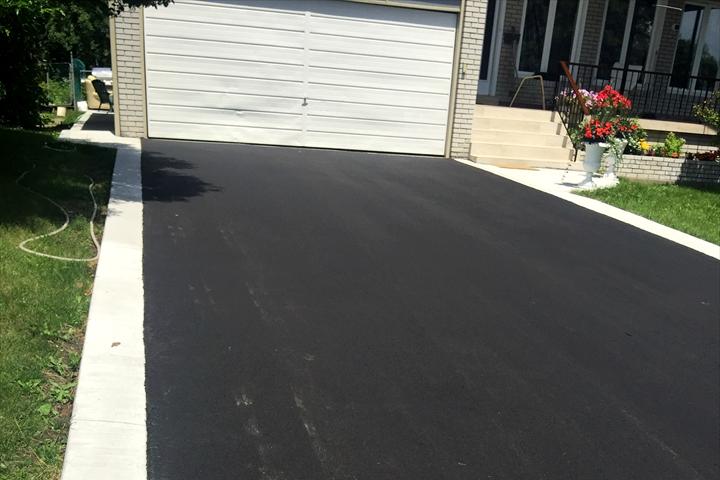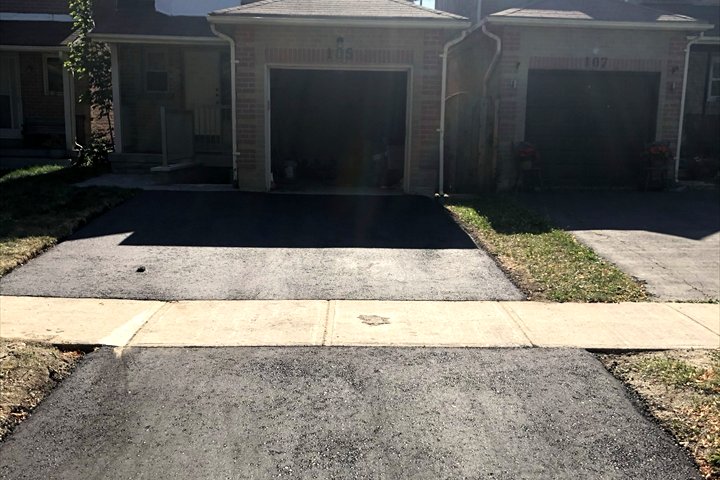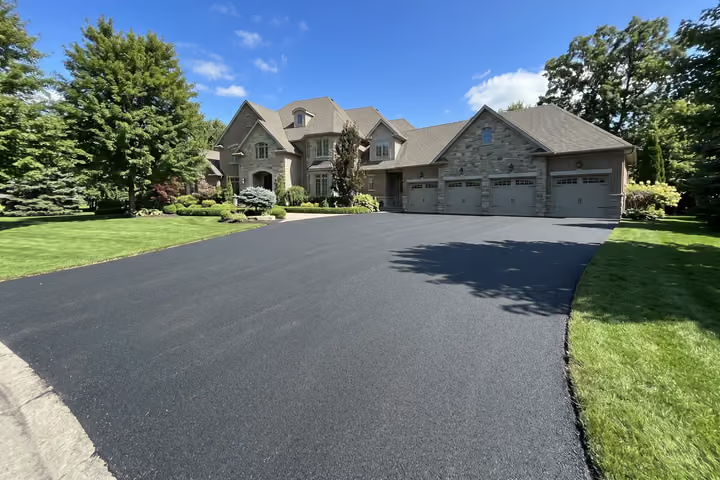
Markham covers a lot of different housing in one city. Unionville and Markham Village have older streets and mature trees. Cornell was built with garages on rear lanes. Berczy Village, Wismer Commons, Cathedraltown and the other newer communities are mostly attached-garage subdivisions. Each one puts the driveway in a different place relative to the house, and that changes where the water goes and how the job is built.
Getting the slope right
Most driveway failures in Markham start with water. Much of the city sits on silty, clay-bearing glacial tills that drain slowly and are frost-susceptible, so water that gets under the asphalt stays there, freezes and lifts the surface. The Rouge River and its tributaries cross the city, and lots near the valleys can be wetter than lots a few streets over.
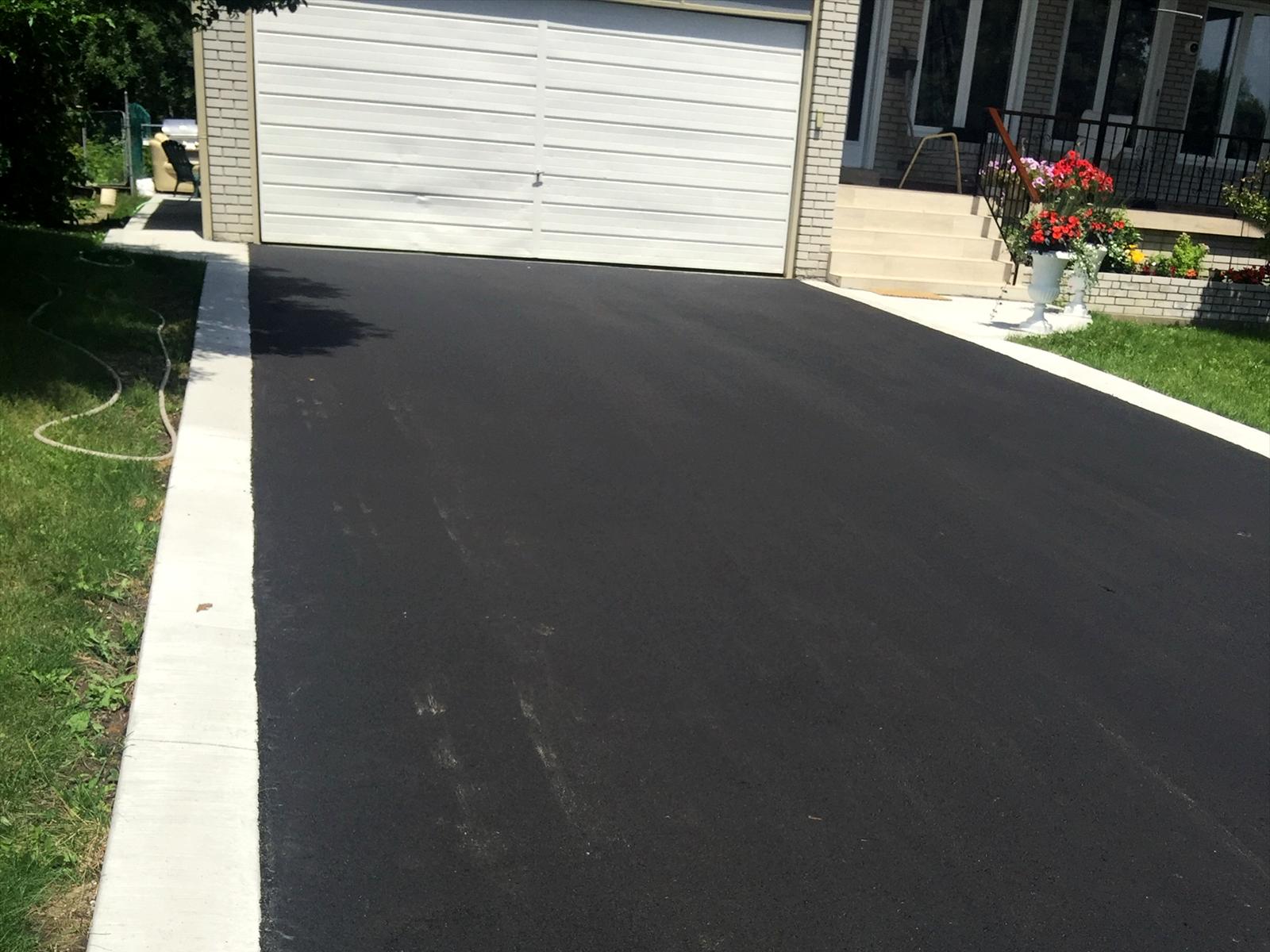
A driveway needs enough fall to move water off the surface and toward the street. Too little and puddles sit on it until they find a crack. Too much and cars scrape at the street and the surface gets slippery in winter. On a replacement, the old slope is the starting point, not the answer: if the driveway has settled toward the garage, an overlay can’t fix it, because new asphalt follows the shape underneath.
Side-yard swales are the other trap. If the swale beside your driveway empties across it today, a wider driveway can’t simply pave over that path and carry the water on. The swale needs its own route to the street, and finding it decides where a new edge can go.
Rear-lane garages in Cornell
Cornell’s homes often face a street or park at the front, with the garage on a lane behind. The driveway is a short apron between the lane and the garage door. It’s a small job in area, but the levels are tight: the apron has to tie into the lane at a height that lets lane water run past, and still fall away from the garage. Access is usually through the lane, so truck deliveries and the roller are planned around neighbours who use it too.
Older streets in Unionville and Markham Village
On Unionville’s older streets, a driveway often runs between a mature tree and the house, so the edge line matters as much as the base. Repeated overlays there tend to leave a lip at the front walk. A firm base with a worn surface can suit resurfacing if the height allows a full layer; a soft or settled one needs rebuilding.
Four routes for a Markham driveway
- Replacement, when the base has failed or the slope has turned toward the house. See asphalt driveways.
- Resurfacing, when the driveway is firm, already drains the right way, and has room for a full layer of new asphalt. See resurfacing.
- Widening, planned around side-yard drainage. See widening and extensions.
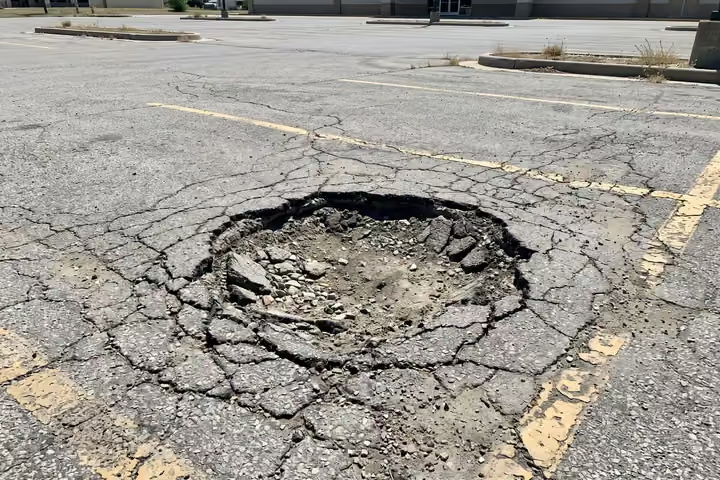
- Repair, for isolated potholes and cracks, including hot rubber crack filling. See asphalt repair.
What each route costs, and why, is in the driveway cost guide.
Plazas and multi-unit sites
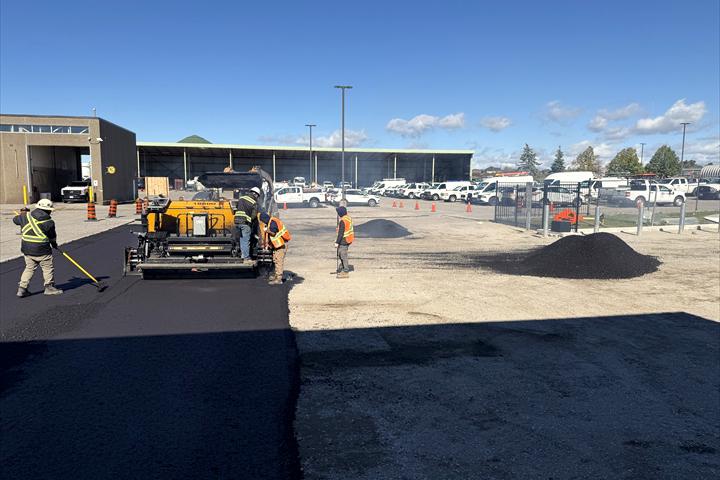
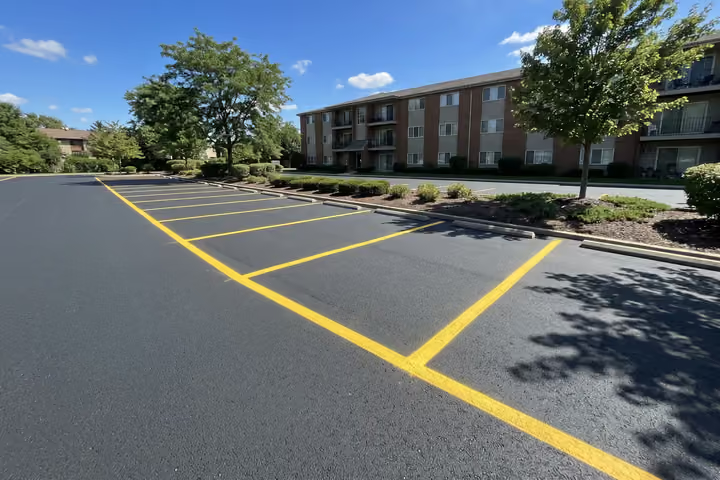
Markham has a lot of busy commercial plazas and multi-unit residential sites, and on a large lot, slope matters even more. One low spot collects water from a wide area and carries it into the base around the nearest catch basin. Plaza lots also take heavy turning traffic at entrances and drive-through lanes, where the surface wears and shoves first. We pave, resurface and repair parking lots, rebuild catch basins and repaint lines, working in sections so tenants keep access. See parking lot paving, parking lot resurfacing or our maintenance programs.
If water sits anywhere on your driveway after rain, take a photo of it before it dries and include it when you ask for an estimate. Where the puddle forms tells us more about the base than the cracks do.