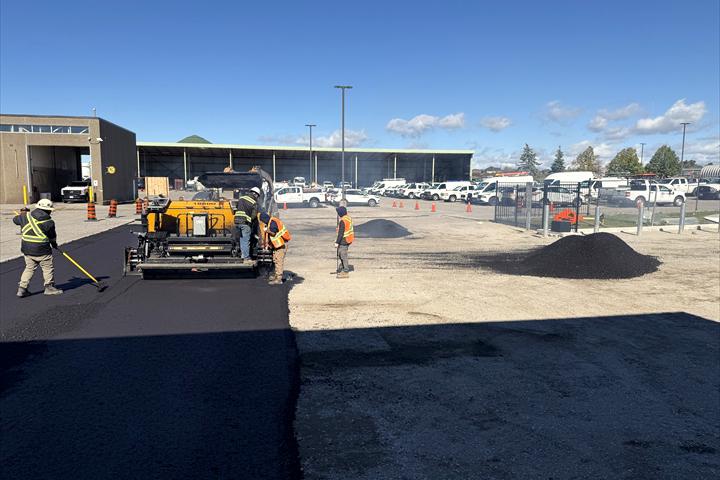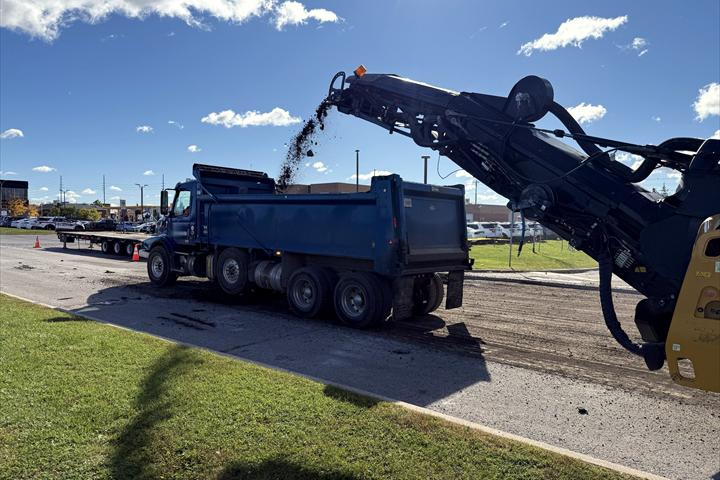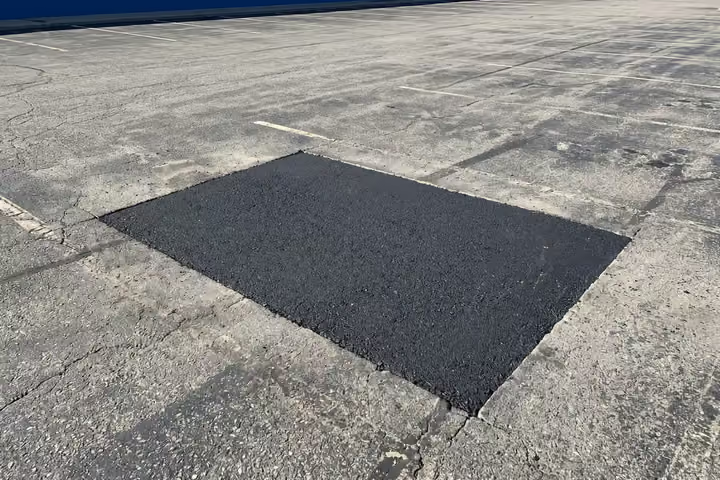
The first decision on most Newmarket lots is whether to mill and repave or rebuild from the base up. A lot with a sound base and working drainage can take a new surface for a fraction of the cost of a rebuild. A lot that has rutted, heaved or broken into patterns has a base problem, and new asphalt on top of it will follow the old damage within a few winters. On this town’s slow-draining till, drainage usually decides which kind of lot you have. For residential paving, see our Newmarket page.
The lots we see in Newmarket
Newmarket’s busiest commercial ground runs along Davis Drive and Yonge Street: plazas, offices, medical buildings near Southlake, and apartment and condo buildings. Add the lots at schools and places of worship across town, and the same few patterns keep coming up.
- Plazas carry steady car traffic all day plus delivery trucks at the back. The truck route and loading areas wear out years before the parking stalls.
- Condo and apartment lots take garbage and recycling trucks, moving vans and snow-clearing equipment. The pad where the garbage truck stops and turns is often the most damaged spot on the property.
- Offices and medical buildings have heavy morning and evening peaks and a lot of turning in tight aisles, which scuffs and ravels the surface.
- Places of worship and schools see light traffic most of the week and heavy use at set times, which makes scheduling the work easier.
What goes under a lot that lasts
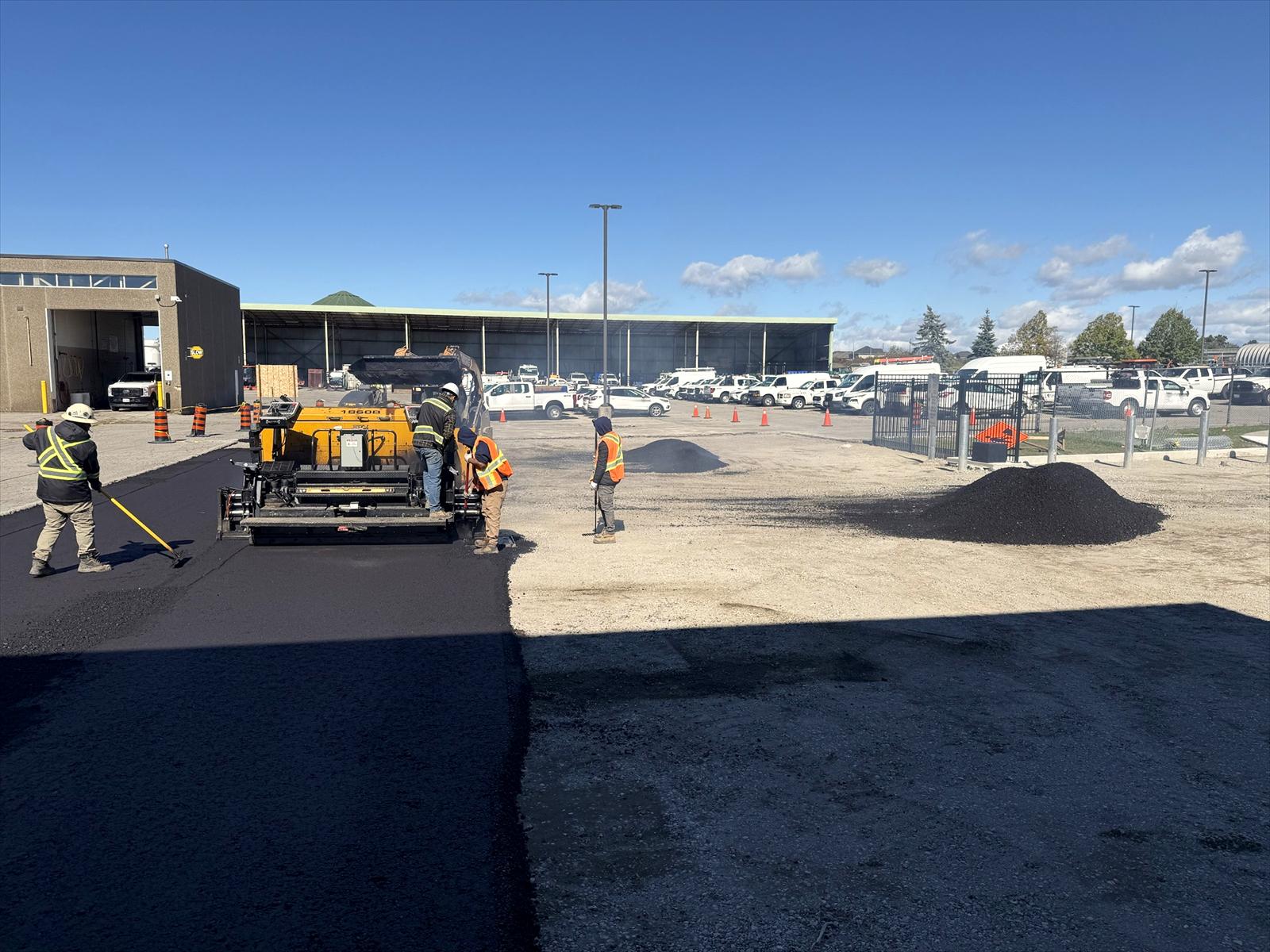
A commercial lot is usually built heavier than a driveway: a lower layer of Granular B stone, a layer of crushed Granular A on top for a firm, level bed, then two lifts of asphalt, a coarse base course such as HL8 and a surface course such as HL3. The base asphalt carries the load and the surface course seals and wears.
Not every part of a lot needs the same build. Drive lanes, truck routes, garbage pads and loading areas need more than parking stalls that only see cars. Your written estimate sets out the depths for each area, so you can see where the money goes.
Drainage on Newmarket’s till
Most of Newmarket sits on silty, clay-bearing glacial tills that drain slowly and are frost-susceptible. A parking lot on that ground depends entirely on its surface grades and catch basins to move water off. Where water ponds, it finds its way through cracks into the base, freezes, and lifts the pavement. That’s the pattern behind most of the potholes that appear near catch basins and in low corners every spring.
A repave is the time to fix the drainage, because the grades can be corrected as the new asphalt goes down:
- Ponding areas get regraded so they fall toward a basin.
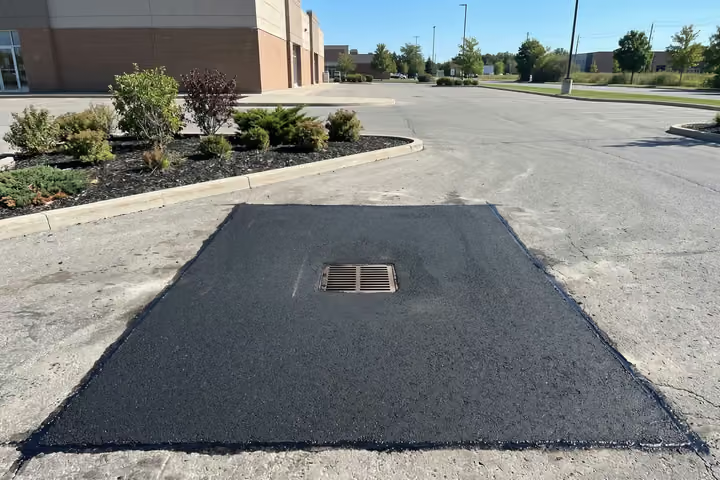
- Settled catch basins get rebuilt and their frames reset to the new surface level. See catch basin repair.
- Low edges get attention where the lot meets landscaping or a curb, since water that runs off the asphalt and sits against its edge softens the base underneath.
If you have the drawings from when the lot was built, send them along. They usually show the intended grades and the catch basin locations, which helps when the lot has drifted from what was designed.
Keeping the lot open
Few Newmarket lots can close for the job. The usual answer is to pave in sections, so part of the lot stays open for tenants, residents and customers while the rest is milled and paved. A few things shape the order:
- Fire routes stay clear. Fire trucks still need a way in, so the sections are arranged around the fire route, not across it.
- Accessible stalls move, not vanish. When the section with the accessible parking is being paved, temporary accessible spaces go near the entrance in the open part of the lot.
- Entrances are done last or at the quietest time. On a lot with one way in off Davis Drive or Yonge Street, the entrance is the hardest part to close, so it gets the shortest possible window.
- Tenants hear about it early. A notice a week or two ahead, with the dates for each section, saves most of the complaints.
We can coordinate concrete, curb or drain contractors where the job needs them, so the sequence holds together.
After the asphalt
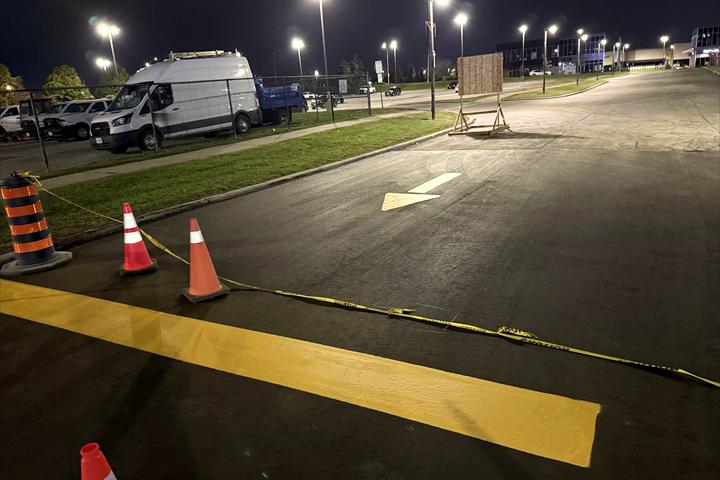
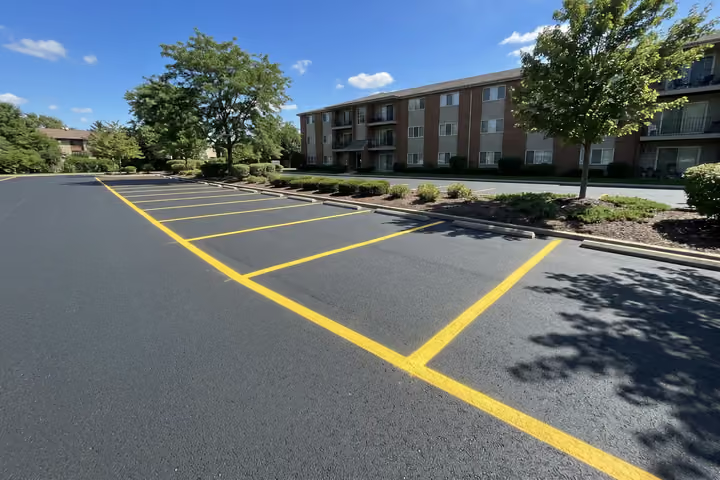
New asphalt covers every stall line, arrow and fire route marking, so line painting follows the paving. If the old layout never worked well, this is the moment to change it, and we can supply a proposed layout for you to sign off. Accessible stalls, fire routes and crosswalks go back in first.
After that, the cheapest way to protect the investment is to keep water out: fill cracks while they’re small, and deal with any catch basin that starts to settle. Our maintenance programs cover inspections, patching, hot rubber crack filling, catch basin repair and line repainting for managers with one lot or several.
Budget and timing
Per-square-foot prices are in the parking lot cost guide. What moves a Newmarket job within that range is mostly the share of the lot needing full-depth rebuild, the number of catch basins to rebuild, and how many sections the work has to be split into.
If the future of the site is uncertain, for example an older plaza that may be redeveloped in a few years, a full rebuild may not pay for itself. Parking lot resurfacing or targeted repair can carry the lot until the decision is made. Our main parking lot paving page covers the full scope of new lots and repaves, and we respond to formal tenders where a board or owner buys that way.
For a single lot, send us the address, a rough idea of the busy hours, and any site drawings you have, and we’ll arrange a visit for a free written estimate.