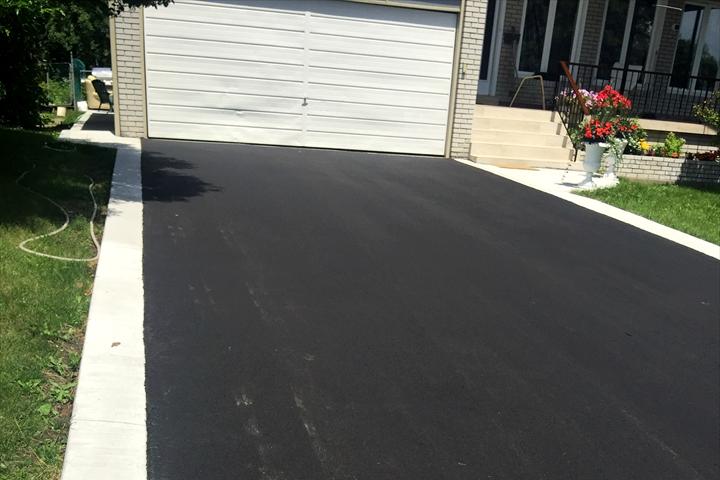
Parts of Aurora sit on the Oak Ridges Moraine’s sand and gravel, and parts, further north, on slower-draining till. The two fail in different ways, so the first question for a new driveway here is what’s underneath the old one. The second is the shape of the land. Much of Aurora is rolling ground, and a sloped driveway, a ravine lot or a ditch at the end of the driveway each changes how the job is built.
Sand, gravel and till: what’s under Aurora driveways
Under much of Aurora is moraine sand and gravel, with pockets of till mixed in. Elsewhere in and around town, the ground is silty, clay-bearing glacial till that drains slowly and is frost-susceptible. Sandy ground drains faster than till, which sounds like good news for a driveway, and often it is. But the moraine can also hold a high water table, and a till patch can trap water right beside sand that drains freely.
What that means for your driveway:
- Two driveways on the same street can fail in different ways. One may sink where groundwater sits under the base. Another may stay firm for years. How your old driveway failed says a lot about what the new base needs.
- Loose sand needs proper compaction. Sand that hasn’t been compacted moves under load, and edges slump. A compacted stone base, wider than the asphalt so the edges are supported, prevents that.
- Water still has to go somewhere. Even on sand, a driveway that slopes toward the garage collects water at the door. The surface should shed water away from the house.
Once the old driveway comes up, any wet or soft material gets dug out and replaced, never covered over.
Sloped lots and driveways that fall toward the garage
Rolling ground means plenty of Aurora driveways aren’t flat. A driveway that climbs from the street to the house is the easy case: water runs away from the garage. One that drops from the street down to the garage sends every rainstorm and every bit of snowmelt toward the door.
On a downhill driveway, the grading does most of the work. The surface can be shaped to push water to one side before it reaches the garage, and a drain across the bottom is sometimes needed as well. That drain is separate work from the asphalt, so raise it early.
Slopes also affect the paving itself. Hot asphalt has to be compacted before it cools, and on a steep grade the rolling is done in controlled passes so the mix doesn’t creep downhill. The base matters more on a slope, too: water running down through a weak base carries fine material with it, and the low end settles first.
Where the driveway meets the road
Not every Aurora street has a curb. On many older and estate streets, the end of the driveway crosses a roadside ditch, usually over a culvert pipe. That crossing is often the most damaged part of the driveway.
- Edges break off over the ditch. Asphalt that runs to the edge of the ditch slope has nothing supporting it, and plows and tires snap it off. The base needs to extend under the full width, with the edge finished cleanly above the ditch.
- Culverts crush or silt up. A culvert that’s partly crushed or full of silt backs water up beside the driveway, and that water ends up in the base. If yours is crushed or silted up, point it out on the visit; paving over a failing culvert just moves the problem into the new base.
- The ditch keeps its shape. The driveway’s edge is built to keep the ditch line open, not to fill it.
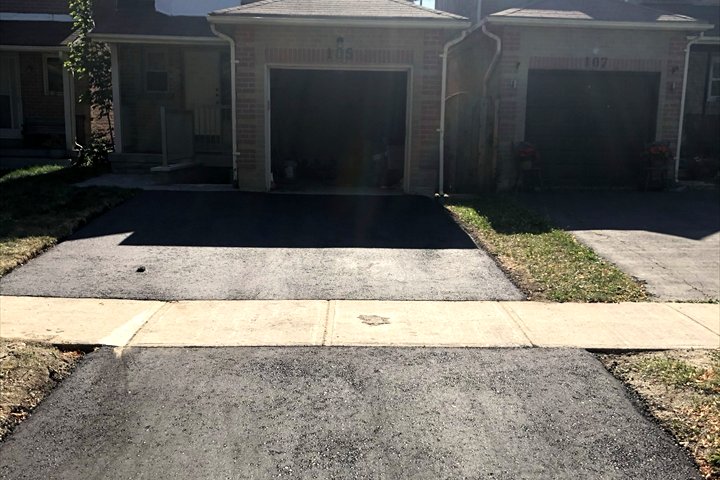
Curbed streets in the newer neighbourhoods have their own weak spot: the joint where the driveway meets the apron, which takes a hit every time a car turns in.
New-build driveways in the newer subdivisions
In Aurora’s newer subdivisions east of Leslie Street, and in the town’s other newer neighbourhoods, many driveways were built over ground that was dug out and backfilled when the house went up. That fill keeps settling for a while. The result shows up as a dip in front of the garage, or a crack running parallel to the house.
If you’re paving for the first time on a new house, waiting until the ground has settled pays off. If the builder’s driveway has already dipped, an overlay won’t fix it; the settled area has to be dug out and the base rebuilt.
Estate lots and long driveways
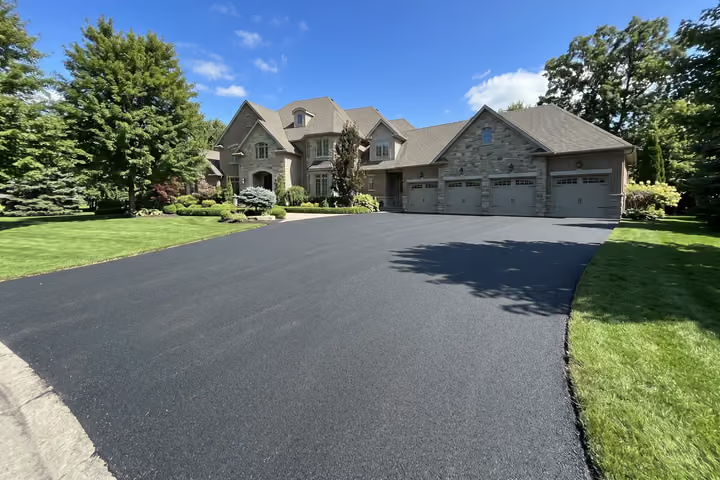
West of Yonge, around Bathurst Street and St. John’s Sideroad, lots are larger and driveways run long, sometimes with a turnaround or a loop near the house. A long driveway needs drainage along its whole length, a crown or cross-slope so water runs off, and edges that hold up to snow clearing. Properties with a long lane should look at private road paving, which deals with the same questions over a greater length.
Resurface or replace on moraine ground
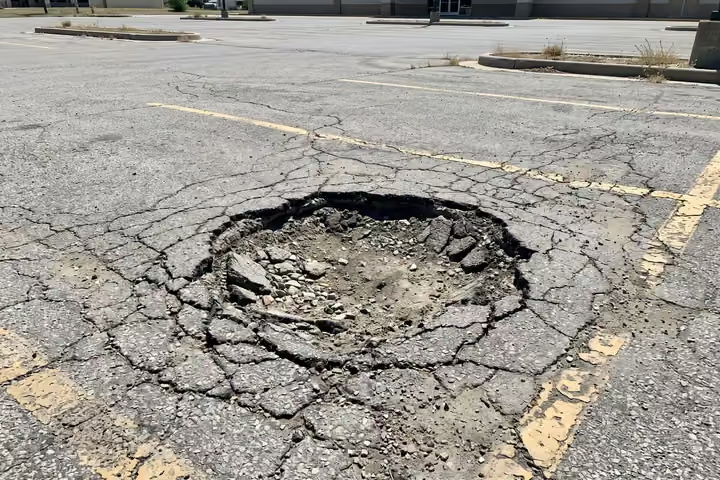
On this ground, the choice between resurfacing and a full replacement depends on the base. If the old driveway has sunk in patches, the stone underneath has moved, and an overlay will crack along the same lines. If it’s evenly worn but still firm, and there’s height to spare at the garage for a full layer, resurfacing can be the cheaper answer. A few potholes or open cracks can go to asphalt repair and hot rubber crack filling.
For more room, our Aurora driveway widening guide covers building the new strip on sand, slopes and ditch-side lots. If you’re budgeting, the cost guide for asphalt driveways shows how size and site conditions move the price.
Commercial lots in Aurora
Plazas along Yonge Street and Wellington Street, offices and industrial buildings near Highway 404, and condo, school and church lots all sit on the same mixed ground. For boards and managers who buy through a formal tender, we respond in that process, and when a lot needs concrete or storm drain work alongside the asphalt, we line up and sequence those contractors. Our Aurora parking lot repair page covers cracks, potholes, peeling surfaces and catch basins. See also parking lot paving, line painting, catch basin repair and our maintenance programs.
Start with a photo of the end of your driveway
When you contact us, a photo of where your driveway meets the road tells us most of what we need: curb or ditch, how steep it is, and whether the edge has broken. Add one of the worst spot on the driveway and you’ll get a more useful free written estimate. Nearby: Newmarket and Richmond Hill.