Paving in Toronto is mostly about space. Older lots are narrow, many driveways squeeze between two houses or are shared with a neighbour, and some garages sit lower than the street. The asphalt itself is the same as anywhere in the GTA. What changes is how the equipment gets in, where the water goes and how much old material is underneath.
Narrow side drives and hand work
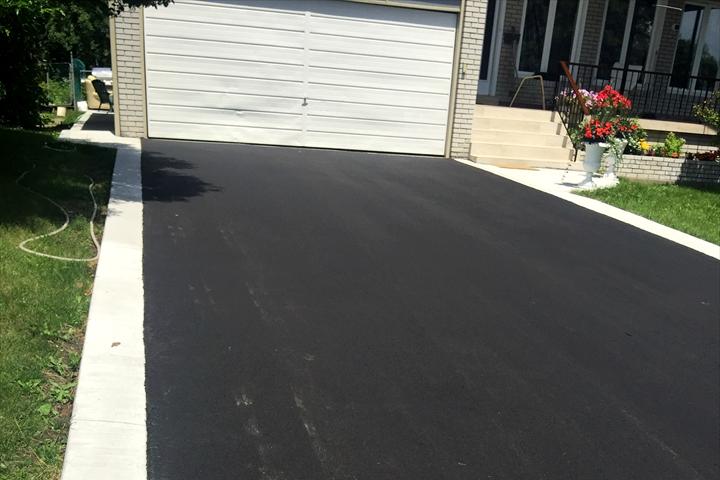
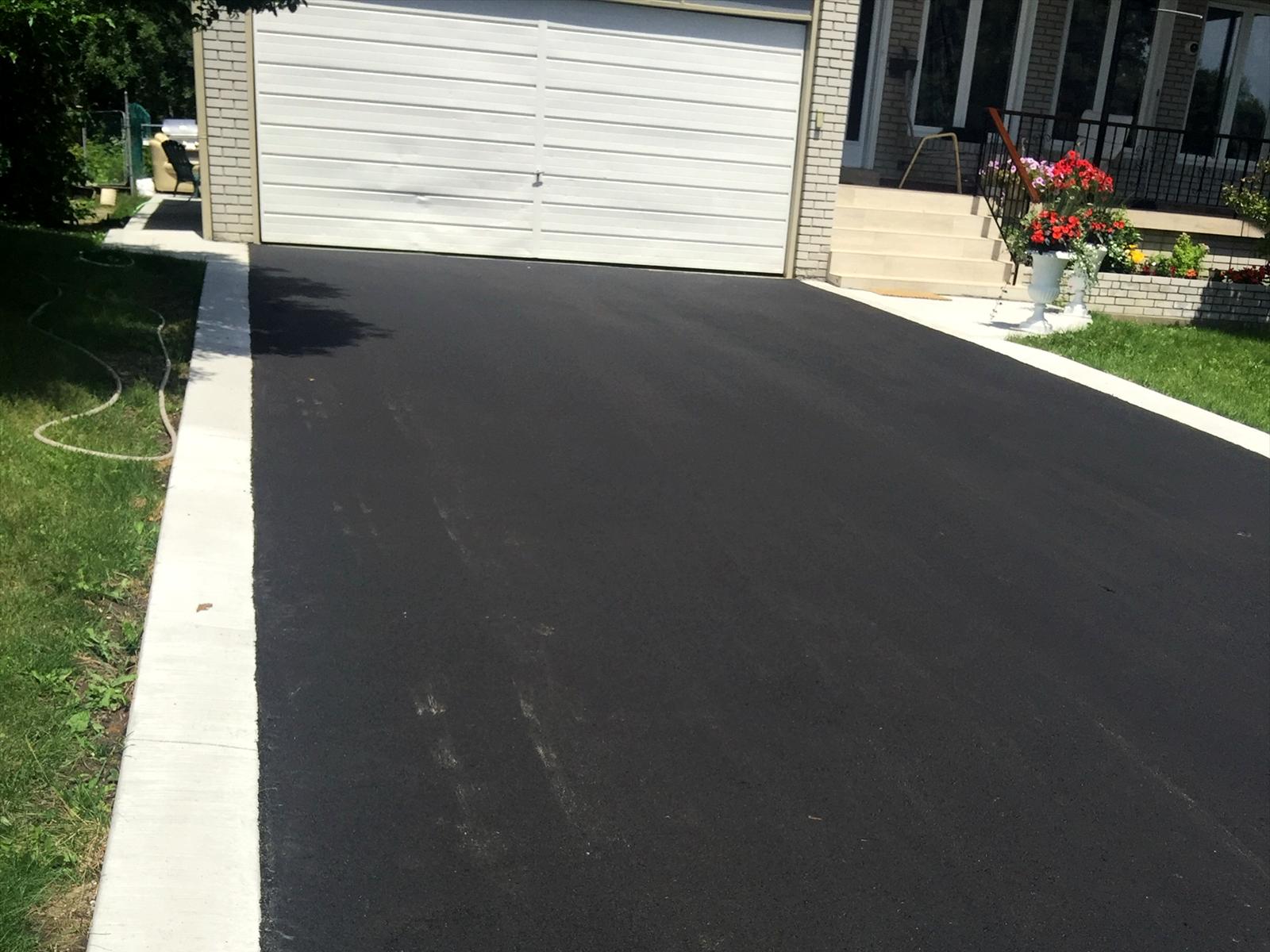
A driveway that runs beside the house, often not much wider than a car, can’t take a full-size paver. Smaller machines and hand work fill the gap: the base is compacted with smaller plate compactors and rollers, and the mix is placed and raked closer to the walls. That takes more labour per square foot, which is why a narrow drive can cost more per square foot than a wide one. Our driveway cost guide explains how access changes a quote.
Two details matter more on a side drive than elsewhere. The finished surface should sit below any basement windows and weep holes, and it has to fall away from the foundation so rain off the roof doesn’t run against the wall. If the existing driveway slopes toward the house, fixing that slope is the main reason to rebuild.
Shared driveways
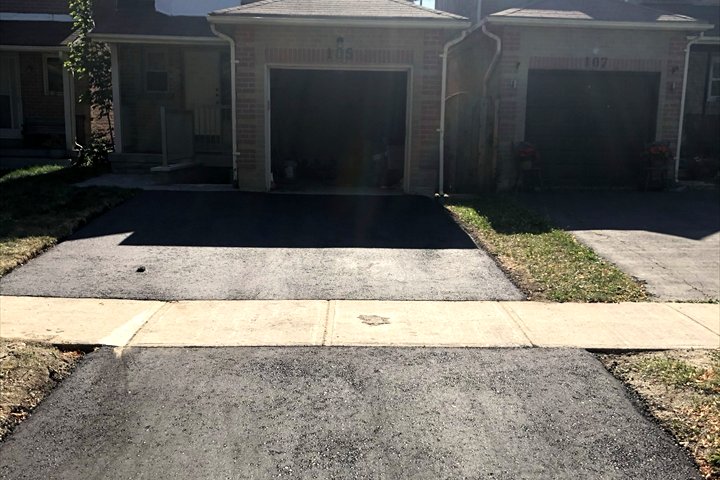
Many older streets have mutual driveways, one strip serving two houses. Both owners have to agree on the work, and the shared section has to drain for both properties, not one. Settle the scope between neighbours before booking. Paving half leaves a joint down the middle of the wheel path, which is the first place cracks open.
Garages below the street
Where the garage floor is lower than the road, every metre of driveway runs downhill toward the door. The grade comes before the material: a driveway that pitches toward the garage will fail there early, however good the asphalt is. These driveways usually have a drain at the bottom, which the asphalt is shaped toward, and that drain has to be working before the new surface goes down. Downspouts that empty onto the paved area add to the load and are easy to redirect.
Toronto’s ground varies from silty, slow-draining till in the west to sandier ground toward the lake and the Scarborough ravines. On a lot that slopes toward the house or sits low against the street, where the water goes decides the design more than the asphalt does.
Layers on layers
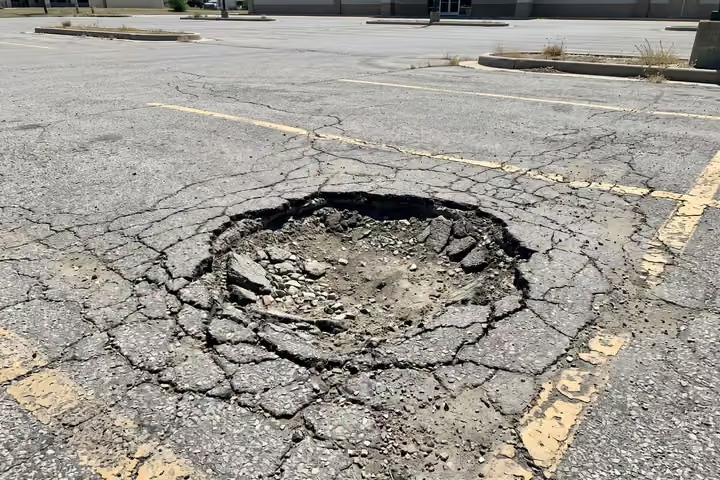
On a decades-old Toronto driveway, the surface has often been raised so many times it sits above the garage slab or the walkway, and water runs the wrong way. Another overlay makes that worse. The usual fix is to mill or remove the old layers, rebuild any soft base underneath, and pave back to a height that sheds water. If the surface is tired but the base is firm and the height is still right, resurfacing costs less than a rebuild. A few failed spots may only need asphalt repair.
Plazas and condos
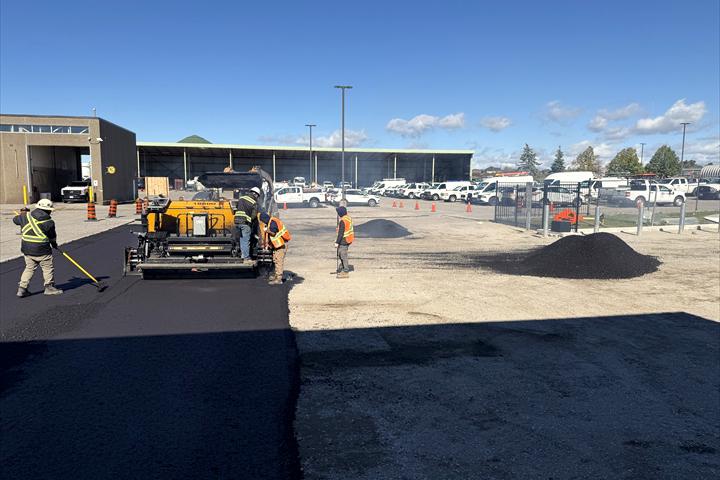
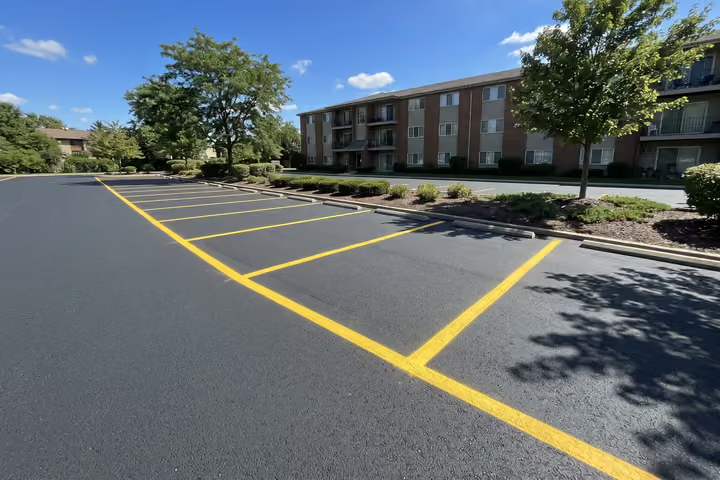
Commercial work in Toronto is mostly about keeping a site open while it’s paved: working in sections so tenants keep access, draining to catch basins, and new line markings. Night and weekend work can be scheduled on commercial sites when the job suits it. See parking lot paving, parking lot repair, catch basin repair and maintenance programs for managers with several sites.
Our office is in Vaughan, so north and west Toronto are short trips. When you ask for a quote, tell us how wide the narrowest point of the driveway is and whether it’s shared. Those two facts shape the job on a Toronto lot more than its total size.