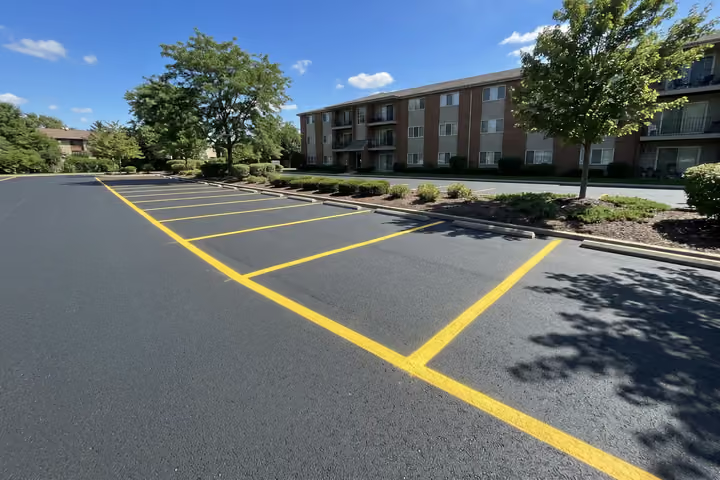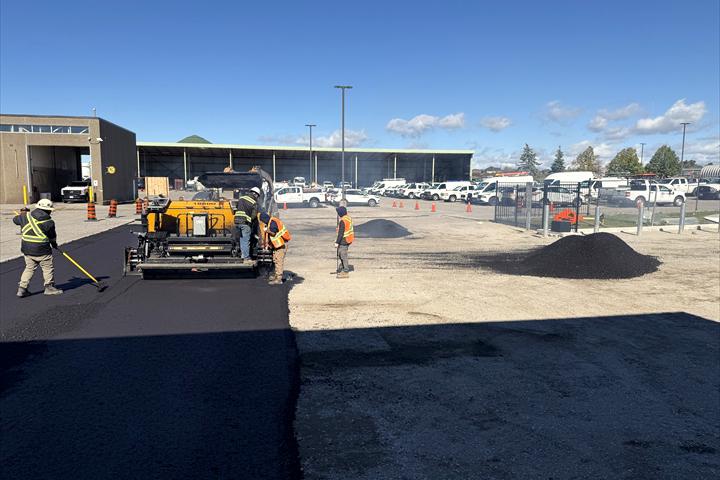
Most damage in an Aurora parking lot starts as one of four things: open cracks, potholes, a surface peeling away in the drive lanes, or a catch basin that no longer takes the water. Each has a different cause and a different fix, and each gets more expensive the longer it’s left. On a plaza along Yonge Street or Wellington Street, a pothole by a store entrance or a lifted edge near the accessible stalls is also a trip hazard, which is a cost of its own. Our Aurora page covers paving in town generally.
Why Aurora lots break where they do
Aurora sits partly on the Oak Ridges Moraine’s sand and gravel and partly on silty, clay-bearing glacial till that drains slowly and is frost-susceptible. A large lot can cross both. That’s why damage in one lot is rarely even.
- On till, water that gets through a crack stays in the base, freezes and lifts the pavement. Heaving and potholes cluster in the low areas and around catch basins.
- On moraine sand, the base drains better, but where the water table is high, low corners stay soft. And sand at an unsupported edge, along a landscaped island or the lot’s outer edge, washes and ravels, so the asphalt breaks off in chunks.
How the damage is spread across the lot tells you what’s behind it. A few scattered potholes in a sound lot are a repair job. Damage concentrated in every low spot points to drainage. Damage everywhere points to a lot near the end of its life.
Fixing each kind of damage
Open cracks
Cracks let water into the base. Once water sits under the asphalt, winter freezing and traffic widen the crack and break its edges. On the till side of town that happens fast, because the water has nowhere to drain; on moraine sand the same crack does its damage more slowly, mostly in low corners. Hot rubber crack filling seals cracks that still have solid asphalt on both sides. Where cracks have joined into a pattern like alligator skin, the base below has usually failed, and filling won’t hold. That area needs patching.
Potholes
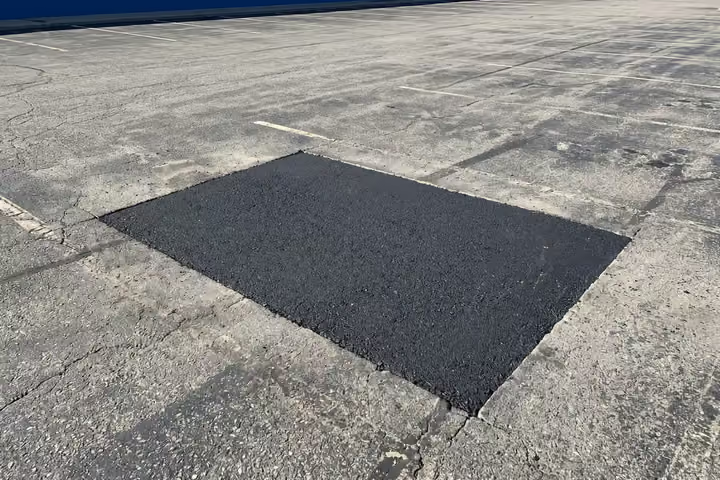
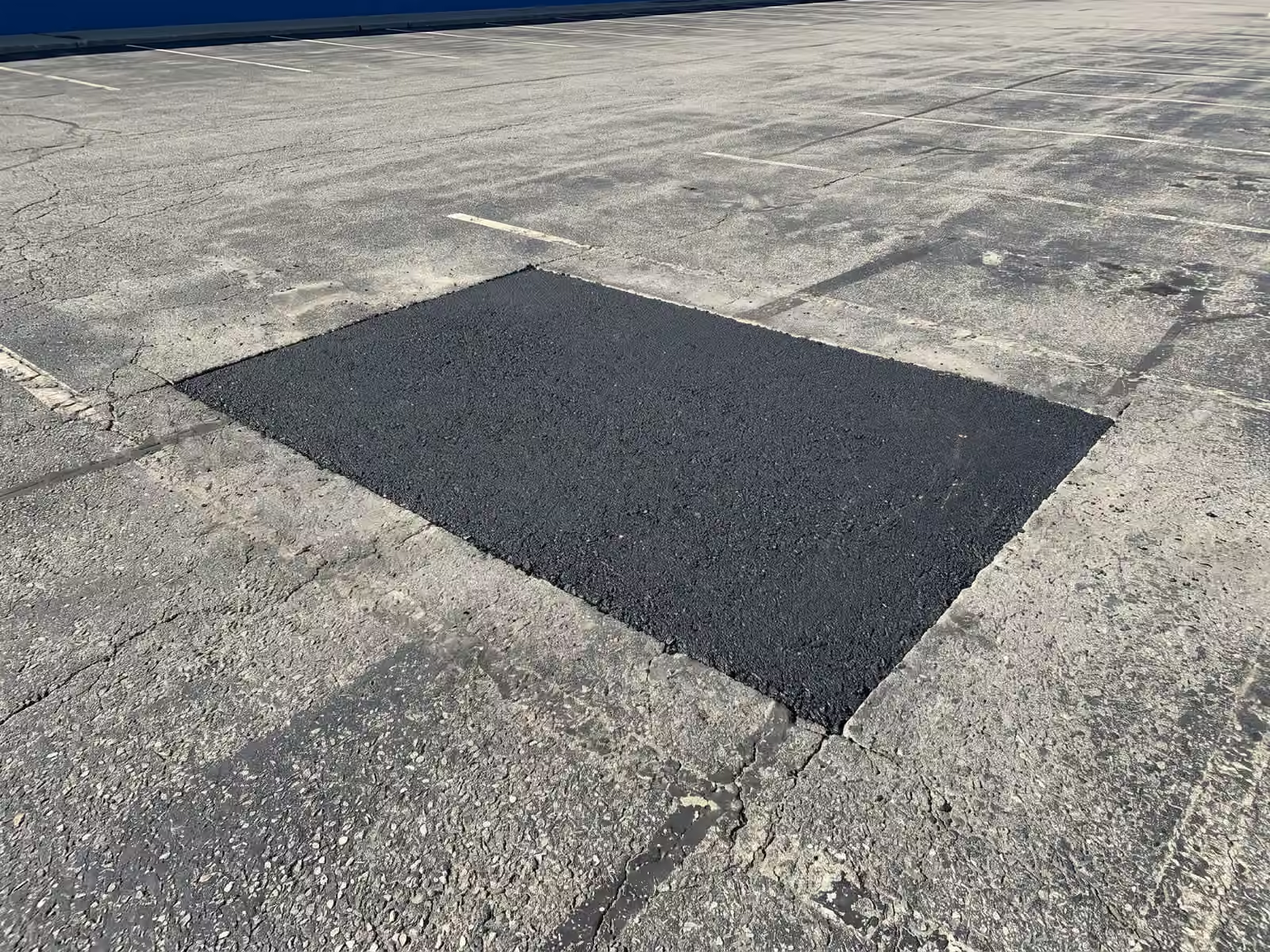
A pothole is a spot where the asphalt and some of the base have gone. On a plaza lot they tend to turn up first in the drive lane in front of the stores, where cars queue and turn, and in the low corners where meltwater sits. A lasting repair cuts the area out square past the damage and rebuilds it with hot asphalt; parking lot repair explains the steps.
Peeling surfaces
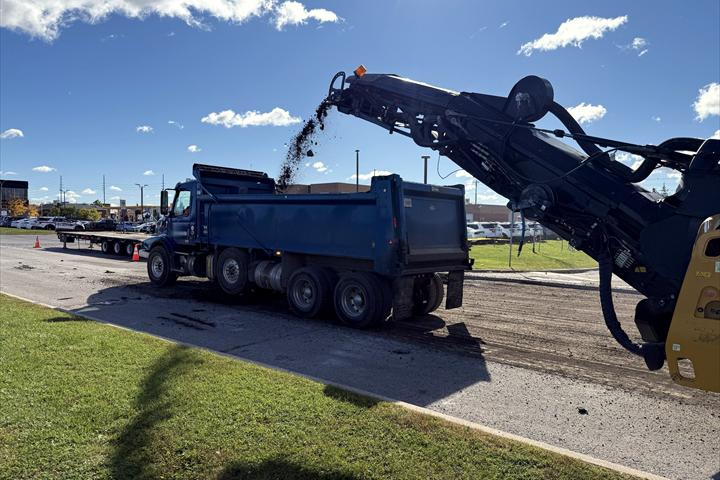
Delamination is the top layer of asphalt coming away from the layer under it. It shows as flaking patches where tires scrub: plaza drive lanes, and on the industrial lots near Highway 404, the yards where trucks turn tight to reach a loading door. Small areas can be cut out and patched. When it’s widespread, milling off the loose surface and laying a new one is usually the better answer; that’s parking lot resurfacing.
Catch basins and ponding
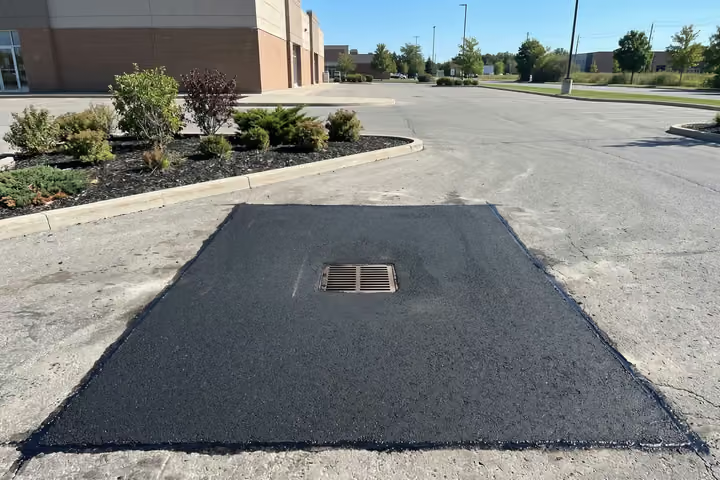
A settled catch basin leaves a dip that ponds, and the asphalt around it breaks up first. Rebuilding the basin and the ring of pavement around it is covered under catch basin repair. Ponding away from any basin usually means the lot’s grades have shifted, and patching the hole without fixing the grade only moves the problem.
Broken edges and ruts
Many Aurora lots have landscaped islands and planted edges, and where those sit on moraine sand, the sand under the asphalt edge washes out and the edge crumbles. Rebuilding it means compacted stone under and beside the new edge, so it has something to lean on. Ruts in drive lanes and at dumpster pads usually mean delivery and garbage trucks running on a base built for cars. Both need the base dealt with, not just a skim of new asphalt.
Repair, resurface or rebuild
Repairs make sense while the damage is local and the rest of the lot is firm. Once patches cover a large share of the surface, or new potholes keep appearing beside old patches, the money is better spent on resurfacing or, where the base has gone, a full rebuild covered under parking lot paving. Repairing a lot that’s past saving buys a season, not years.
What to fix first on an Aurora lot
The order depends on what kind of lot it is.
- Plazas on Yonge and Wellington. Start where shoppers walk: the strip in front of the stores, the accessible stalls and the entrance off the street. The drive lane in front of the stores usually comes next, since it takes the most turning.
- Industrial buildings near Highway 404. Start with the truck route and the apron in front of the loading doors. Car parking at the front can usually wait a season.
- Condo, school and church lots. Start with the walkways between parking and doors and any catch basin that ponds, because standing water there turns to ice on the path people use.
Whatever the lot, open cracks in low areas belong near the top of the list, because they are what turns this year’s small repair into next year’s rebuild. Each stage can be priced separately.
Timing in the season
The spring thaw shows the winter’s damage, and that’s when most managers call. Cold patch can fill a hole until then. Hot asphalt patching and hot rubber crack filling run through the paving season, and cracks filled in late summer or early fall are sealed before the next freeze. Work on the busiest areas is timed for the quietest part of the day.
Cost and ongoing care
Repairs are priced per job after a site visit, in a free written estimate. If the lot is past repair, the parking lot cost guide has our per-square-foot range for repaving.
For several sites, or a lot you’d like to keep ahead of, our maintenance programs cover inspections, patching, hot rubber crack filling, catch basin repair and line repainting. When you contact us, list the spots that worry you most, with photos if you have them, so those are priced first.