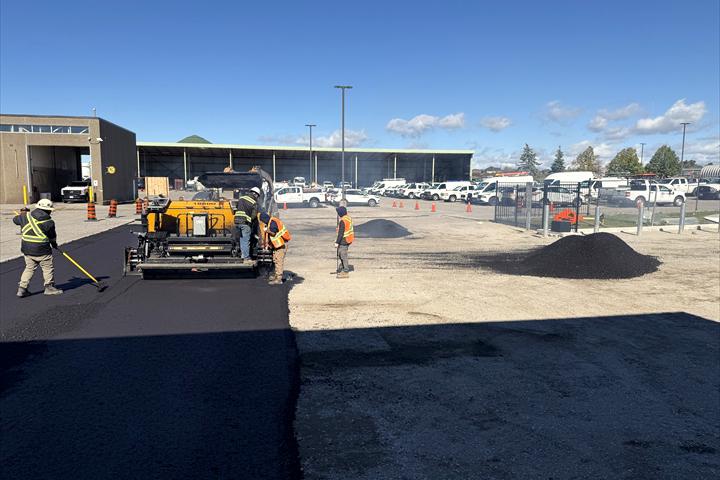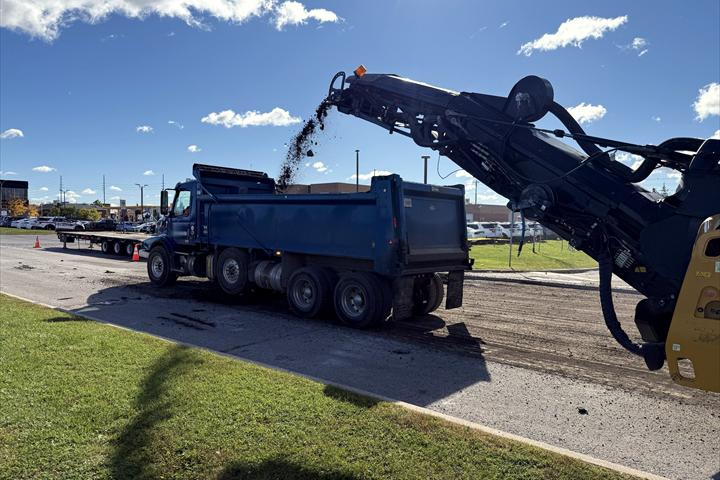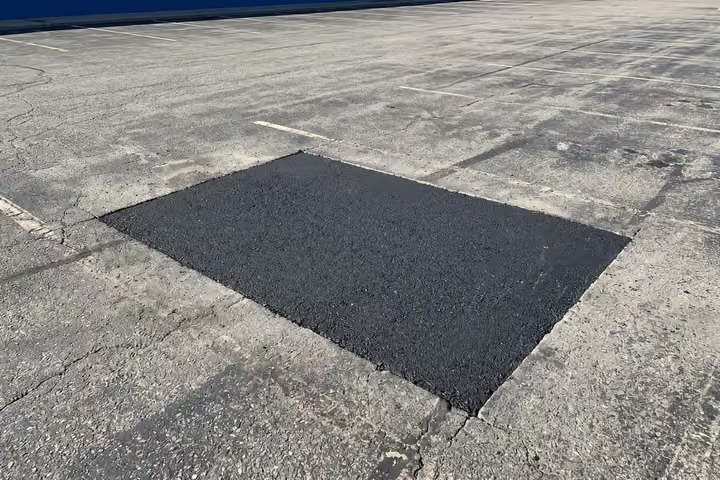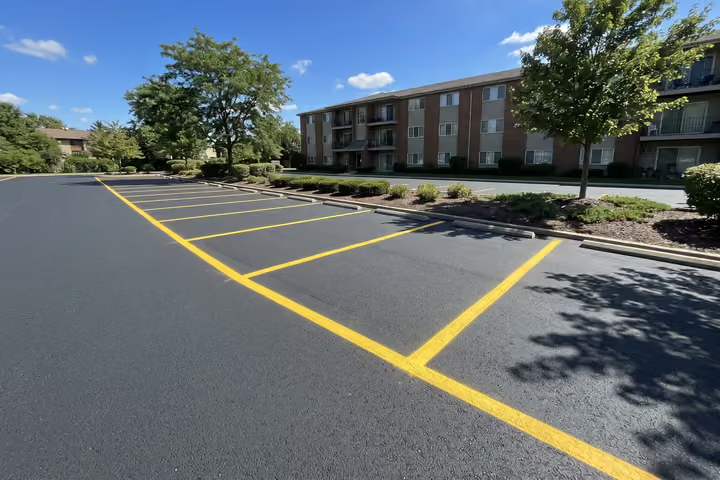
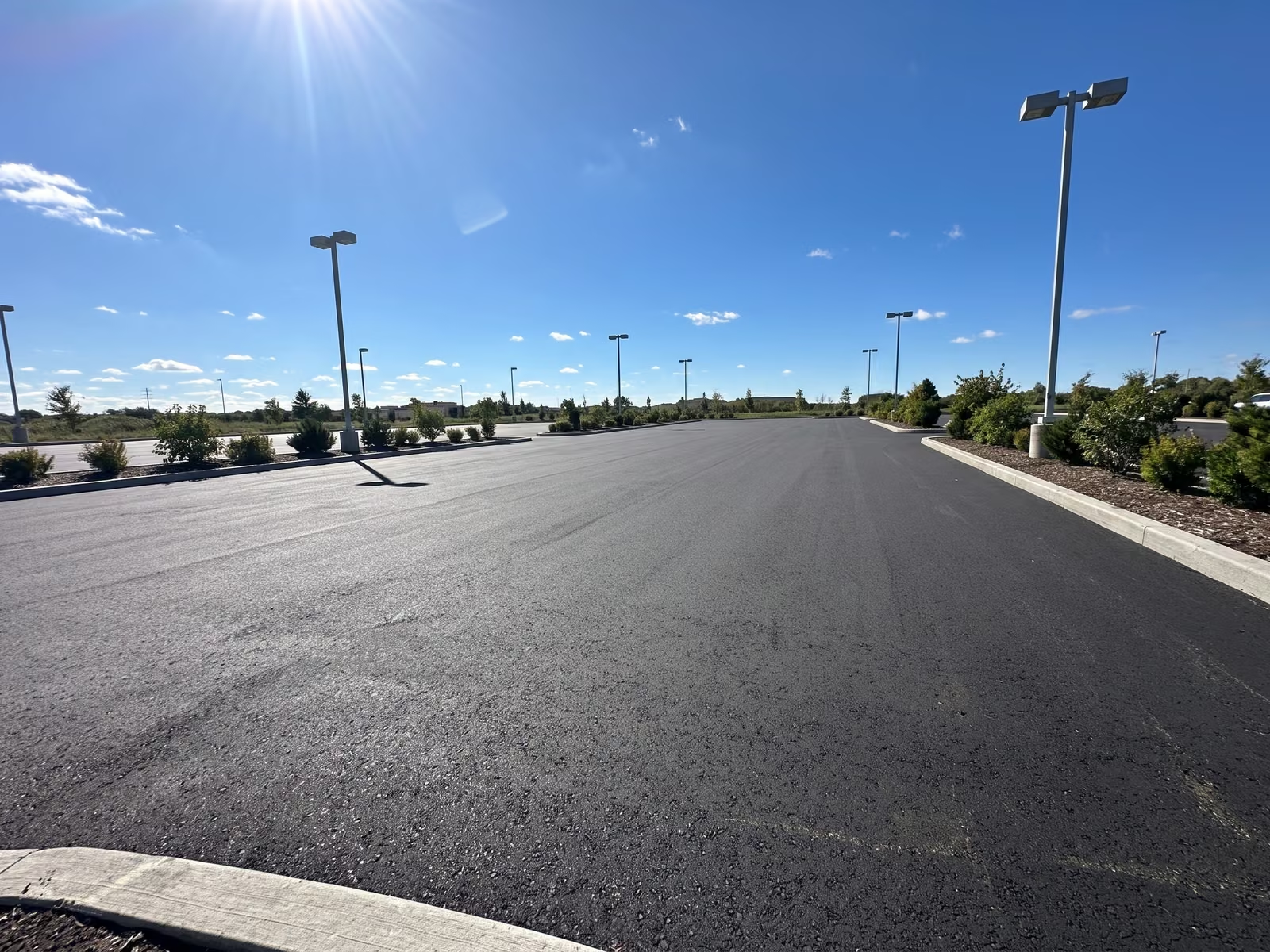
For parking lot paving in Ontario, our 2026 range is $3.50 to $5.00 per square foot, depending on the location and complexity of the job. Where a lot lands in that range depends on how much has to come out, what the base is like, how the water drains and how much of the lot has to stay open while the work is done. Below are those factors, the arithmetic on three lot sizes, and a way to plan pavement spending over several years.
These are our own figures for the GTA areas we serve in Toronto, York Region and Peel. They are a guide for budgeting. Your price is set in a written quote after we see the site.
What moves the price within the range
Area
Size is the starting point. Larger lots tend to sit lower in the range per square foot, because setup, equipment delivery and planning are spread across more area. Small lots and odd-shaped areas tend to sit higher.
Removal of the old lot
Breaking out and hauling away old asphalt is a large part of any reconstruction. Thick or multi-layer pavement, from a lot that has been overlaid before, means more material to remove and dispose of.
Base condition
If the granular base under the old lot is sound, less of it needs replacing. If we find soft, wet or contaminated material, it has to be dug out and replaced with new stone. This is the factor that is hardest to judge before work starts, which is why a good quote explains how unexpected base problems will be handled.
Drainage and catch basins
Regrading a lot so water reaches the catch basins adds work. So does rebuilding basins that have settled or have broken frames. A lot with good drainage costs less to rebuild than one where water has been pooling for years, and every basin that needs rebuilding at the top is a line of its own.
Phasing
A lot that can close completely is the cheapest to pave. Every phase adds setup, traffic control and return trips. If some sections need evening or Saturday work, the quote should show which ones.
Access
Tight entrances, overhead obstructions, narrow drive aisles and limited space to stage trucks slow the job down. A lot where trucks can come and go freely is faster, and cheaper, to pave.
Line painting
Stall lines, fire route markings, accessible stalls, arrows and crosswalks have to be painted after paving. The more markings, the higher the cost, and a new layout costs more than repainting the old one; our line painting page explains the difference.
Traffic control
Some sites need flaggers or traffic control at the entrances, especially where an entrance opens onto a busy road and loaded trucks will be turning in and out all day. It is a real cost on those jobs, so make sure the quote says whether it is needed and who provides and pays for it.
Worked examples
These examples are simple arithmetic on our 2026 range. They are not quotes, and they assume a straightforward paving scope. Your site’s factors decide where in the range it lands.
| Lot area (example) | Range (min to max) |
|---|---|
| 10,000 sq ft | $35,000 to $50,000 |
| 25,000 sq ft | $87,500 to $125,000 |
| 50,000 sq ft | $175,000 to $250,000 |
Example: 10,000 sq ft. Roughly the scale of a small strip plaza lot or an apartment building’s surface parking. 10,000 × $3.50 = $35,000 and 10,000 × $5.00 = $50,000. A small lot with tight access and several phases would sit toward the top.
Example: 25,000 sq ft. A larger plaza or a condo with a visitor lot and internal drive. 25,000 × $3.50 = $87,500 and 25,000 × $5.00 = $125,000.
Example: 50,000 sq ft. A large retail lot or an industrial yard. 50,000 × $3.50 = $175,000 and 50,000 × $5.00 = $250,000. Size helps the rate here, but heavy truck areas, extensive drainage work or many phases can still push it up.
To convert square metres, multiply by about 10.76. A 1,000 m² lot is roughly 10,760 sq ft.
Budgeting over several years
Paving a whole lot is rarely the only option. Most lots go through three stages, and spending at the right stage costs less than waiting for the next one.
- Repair. Patching potholes, cut-and-patch repairs and hot rubber crack filling. This is the smallest spend, and done every year it slows down the damage; parking lot repair sets out what to fix first.
- Resurface. When the surface is worn but the base is sound, a mill and overlay replaces the top layer for much less than a rebuild.
- Rebuild. When the base has failed across most of the lot, full reconstruction is the only fix that lasts.
We don’t publish separate figures for repair or resurfacing, because they depend heavily on the site. We quote them after a site walk.
A sensible plan for a property manager or board looks something like this:
- Every year: a spring walk-through, safety repairs and crack filling, plus line touch-ups where needed.
- Watch for the turn: when patching costs rise year after year and cracking spreads, start budgeting for resurfacing.
- Plan the big job ahead: a rebuild or resurfacing works best when it is in the capital plan or reserve fund a year or more ahead, so the work can be phased properly and booked early.
Lots can also be done in parts. Rebuilding the failed drive aisles one year and resurfacing the parking rows another spreads the cost without leaving hazards in place. Condo boards and managers can read how this fits a reserve fund on our property managers and condos page.
What a commercial quote should list
When you compare quotes, look for these items. A quote that leaves them out is hard to compare and easy to change later.
- The area of each section being paved, ideally marked on a plan.
- Removal: what comes out and how deep.
- Base work: the granular material and depth, and how soft spots will be handled and priced if found.
- Asphalt layers: binder and surface course mixes and their thicknesses.
- Drainage: grading, and any catch basins to be rebuilt or adjusted.
- Phasing: how many phases, which areas stay open, and whether any work is after hours.
- Line painting: included or not, and what markings.
- Traffic control: whether the job needs it, and who pays for it.
- Insurance: the contractor’s liability coverage. We carry $7 million.
- Taxes: whether HST is shown separately.
To get a budget range or a firm quote, send your site plan, photos and timing through our contact page.