Resurfacing is the cheapest way to give a worn lot a new surface, and the easiest place to waste money. On a lot with a sound base it costs much less than reconstruction and lasts for years. On a lot whose base is failing, it hides the problem for a season or two and then cracks in the same places as before. So the first question for an owner or board is which kind of resurfacing the lot needs, if any.
Resurface or rebuild
Mill and overlay
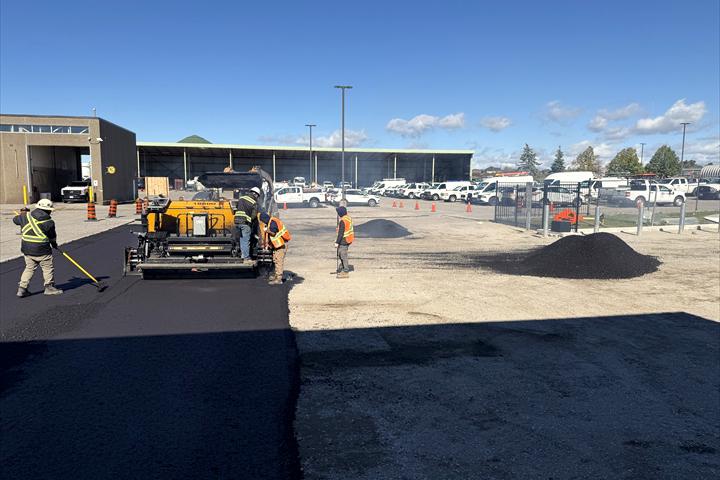
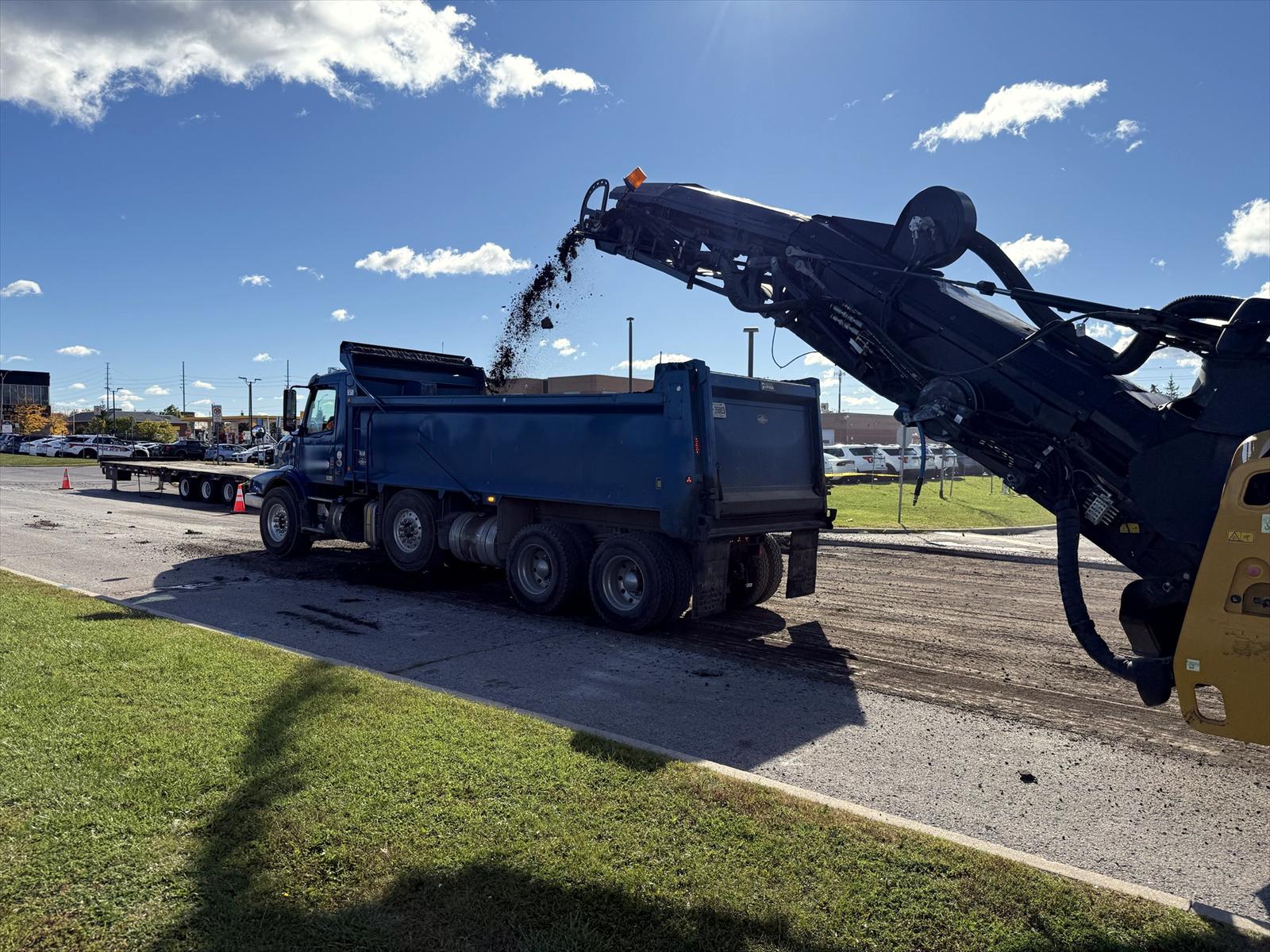
A milling machine grinds off the top layer of old asphalt to a set depth. The milled surface is swept clean, a tack coat is applied so the layers bond, and new hot-mix asphalt is placed and rolled. The lot ends up at about the height it started, with a new surface course on top of the old lower layers.
This is the right choice when the structure below the surface is still sound: the cracks are mostly at the top, the lot isn’t rutted or sinking, and drainage works.
Full-depth replacement
All the asphalt is removed, the base is exposed, soft areas are dug out and rebuilt, and the lot is paved again in binder and surface layers. This is reconstruction, covered in detail on our parking lot paving page.
It is the right choice when the base has failed: wide areas of alligator cracking, ruts, sinking and ponding that keeps coming back.
Which one fits your lot
The answer is often different for different parts of the same lot, so look at it area by area.
| What you see | What it usually means | Typical approach |
|---|---|---|
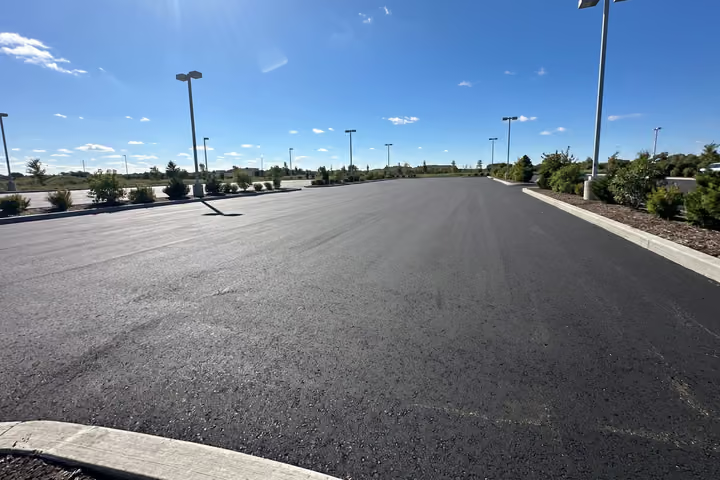
| Surface wear, ravelling, fine cracks, sound base | The top layer has aged | Mill and overlay |
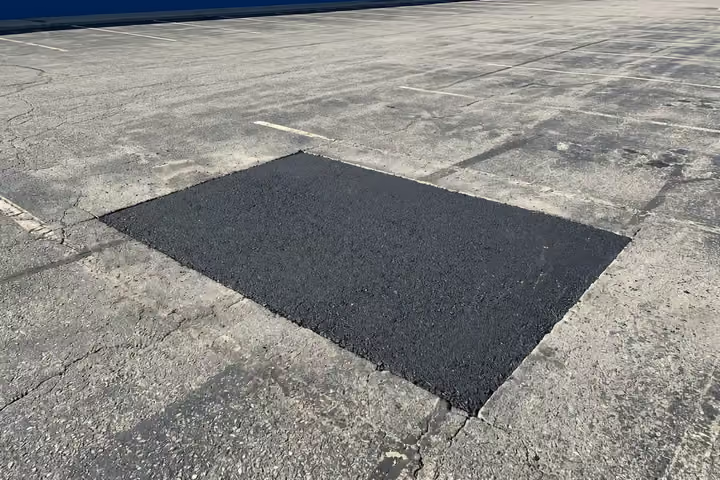
| Scattered potholes in an otherwise sound lot | Local failures | Repair first, then decide |
| Alligator cracking in drive aisles only | Base failure where traffic is heaviest | Full-depth in aisles, overlay elsewhere |
| Ruts, sinking and ponding across the lot | Base failure throughout | Full-depth replacement |
| Lot already overlaid once or twice | Curbs and drainage compromised | Mill deeper or rebuild |
A mill and overlay quote should never be a guess about the base. The surface shows most of what you need: alligator cracking, ruts, soft spots that flex under a truck, and ponding. If a contractor quotes an overlay without walking the lot, ask what they’re assuming about what’s underneath.
Curb reveal and drainage
Curb reveal is the height of the curb face above the asphalt. It matters more than most people expect.
- It carries water. The gutter line along a curb is where much of a lot’s water travels to the catch basins. Lose the reveal and water spills across stalls and sidewalks instead.
- It controls vehicles. A curb with little reveal no longer stops wheels from riding onto landscaping or walkways.
- It meets the building. Door thresholds, ramps and accessible routes are set to a finished asphalt height. Paving over the top changes that height.
That is the main argument for milling a commercial lot instead of paving straight over it. Milling brings the surface down first, so the new asphalt goes back at a height that keeps the reveal, the gutter lines and the transitions to entrances working. Catch basins are adjusted to the finished grade at the same time; one that has settled or has a broken frame needs rebuilding at the top before the new asphalt goes around it.
Keeping stalls open
Resurfacing moves faster than reconstruction, which makes it easier to keep the lot open, but a closed section is still a problem for tenants. A typical job runs like this:
- Sections by drive aisle. The lot is split into sections that close one at a time while the rest stays open.
- Milling and paving close together. Each section is paved soon after it is milled, so a milled surface isn’t left open to traffic and weather.
- Entrances and fire route kept clear. At least one entrance stays open throughout.
- Accessible stalls moved, not lost. If a section with accessible stalls closes, temporary accessible parking is signed nearby.
- Some work after hours. Plaza frontages and busy retail areas can be done in the evening or on a Saturday.
What to expect on the day
A milled section looks rough and sits a little lower than the pavement around it, with a small step at its edges. It can carry slow traffic, but the edges are a trip hazard for pedestrians, so milled areas stay coned off, steps at entrances and walkways are marked, and the section is paved as soon as the schedule allows.
Milling is noisy and throws dust, which tenants near the work will notice. Giving them a few days’ notice, with the dates each section closes, heads off most complaints. Once the new asphalt is rolled, the section stays closed until it has cooled enough to carry traffic.
After resurfacing
Milling removes every marking on the lot, so stall lines, fire routes and accessible stalls are repainted once the new surface is ready. If the old layout never worked well, this is the cheapest moment to change it; our line painting page covers what to fix.
Resurfacing is priced from the area, the milling depth, how much full-depth work is mixed in and how many sections the site needs. The parking lot cost guide explains each of those factors.
For a quote, mark on a site plan or aerial photo the areas that hold water or carry trucks, and tell us how many times the lot has been paved over, if you know. Those two details usually decide between milling and rebuilding. Send them through our contact page.