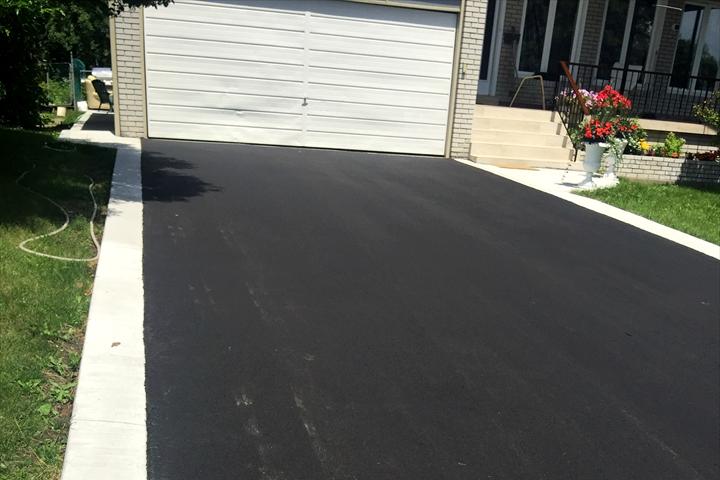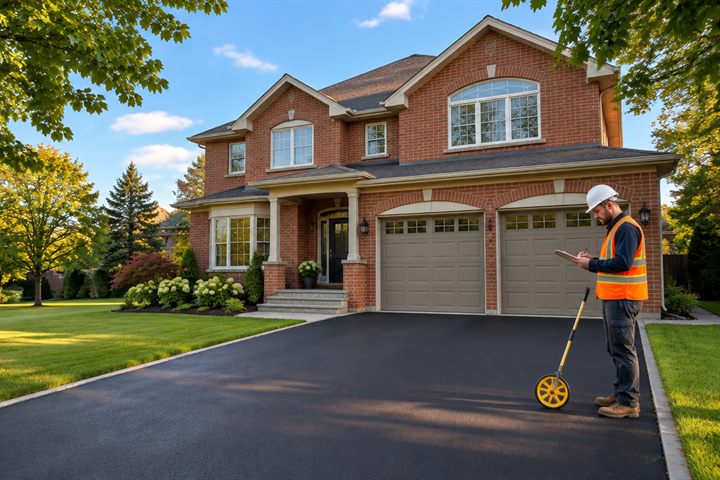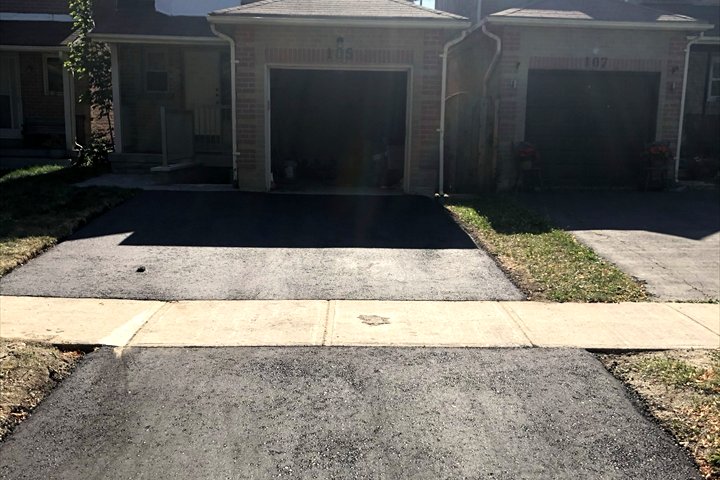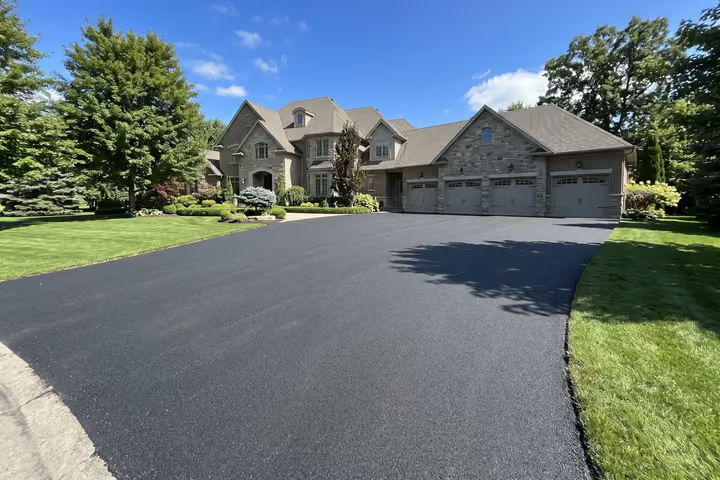
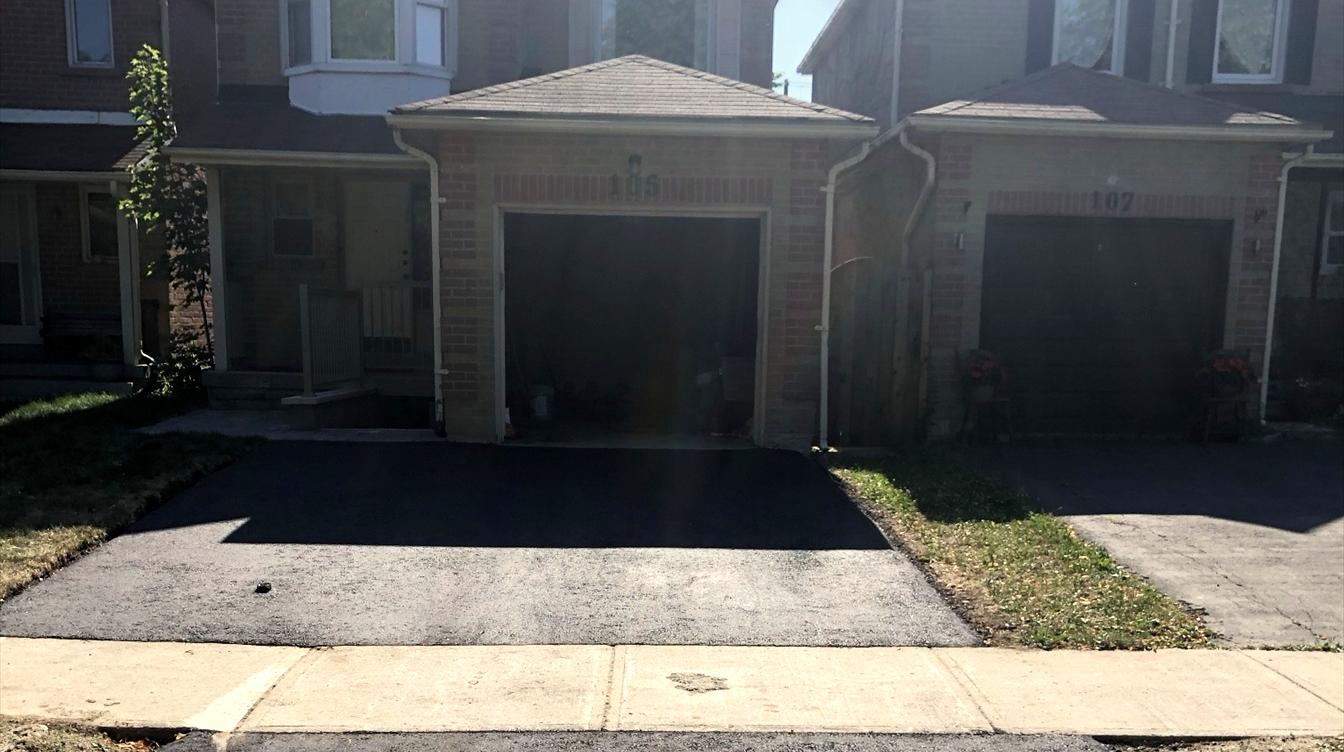
On a typical Brampton subdivision lot, a widening means one more car width along the side of the existing driveway, toward the side yard. That puts the new strip on ground that was disturbed when the house was built, right next to the swale that drains the lot. Those two facts decide how the job is built.
The new strip needs its own base
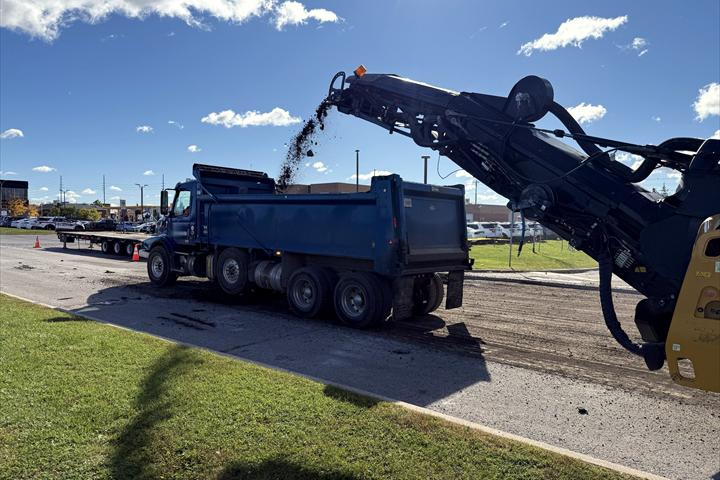
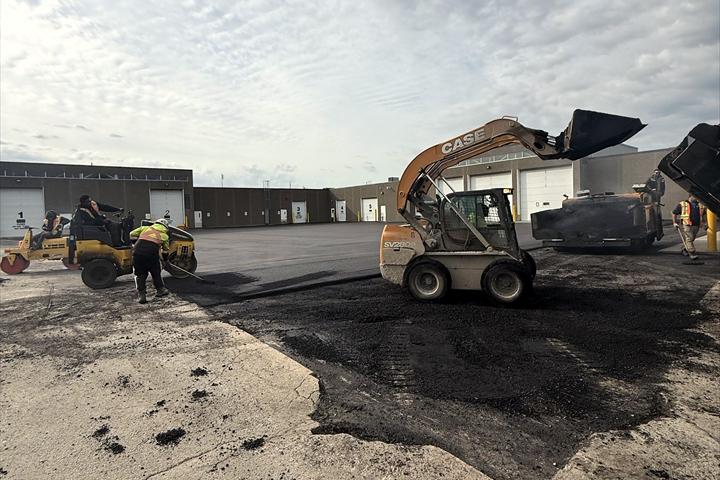
The lawn beside your driveway has no stone base at all, and on a newer lot the soil under it is often construction fill that has been settling since the house went up. All of it comes out: sod, topsoil and anything soft below. The strip is then built like a new driveway, with compacted granular stone to the depth listed in your quote and the asphalt on top.
Two things go wrong when this is skimped:
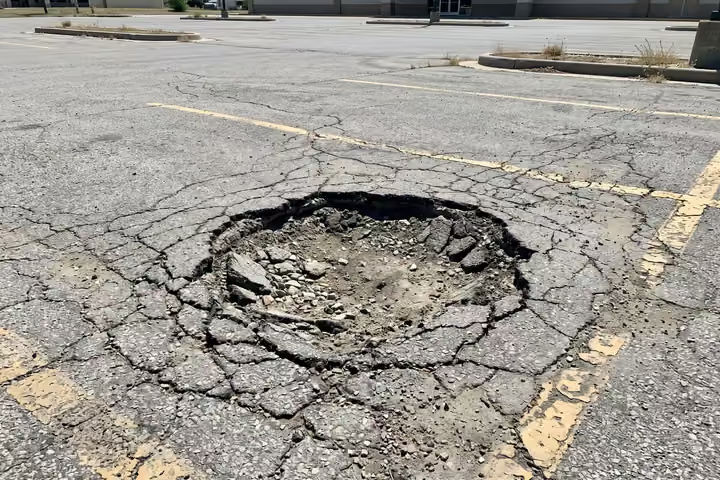
- The new area sinks. Topsoil and loose fill compress under a car, and the asphalt over it drops below the rest of the driveway.
- The outside edge breaks off. An edge with nothing under it crumbles under tires and snowblowers. The stone base runs past the edge of the asphalt so the edge has support.
Keep the swale working
Most Brampton lots drain along the side yard: a shallow swale carries water from the back of the lot to the street. A widening that fills the swale, or sits higher than it, blocks that path. The water then backs up against the house or spills onto the next lot.
Walk the side yard during a heavy rain and watch where water runs. The new edge stays outside that path, and the widened driveway still falls toward the street. If the swale sits right where you want the extra width, a narrower strip that leaves it alone beats a wider one that floods a basement.
Repaving the whole driveway
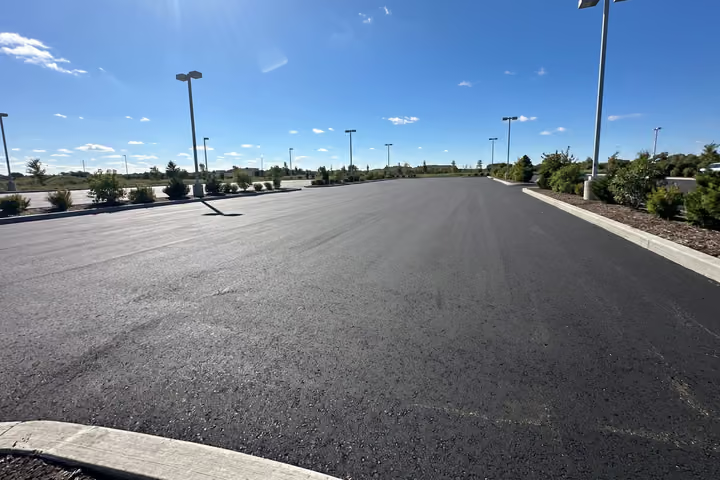
Many driveways here are on their first surface and have started to settle: a dip at the garage, a sunken strip over the service trench, cracking across the surface. When we widen, the old asphalt comes out, those soft spots are rebuilt, and the whole driveway, old footprint plus widening, is paved as one surface. There's no seam, the colour is even, and the slope is set once for the full width.
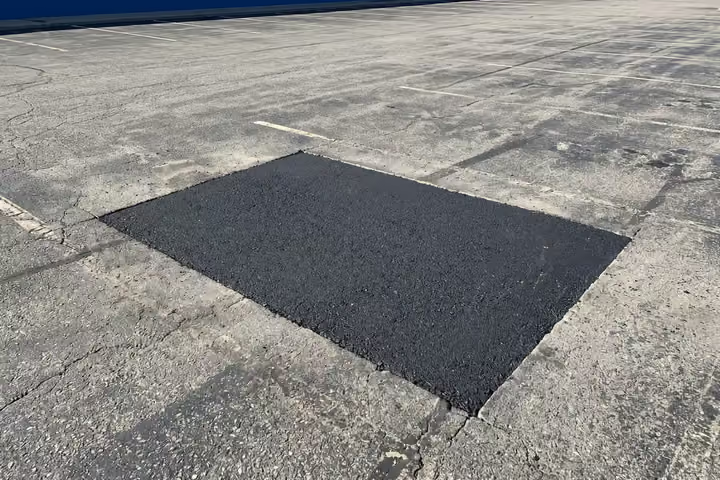
New asphalt added beside a settling driveway saves money for a year or two, until the old side drops and the seam between them opens. That’s why nearly every widening we build is a full repave. More on how it’s done is on our widening page.
Letting the swale set the shape
On a narrow subdivision lot, the swale mostly decides the shape. Where it runs well clear of the driveway, a full-length strip from the street to the garage works. Where it swings close near the street, a flare in front of the garage gives the extra width where the cars park and leaves the swale alone.
Timing
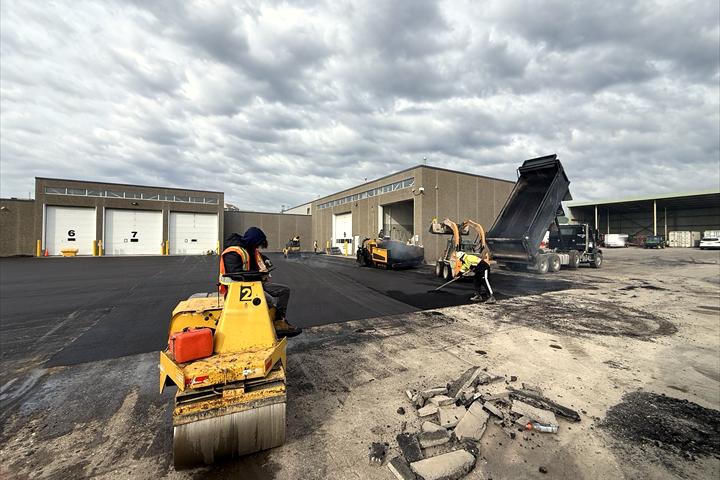
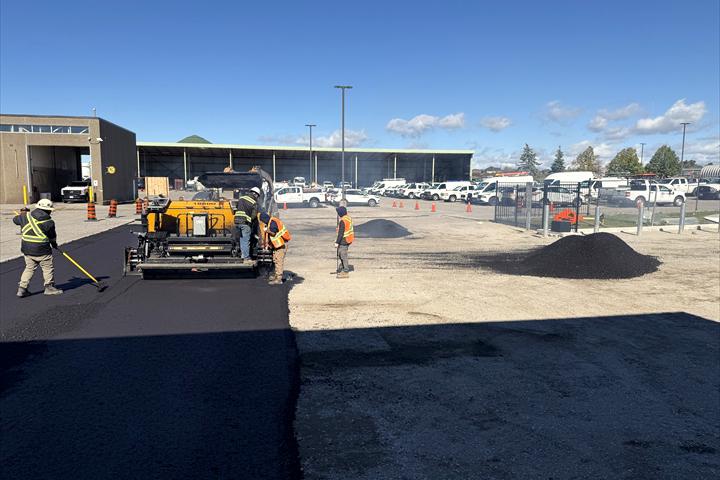
A widening is built in order: the digging and base work first, then the asphalt. If you’re repaving the whole driveway too, it’s still one job. Buried gas, hydro and cable lines are located and marked through Ontario One Call before any digging starts, which matters here because gas and cable lines often run along side yards. Spring through fall is paving season, and the hot mix needs dry weather and warm enough ground to compact properly.
How a widening is priced is in the driveway cost guide, and soils and industrial work are on the main Brampton page.
Before you ask for an estimate, take two photos: one of the side yard after rain, and one of the spot in front of the garage. They show where the water runs and how much of the base needs rebuilding.