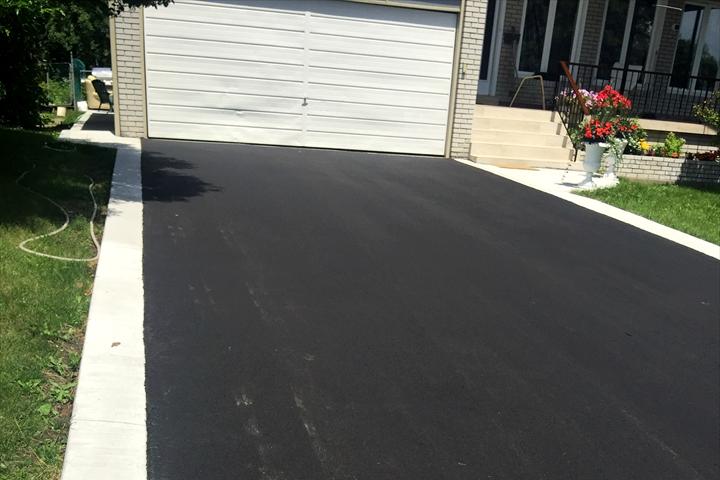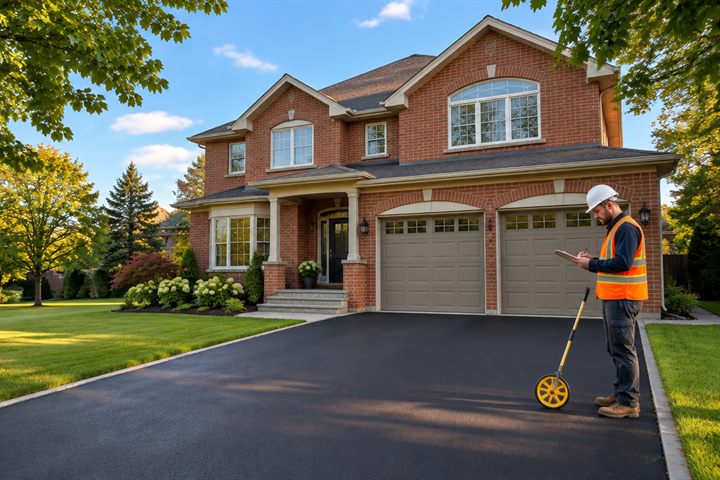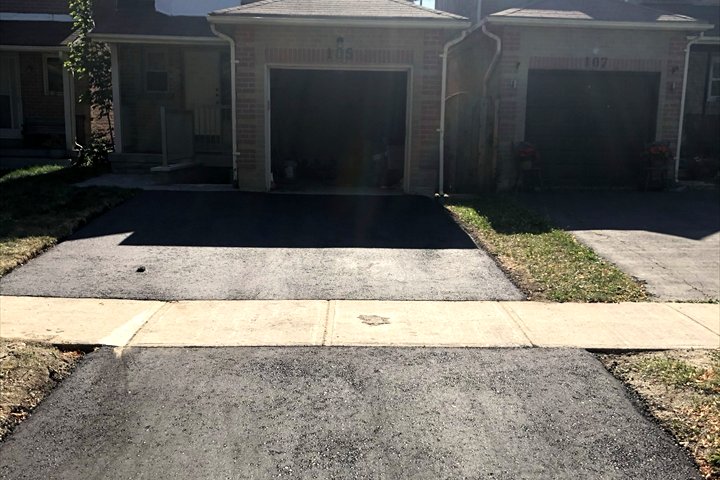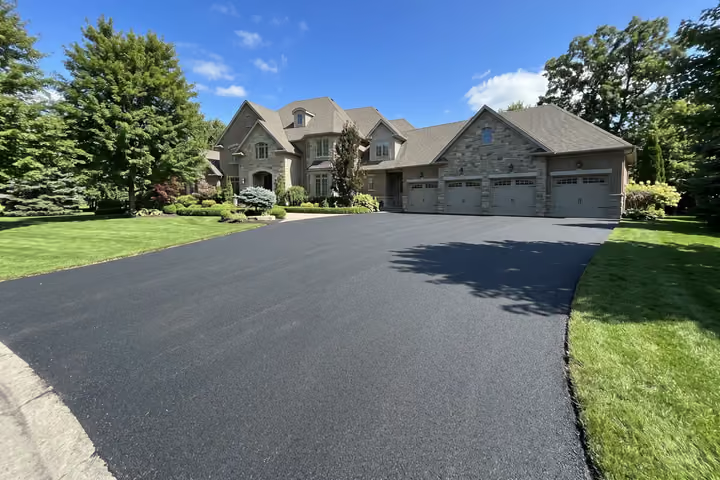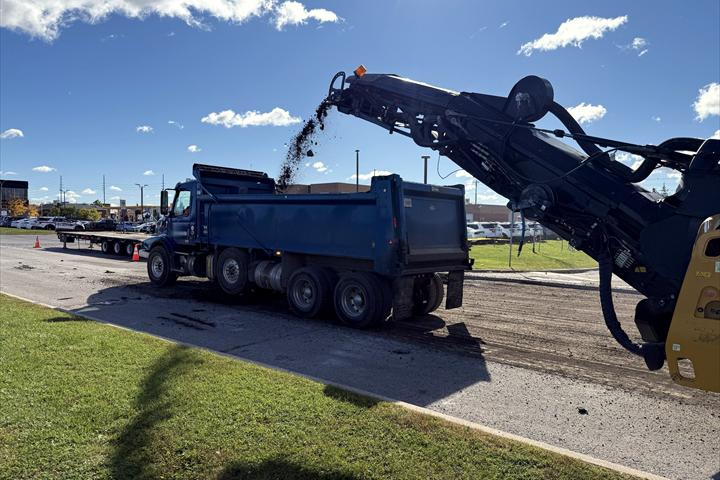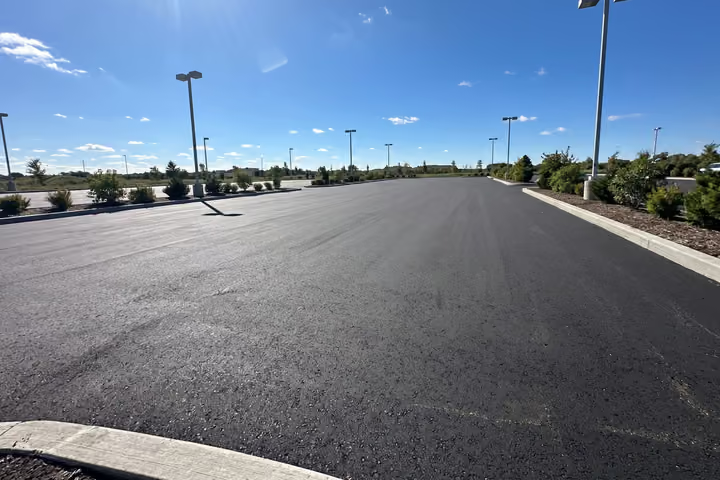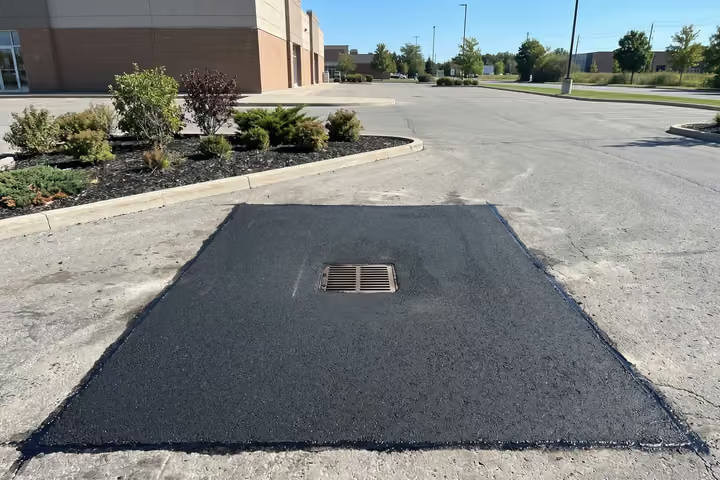
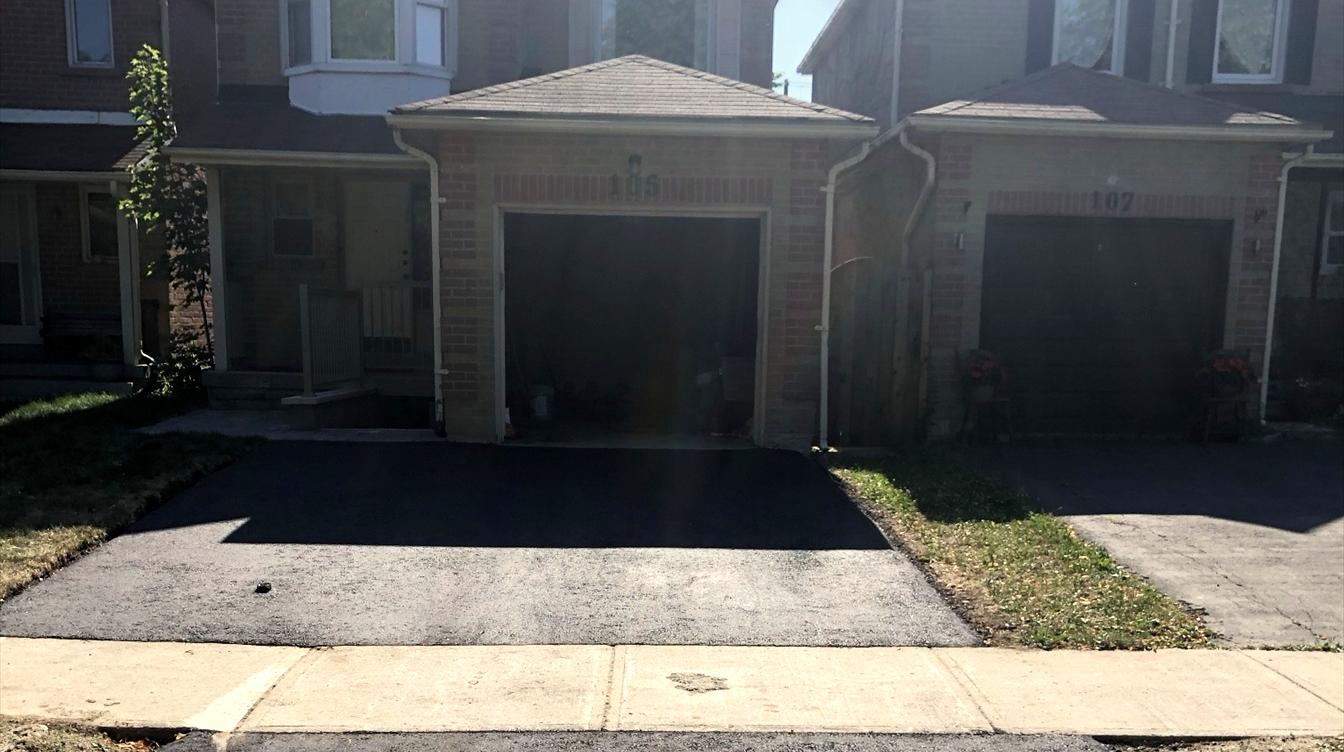
Many south Mississauga homes, in Cooksville, Lakeview, Clarkson and around Port Credit, have a single-lane driveway running past the house to a carport or a one-car garage. Two cars now means parking end to end. Widening turns that into two lanes, and on lots like these the job is mostly about what to do with the old lane, the trees beside it and the length of the run.
Why the old lane is replaced too
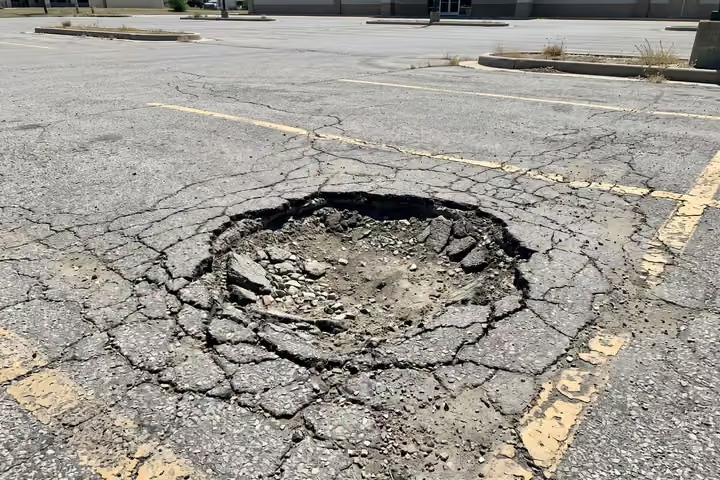
Almost every widening we build includes repaving the existing driveway, and on an older Mississauga lot there’s even more reason to. Decades-old asphalt has normally been patched and overlaid, its edges hang over soil, and its base was built to whatever practice applied at the time.
Join a fresh lane to that and you get two surfaces that age at different speeds, with a seam between them in the wheel path. Within a few winters the old side needs work anyway.
So the plan is a full replacement: the old lane comes out, both lanes get a rebuilt, compacted base, and the whole driveway is paved as one surface with one slope. Why we build widenings this way is on our widening page.
Long runs and partial widenings
Older lots here are often deep, and so is the driveway. Widening the full length doubles a large area. Two other shapes are common:
- Widen near the house only. Two lanes where cars park, one lane toward the street. The transition is tapered so cars don’t clip the lawn.
- Add a parking pad. A paved space beside the garage end, built with the same base as the driveway.
Both cost less than a full-length widening. Either way, the new section is dug out and rebuilt like a new driveway: lawn and topsoil come out, compacted granular stone goes in, and the base runs past the asphalt edge so the edge has support.
Trees beside the driveway
Mature trees are part of what makes these streets, and they’re often right where the second lane would go. Digging a base cuts every root in its path. Cutting a few small roots at the edge of the spread usually does little harm; cutting large roots close to the trunk can weaken or kill the tree, and a dying tree near a driveway is a hazard in itself.
Get an arborist’s view on a large tree before you settle the layout. Widening on the other side, narrowing the new lane where it passes the trunk, or stopping the widening short of the tree are all options.
Slope and drainage on older lots
A single-lane driveway often drains along its own length to the street, with lawn on both sides taking the rest. Doubling the paved area doubles the water. The wider surface needs a cross-slope that sends water to the street or onto lawn that can absorb it, never toward the house, a side door or a window well. On silty, slow-draining till, that matters: water that sits against the base softens it and heaves in winter.
The street end
Where the driveway meets the sidewalk or road, the new asphalt is set flush with the edge so plows and snowblowers don’t catch a lip. Some older streets have ditches and culverts in place of curbs. There, the widening stays on firm ground over the culvert and away from the ditch slope, and the extra runoff has to reach the ditch without eroding it.
Timing and price
A two-lane replacement is scheduled like any driveway, and your written estimate gives the expected timeline. On older lots, gas and cable lines can be in unexpected places, so they’re located and marked before any digging. Price depends mostly on total area, how much soft base has to be rebuilt, and access along the side of the house. The driveway cost guide shows how those add up. Soils and commercial work are on the main Mississauga page.
When you send us your details, measure the driveway’s length and current width, and note any large trees within a few metres of it. On an older Mississauga lot, those three figures decide the layout.